Badminton has traditionally been a game of human speed, reflexes, stamina and precision. But a recent demonstration is at least one of the best we have ever seen as a robot takes on two girls in a badminton court.
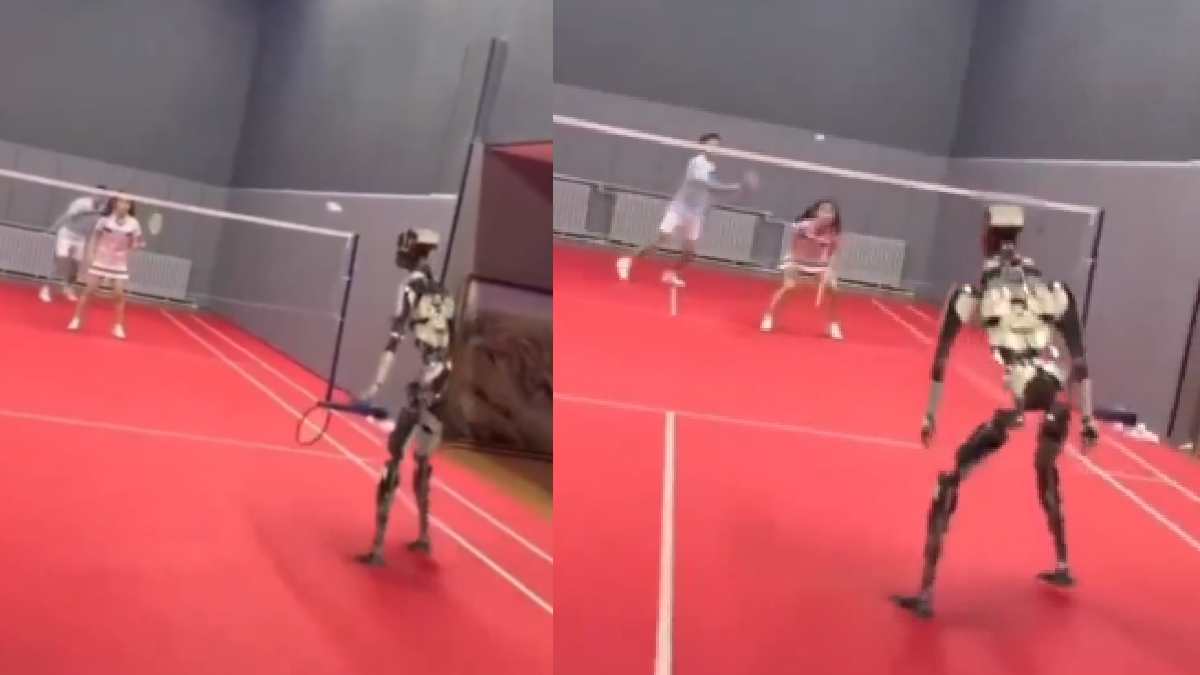
The scene may appear like a simple ‘human-versus-machine’ situation, but the technology behind it suggests something much bigger. The robot is designed to track the shuttle, to respond to incoming shots and return them with remarkable consistency.
Machines don't get tired as much as human players do. A person can lose concentration after a long rally, become physically tired or be affected by a previous injury. The robotic system, however, can continue doing repetitive movements for several hours and still be accurate.
That difference makes robots very interesting for sports training
The robot and two girls demonstrate how machines may eventually be useful practice partners. Instead of relying on another player to be available, athletes could use robotic systems to repeat shots, maintain a specific pace or give challenging rallies for long periods.
⚠️ EVERYONE KEEPS CALLING THIS "MAN VS MACHINE."
— Forem (@0xForem) August 19, 2026
That framing already lost.
You're watching a human go up against a system that doesn't accumulate fatigue, doesn't carry yesterday's injury into today's round, and doesn't have a contract that expires.
The human brings… https://t.co/Uo8FtRDeFs pic.twitter.com/LM0karKNHu
However, comparing a robot with a human athlete is not entirely fair. Human players have qualities which machines cannot replicate. Experience, creativity, instinct, emotional intelligence and spontaneous decision-making are all very important in competitive badminton.
A machine may be very consistent, but consistency is only one part of sporting performance
The bigger development is humans and robots working as a team. Robots could actually be used to make players better, not substitute for athletes. They could provide repetitive drills, model different playing patterns and help athletes train longer times so they are not subject in the same way to the demands of the other human player.
The badminton demonstration also underscores how robotics is taking over the space that was only human. Now robots do not just work in factories or in laboratory environments they are coming to work with people and responding to movement and doing things that require speed and precision.
It’s watching two girls rally against a robotic opponent that is more than a peculiar sporting moment. It’s a small preview of how technology might be integrated into a human athlete’s everyday training.
The idea of man vs machine might eventually be less important. In the future, humans might use machines to enhance them and not just compete with them.
At the time, the robot on the badminton court is an eye-opening example of technological progress. As robotics continues to improve, such encounters might one day be a part of sports training and entertainment too.