The first test flight of an electric personal flying vehicle was conducted by Ravi Tamta from Kaflikhan village near Jageshwar Dham in Almora district. A first flight was made on 7 August 2026 and was a step in Tamta’s long-standing journey to build a personal electric flying vehicle suited to the hilly terrain.
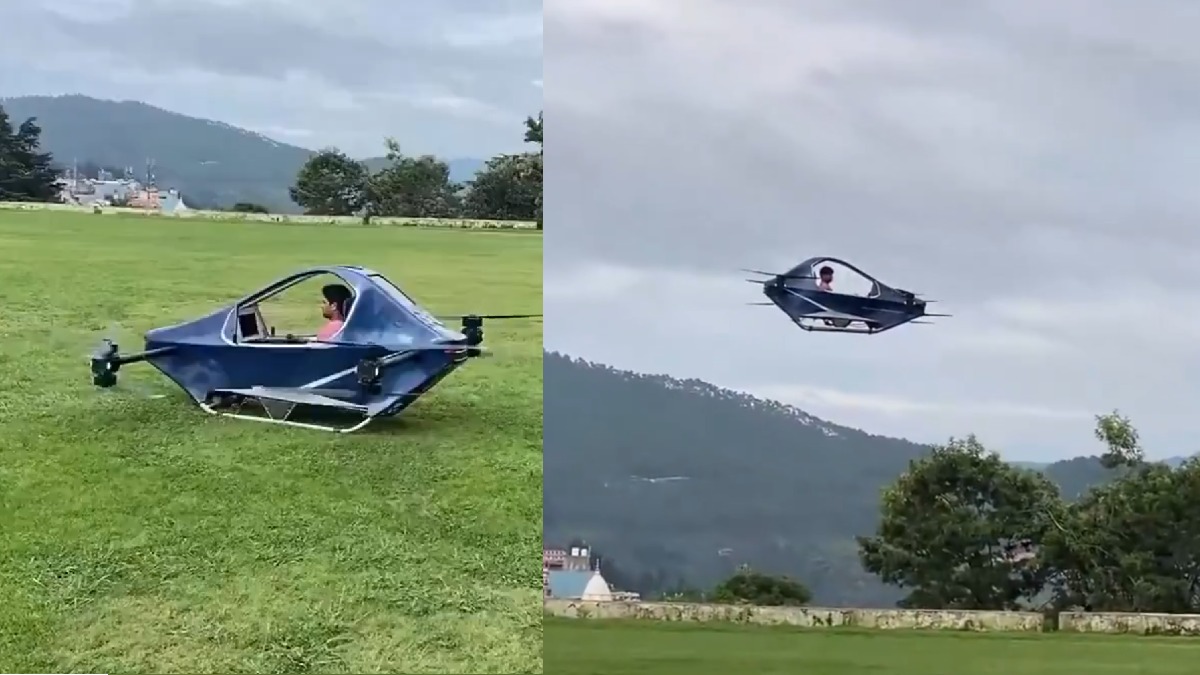
The unusual vehicle has attracted international attention after video of its test flight was uploaded online and went viral. The flight has also attracted the attention of senior government officials, with Uttarakhand Chief Minister Pushkar Singh Dhami and Union Civil Aviation Minister Ram Mohan Naidu Kinjarapu congratulating Tamta on the accomplishment.
Who Built HAPIDA SKYNeX?
The HAPIDA SKYNeX is developed by Ravi Tamta through his startup Hapida Sky Private Limited. Tamta, born in Kaflikhan village in Almora district, has worked for around 13 years in developing the flying vehicle.
More than that, it’s come from Uttarakhand, a state where mountainous terrain, steep roads, landslides and tough weather conditions can make transportation to remote communities difficult. Rather than simply creating another futuristic flying machine, the project would solve a practical transportation problem faced by Himalayan communities if the technology could eventually meet aviation safety and regulatory requirements.
The first successful flight represents the transition of the project from a long development phase to practical flight testing. However, the success should be considered as an early prototype milestone rather than the arrival of a commercially available flying car.
What Is the SKYNeX?
The HAPIDA SKYNeX is described as a 'single-seater, fully electric personal flying vehicle'. Unlike common vehicles that use petrol or diesel propulsion, the prototype uses electric propulsion and is designed to produce zero tailpipe emissions.
The concept is part of the wider global movement toward electric vertical take-off and landing aircraft and other advanced air mobility. All over the world, companies and independent innovators are experimenting with electric aircraft that can bring new kinds of short-distance transportation.
SKYNeX is still in prototype and more details like its range, flight time, payload capacity, battery specifications, cruising speed and operating altitude have not been disclosed. There is also no firm commercial price or launch date.
That means claims that Indian consumers will soon be able to purchase the vehicle should be treated cautiously. A successful prototype flight is an important technical accomplishment but it does not automatically mean that the vehicle is ready for everyday use.
Why The First Flight Matters
Getting a new aircraft off the ground for the first time is one of the most significant milestones in an aviation development programme. It demonstrates that the basic propulsion, control and structural systems can work together sufficiently to achieve flight.
For Tamta and his team, the August 7 test flight is the culmination of years of experimentation and development. It also shows the growing interest in indigenous advanced air mobility technologies in India.
The SKYNeX is perhaps more significant as it is meant to address the environment it is designed to serve. Uttarakhand has a mountainous geography and transport challenges that are very different from those in big cities. Some villages are separated from each other by rough terrain, while landslides, floods and damaged roads can interfere with regular transportation.
If electric flying vehicles could eventually become reliable, safe and affordable, they would offer new paths to get people to difficult locations.
Potential Use In Himalayan Areas
Personal commuting is most likely the only possible application of such a technology as SKYNeX. In a state like Uttarakhand, a more practical early application might be emergency services and access to remote communities.
During floods or landslides, roads can be blocked for hours or even days. Conventional ambulances, supply vehicles and rescue teams may be unable to reach affected areas quickly. A suitable electric aircraft could help transport people, medical supplies and emergency equipment over difficult terrain.
The technology could also eventually be useful for connecting remote Himalayan settlements with larger cities, although such operations would require extensive safety testing, trained operators and appropriate aviation infrastructure.
Prototype Flight Is Only The Beginning
Despite the excitement surrounding the viral test flight video, SKYNeX still has a long development path. Before an aircraft can be used commercially or by the general public, it needs to be tested and proven to provide stability, battery safety and reliability under various conditions.
The vehicle would also need to be compliant with India's aviation regulations and have the approval and certification of the relevant authorities. These processes are very important as an experimental aircraft in controlled airspace poses very different safety concerns from a normal road vehicle.
There is also a crucial distinction between a flying car and a road-legal vehicle that can seamlessly run both on roads and in the air. Based on the information currently available, SKYNeX should be understood as a personal flying vehicle prototype rather than a commercially certified road-and-air vehicle.
No Commercial Launch Yet
At present, there is no firm timeline for when SKYNeX will be commercially available. No price, range or production schedule has been agreed yet.
The first flight constitutes a proof-of-concept rather than a product launch. Further flight tests will be needed to see how the aircraft works over more sustained periods and under different circumstances.
The progress of the project will also depend on battery technology, manufacturing costs, aviation regulations, infrastructure and operational safety.
The viral flight has, for now, put an unusual Indian innovation in the spotlight. Ravi Tamta’s HAPIDA SKYNeX shows how independent innovators are exploring electric aviation and trying to solve the problems in India’s unique geographical landscape.
उत्तराखंड के अल्मोड़ा के युवा इनोवेटर रवि टम्टा जी को ड्रोन तकनीक में नवाचार करते हुए HAPIDA SKYNEX प्रोटोटाइप के सफल उड़ान परीक्षण पर हार्दिक बधाई।
— Pushkar Singh Dhami (@pushkardhami) August 7, 2026
आपकी यह उपलब्धि सिद्ध करती है कि हमारे युवाओं में प्रतिभा, नवाचार और वैज्ञानिक सोच की कोई कमी नहीं है। आपका यह अभिनव प्रयास… pic.twitter.com/sR7KZ8AWoO
If the project can successfully progress from prototype testing to certification and eventually practical deployment, its greatest impact may not be giving people a futuristic way to commute. Instead, the technology could help address one of Uttarakhand’s oldest transportation problems: reaching communities that are difficult to access by road.
The August 7 flight is just the first step, but it is a noteworthy moment for India’s emerging advanced air mobility landscape.