
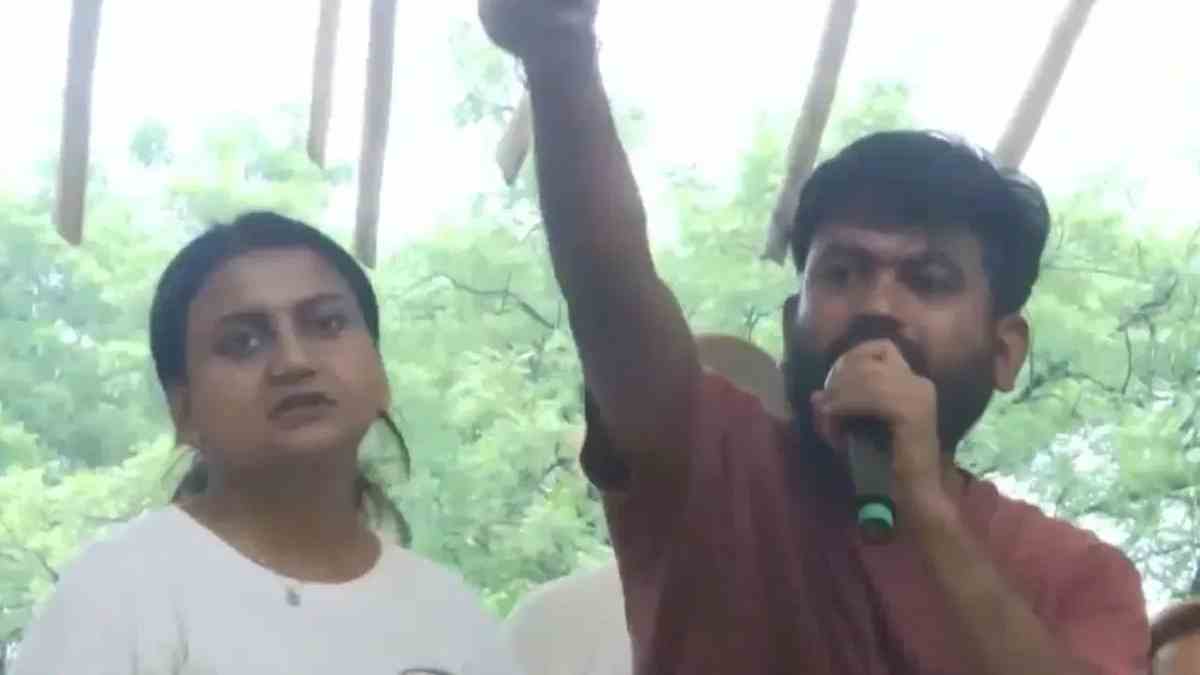
Cockroach Janta Party (CJP) founder Abhijeet Dipke has criticised Prime Minister Narendra Modi and questioned the security measures taken in New Delhi ahead of the party’s planned protest at Jantar Mantar on Saturday, October 10.
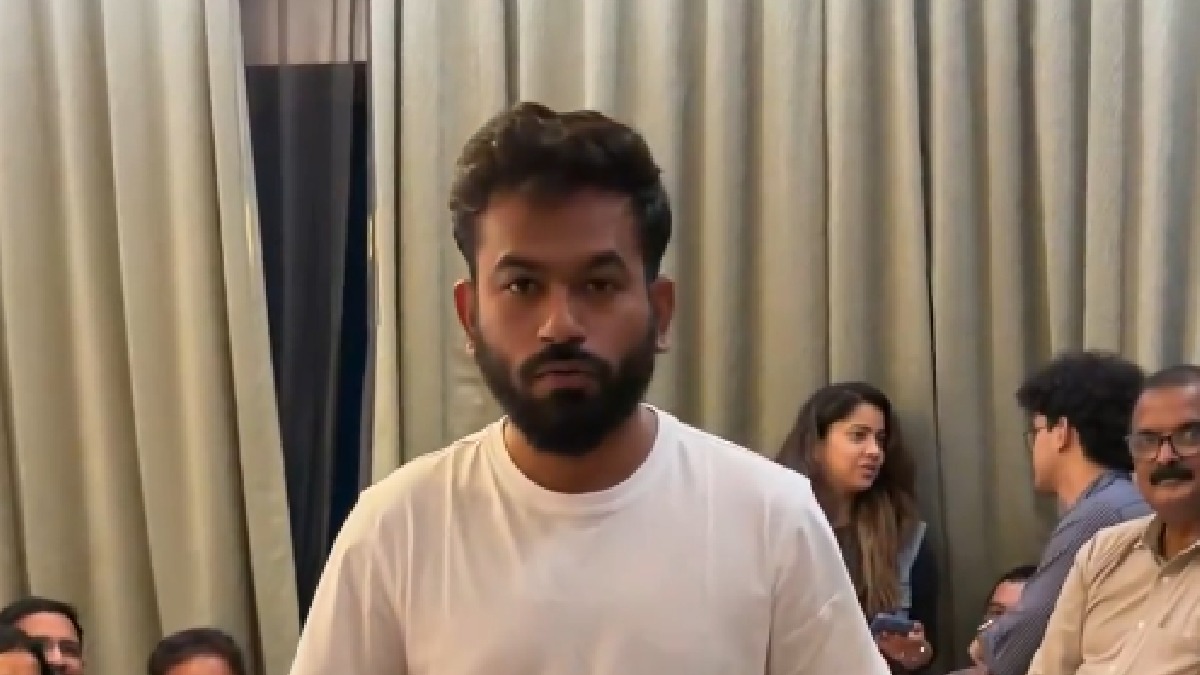
Dipke, who traveled from Mumbai to lead the demonstration, said the government is scared of young people and called the Prime Minister a “dictator” of the country.
Speaking to reporters after his departure to Delhi, Dipke questioned the extensive security arrangements and restrictions on public movement in the capital. He said metro stations and roads had closed out of fear of the proposed demonstration.
His comments came as Delhi Police and central security forces geared up for a huge gathering organized by CJP to address the alleged electoral rolls violations.
“Narendra Modi is a dictator. He is scared, which is why he has closed the Delhi Metro, roads, everything. If he is this scared of the youth of the nation, why is he sitting in the PM's post?” Dipke said.
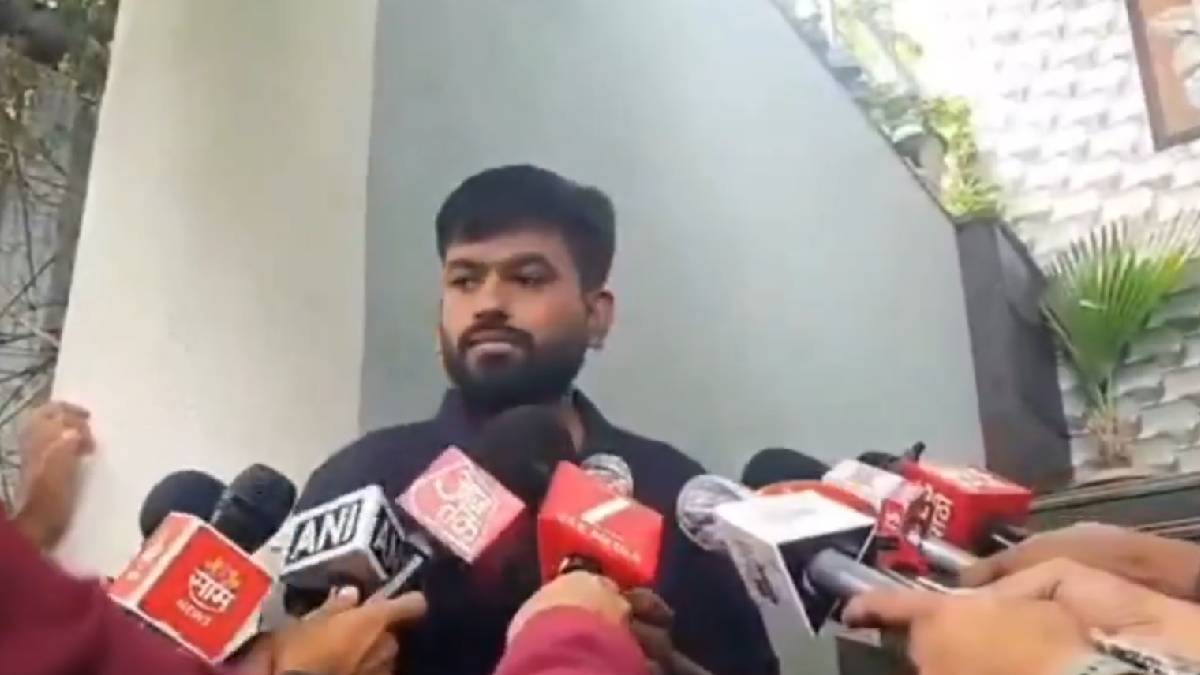
The CJP founder also questioned the Centre's response to the planned demonstration, asking whether the government intended to treat its own citizens as adversaries. In a conversation with news agency ANI, he referred to Prime Minister Modi, Union Home Minister Amit Shah and Chief Election Commissioner Gyanesh Kumar while criticising the security measures.
Dipke further claimed that the Prime Minister feared public opposition over the electoral roll issue. These remarks represent the CJP leader's allegations and political position as the dispute over permission for the demonstration continued.
Modi has accepted defeat even before our protest has begun. The mass crackdown on protesters and the shutdown of Delhi are not signs of strength, but of a leader terrified of his own people.
— Abhijeet Dipke (@abhijeet_dipke) October 10, 2026
CJP Has Always Given The Right To Protest
Defending the planned gathering at Jantar Mantar, Dipke said peaceful protest was a fundamental democratic right. He referred to Article 19 of the Indian Constitution, which protects freedoms including speech and peaceful assembly, subject to constitutionally permitted reasonable restrictions.
“Protesting is our fundamental right. Article 19 gives us the fundamental right to protest in a democratic and peaceful manner, and that is exactly what we intend to do,” Dipke said.
The party had planned to demonstrate against Chief Election Commissioner Gyanesh Kumar for alleged irregularities in the Special Intensive Revision (SIR) of electoral rolls. CJP has called for accountability for this and has asked the chief election commissioner to take action against the election chief.
The demonstration was proposed after Delhi Police denied permission for the October 10 gathering. Police cited short notice, violations in previous demonstrations and concerns about public safety, crowd management and traffic as reasons for the decision.
The dispute has brought into sharp focus the tension between peaceful assembly and the authorities’ duty to maintain public order. CJP has been against the restrictions, but the police have maintained that security must be in place to protect protesters, commuters and the public at large.
More than 40,000 Security Personnel Deployed
With large crowds expected in Delhi, security was very tight across central Delhi. Over 40,000 personnel from Delhi Police and Central Armed Police Forces (CAPFs) were deployed or expected to be deployed to prevent crowds from forming around Jantar Mantar, according to the security forces.
According to the reported deployment details, Delhi Police had planned to deploy more than 15,000 personnel, while around 26,000 central force personnel were expected in the capital. Additional personnel from Haryana and Uttar Pradesh could also be deployed, officials said.
Jantar Mantar, the intended site of the demonstration, was sealed off, and only media personnel were allowed to go. Roads connecting to the protest site were blocked, and loudspeakers at key entry and exit points warned against gatherings, processions, road blockades and other prohibited activities under Section 163 of the Bharatiya Nagarik Suraksha Sanhita (BNSS).
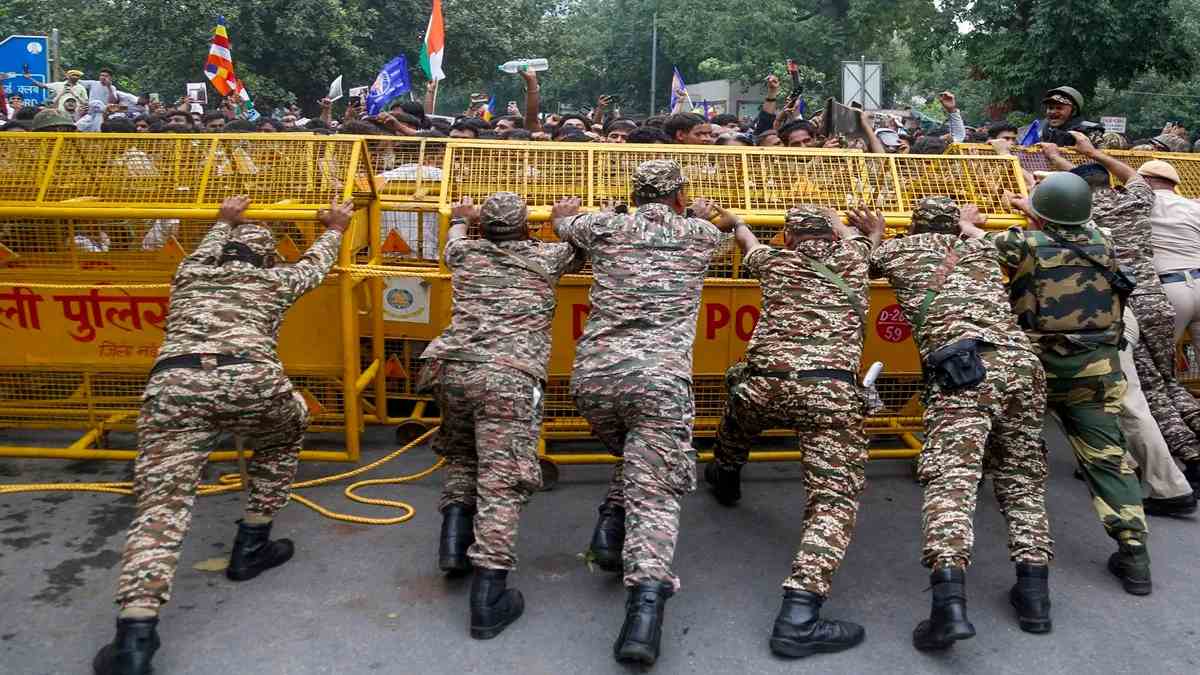
A senior police officer said the New Delhi district had been divided into 20 zones, each with an officer of deputy commissioner of police rank. Barricades were set up in 37 identified locations to control entry ways for protesters.
One of the most significant security deployments was seen at the Tolstoy Marg-Sansad Marg intersection, which is a key junction to Jantar Mantar, and near Parliament Street police station. There were several barricades to block pedestrian and vehicle traffic, and traffic was diverted on some central Delhi streets.
Delhi Metro Restrictions And Internet Suspension
Public transport and communications were also affected by the security measures. The Delhi Metro Rail Corporation (DMRC) had announced that entry and exit at 57 stations would be suspended from 9 pm on Friday to Saturday. The list was later revised to 45 stations.
The restrictions were to be in place to facilitate security arrangements for the expected gathering. The changes would affect commuters travelling through some parts of the capital, and planning advance journey plans was essential.
In other news, an order dated October 9 directed mobile internet services to be suspended within a four-kilometre radius of the Janpath-Kartavya Path crossing from 10 pm on Friday until 10 pm on Saturday.
The order cited the Telecommunications Act, 2023, and Telecommunications (Temporary Suspension of Services) Rules, 2024, and directed telecom companies such as Airtel, Vodafone Idea, Jio and MTNL to implement the suspension.
The restrictions added to the disruption expected in central Delhi, especially for those relying on mobile internet for navigation, communication and other daily activities.
Traffic Diversions And Train Cancellations
Delhi Traffic Police issued an advisory warning of possible congestion and diversions at 30 locations from 6 am on Saturday, depending on the situation. Possible areas with a potential to be affected included Dhaula Kuan flyover, Jhandewalan, Mandi House, Minto Road, Deen Dayal Upadhyay Marg, Lodhi Road flyover, Patel Chowk, Rail Bhawan and Windsor Place.
Restrictions were also expected on or around Jantar Mantar Road, Ashoka Road, Sansad Marg, Janpath and Barakhamba Road. Commuters were advised to avoid non-essential travel through the affected areas and leave more time for trips to railway stations, inter-state bus terminals and the airport.
The Railways also cancelled mail and express trains that would have arrived at New Delhi and Hazrat Nizamuddin stations between 4 am and 2 pm on Saturday, saying road congestion was likely. The cancellations covered trains that were scheduled to leave their originating stations after 2 pm on Friday and reach the two stations during the same time.
CJP continued to resist the restrictions, but the demonstration showed how political expression, public access and security management in the capital were at odds. Dipke’s comments injected a political dimension, and the authorities were concerned about preventing disruption and protecting public safety during the planned protest.





Comments
Leave a Comment