
The Cabinet Secretariat did not act on complaints filed by two Election Commissioners against senior Election Commission of India (ECI) officer Maneesh Garg, according to documents obtained under the RTI Act. The documents show that the government considered the letters as individual communications rather than formal complaints representing the Election Commission as a collective body.
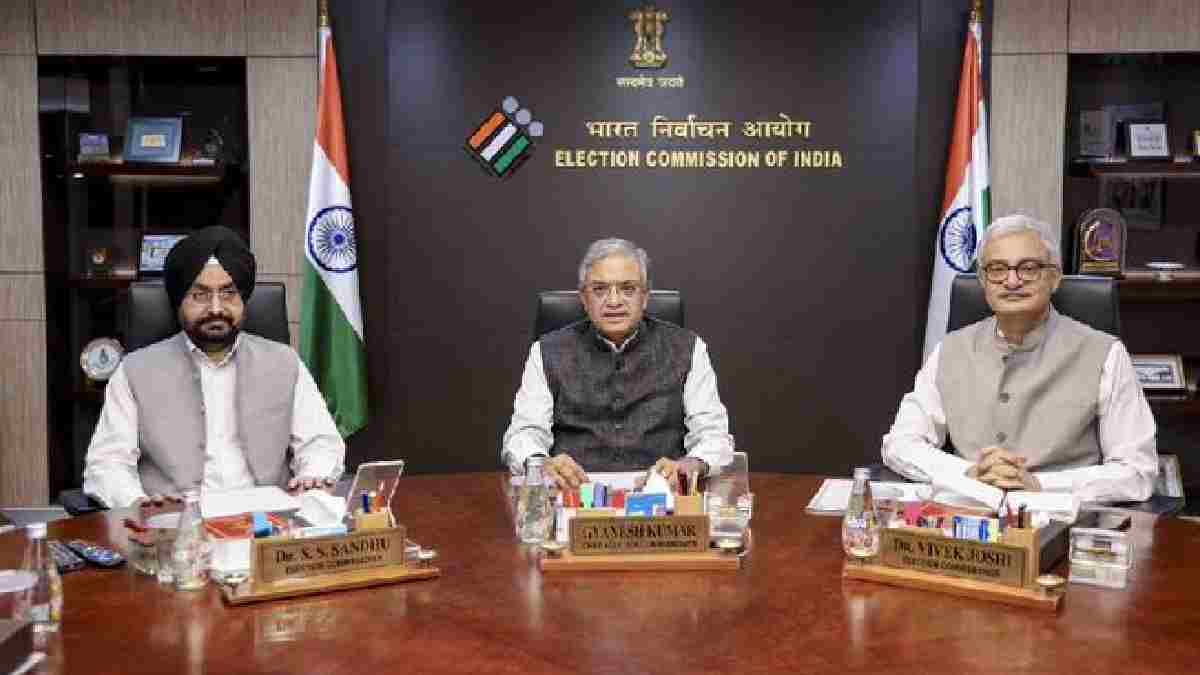
Election Commissioners Sukhbir Singh Sandhu and Vivek Joshi wrote to Cabinet Secretary T V Somanathan on July 29, 2026, to express their concerns about Garg, a Senior Deputy Election Commissioner. Their letters questioned a work allocation order that allegedly extended responsibilities to senior deputy election commissioners, deputy election commissioners, directors general, and officers of equivalent rank without prior consultation with the Election Commission or the officers concerned.
The development has brought fresh attention to the administrative power, the election management system of India and the alignment of government and the constitutional body that holds elections.
Why did the Election Commissioners complain?
According to the documents, the dispute centered on a work allocation order issued by Garg, an IAS officer appointed to the Election Commission of India by the Appointments Committee of the Cabinet in September 2024.
The Commissioners claimed that the new allocation was made despite repeated oral and written instructions to not introduce such changes without the Commission's approval. There were also objections to the decision-making process and to the distribution of responsibility within the organisation.
Vivek Joshi also claimed that the Administration Division had not provided him with a file he had requested. The issue raised questions about access to official records and the procedures followed when responsibilities are reassigned within the Commission.
The controversy gained more attention after a report by The Indian Express in September 2026. The new allocation would make it more centralised in appointing or deleting voters and updating electoral lists, which would have been done by officials at the state level.
Electoral roll management is an integral part of the election process because it determines voter eligibility and the accuracy of registration records. If the administrative structure that governs these duties changes, then accountability and operational independence become subject to scrutiny.
What did the Cabinet Secretariat say?
A Cabinet note dated August 4, 2026, explained why the Secretariat did not proceed with action on the letters at that stage.
The note stated that the communications were sent by the two Election Commissioners in their own capacities. So the officials did not consider them as a formal communication from the Election Commission as a whole.
The assessment also raised concerns that being involved by the Cabinet Secretariat without any official communication from the Commission could be interpreted by the Commission as interfering with the function of a constitutional body.
The note stressed that Garg's work and conduct, despite his appointment through the Cabinet committee, were governed by the Election Commission's rules and guidelines.
The same note of August 3 had suggested asking for the opinion of Chief Election Commissioner Gyanesh Kumar, but we concluded that taking action without a formal communication from the Commission might be inappropriate.
The Secretariat ultimately decided to accept the letters and forward copies to the Chief Election Commissioner's office rather than initiate proceedings against the officer.
Letters Acknowledged but No Immediate Action
The acknowledgements were issued on August 5, 2026. Copies were also marked to the Department of Personnel and Training and the Establishment Officer.
According to RTI documents, the matter was placed on record so that it could be considered in future decisions regarding Garg. However, the available information does not establish that the complaints resulted in disciplinary action or a formal investigation by the Cabinet Secretariat.
The difference between an acknowledgement of a complaint and action. The Secretariat received these messages but did not consider the letters as sufficient grounds for intervention without an institutional communication from the Commission.
The decision reflects the administrative and constitutional issues of when complaints involve senior officers serving in an independent constitutional institution.
The 2023 Law was cited by election commissioners
The two Commissioners alleged that the new work allocation violated provisions of the Chief Election Commissioner and Other Election Commissioners (Appointment, Conditions of Service and Term of Office) Act, 2023.
Section 18 of the Act addresses the conduct of the Commission's business. According to the provision cited in the dispute, business should be conducted unanimously as far as possible, with differences of opinion resolved through a majority decision.
The Commissioners' objections thus raised questions about whether the changes to the allocation of responsibilities followed the Commission's established decision-making procedures.
But the allegations need not be taken as a final legal conclusion. The documents in the RTI disclosure explain the Cabinet Secretariat's assessment and its decision not to intervene at that time; they do not, by themselves, establish that Garg violated the law.
What happens next?
The future of the matter could be in the hands of whether the Election Commission formally makes a statement on the allegations and if the Commission’s leadership decides to do more.
The letters are sent to the Chief Election Commissioner's office, but the concerns might be investigated through the Commission's own administrative processes. The RTI disclosure does not give any indication that any such review has been conducted.
The episode is a reminder of the need for clear administrative procedures, transparent decision-making and checks against inappropriate executive interference. It also clarifies the difference between individual objections raised by members of a constitutional body and formal decisions or communications by that institution as an entire body.
For now, the key finding from the RTI documents is that the Cabinet Secretariat welcomed the complaints but did not initiate action against Maneesh Garg on the basis of the individual letters. Whether the Election Commission takes further steps remains a separate question.






Comments
Leave a Comment