
The Central Government has announced a major festive benefit for Indian Railways employees ahead of Diwali 2026 and approved a productivity-linked bonus (PLB) of 78 days' wages for over 11.4 lakh railway staff.
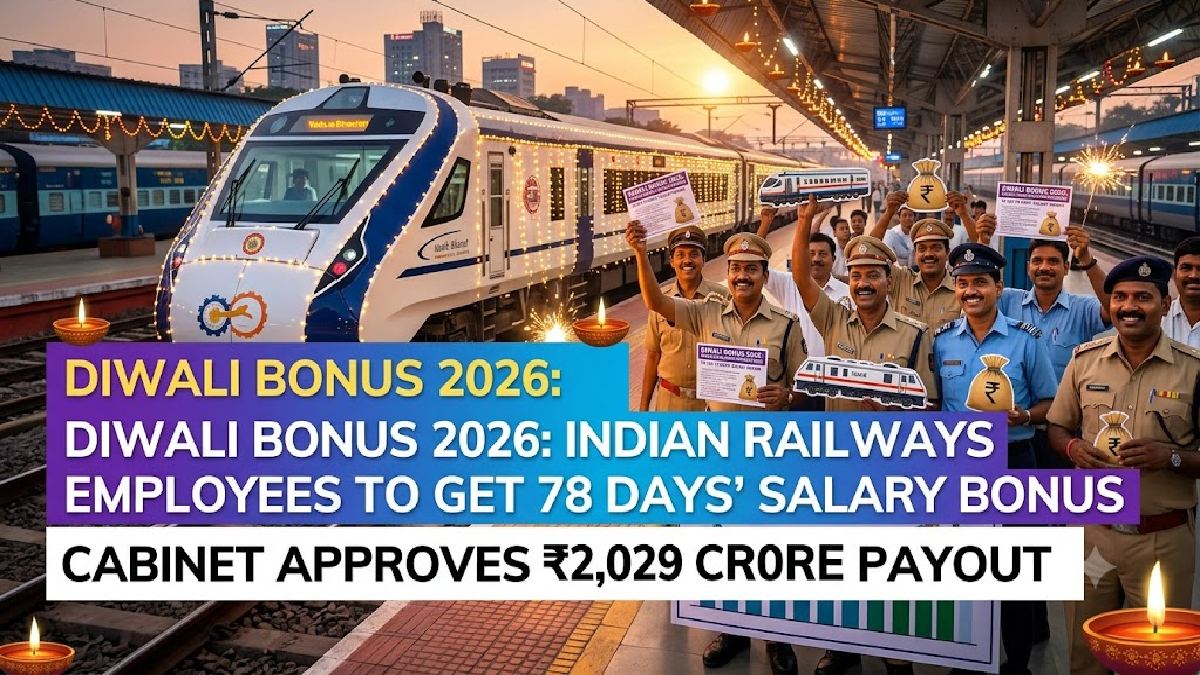
The report says that the amount of the bonus scheme is around ₹2,029 crore, and it will give eligible non-gazetted railway employees an additional financial benefit during the festive season. It is an opportunity to recognise the contribution of railway workers to one of the world's leading railway networks.
People who work on trains, track maintenance, station management and other essential services will receive the bonus. The announcement should ease the burden of eligible employees who depend on annual festive payment to pay for household expenses, shopping and other financial demands during Diwali. The final payment a worker will receive will be determined by eligibility and wage calculation.
How much bonus will Railway employees get?
According to the currently calculated method in the report, the maximum annual bonus of an eligible non-gazetted railway employee is ₹17,951. We still calculate a wage ceiling of ₹7,000 per month, which is the same as the higher wage ceiling proposed by railway employee unions.
The 78-day bonus is calculated on the basis of the prescribed wage ceiling and the number of days approved by the government. So the eligible employees can receive the maximum of ₹17,951 according to the existing formula with the conditions. The productivity-linked bonus is an annual incentive for railway employees to get bonuses for their contributions in terms of performance. It is separate from an employee's regular monthly salary and should not be confused with a permanent increase in wages. It is particularly important during the festive season, when many households spend more money on travel, clothing, gifts and family celebrations.
Why do railway unions want a higher bonus?
Railway employee unions have voiced their opposition to this and asked for a higher wage ceiling. The current ceiling is ₹7,000 per month, but they want it to be increased to ₹18,000 per month. If the bonus were calculated as per the same 78-day limit, the maximum would be ₹46,184 as per the figures cited in the report.
This is far from the current maximum of ₹17,951, but the government maintains the current wage ceiling, they said. The difference between the unions’ demand and the current calculation has therefore remained a concern for railway employee representatives. A higher ceiling would increase the bonus for eligible employees who are currently stuck in the lower limit, but the actual amount payable would still depend on the rules affecting eligibility and calculation.
Which Railway employees are eligible?
Non-gazetted railway staff are responsible for several vital functions in the railway network. This includes track maintainers, locomotive pilots, train managers, station masters, pointsmen and other Group C employees who are responsible for maintaining railway tracks and operating trains as well as for station operations and signalling and safe movement of railway traffic. In addition to this, the productivity-linked bonus also acknowledges the work of these employees in the maintenance of the railway system and the passenger and freight services.
The government's eligibility for the payment is very clear, so employees should certainly refer to the official railway or personnel department communications for the exact terms applicable to their jobs. A bonus decision is especially significant because railway operations depend on the coordinated work of thousands of employees across stations, maintenance depots, yards and operational divisions.
Cabinet Approves Continuation of Social Assistance Programme
Along with the railway bonus, the Union Cabinet has also approved the continuation of the NSAP for five years (to 2030-31). It costs the government a total of ₹53,428 crore and helps individuals and families with an income of less than ₹60,000 by means of social pension and assistance schemes.
Older people, widows and disabled people who need financial help after the death of their primary breadwinner are among the groups that are beneficiaries. The government also announced changes to the names of some schemes in the programme, the source said. Beneficiaries should read official notifications as to how the changes affect their application process, payment arrangements or eligibility documentation.
Social Pension Schemes to Receive New Names
The changes that have been announced include the renaming of the National Social Assistance Programme as the Pradhan Mantri Samajik Sahayata Yojana. The Indira Gandhi National Old Age Pension Scheme is to be renamed the Pradhan Mantri Vridhavastha Pension Yojana and the Indira Gandhi National Widow Pension Scheme as the Pradhan Mantri Widow Pension Yojana.
The Indira Gandhi National Disability Pension Scheme will be renamed the Pradhan Mantri Divyangjan Pension Yojana. The National Family Benefit Scheme is to be renamed the Pradhan Mantri Parivar Labh Yojana. These are just a few of the changes presented as part of the proposed restructuring and renaming of the social assistance programme.
The names alone do not necessarily indicate an increase in pension payments, and beneficiaries should rely on official government notifications for the precise implementation details and any changes to the operation of the schemes.
Disability Pension Eligibility and Payment Changes
The source report also describes changes to the disability pension criteria. The disability threshold is being lowered from 80% to 40% and will help more people with disabilities to benefit from the new provision to reach the list of people with disabilities who have the remaining eligibility criteria.
Age is stated to be from birth as the minimum age for eligibility for the disability pension for children to receive the pension, so children with disabilities can also benefit from the new provisions. The reported pension amount is ₹375 for beneficiaries under 80 years of age and ₹625 for those over 80 years of age; the reported pension amount and eligibility criteria for the payment of social pension are due to the details of the scheme and to any state-level assistance offered. As described in the article, a lower disability threshold would allow people who did not meet the stricter criterion to access pension support.
The Cabinet's announced decisions cover two important areas of public policy - a festive bonus for railway workers and continued social assistance for the most disadvantaged groups. Although the 78-day productivity-based bonus will provide eligible railway workers with an additional payment, the wage ceiling is still a critical issue for the union seeking larger payouts.
Meanwhile, the continuation and renaming of social assistance schemes and the claims of disability eligibility changes would also affect pension recipients. The decisions may be confirmed, and it is necessary for employees and beneficiaries to consult official government orders and departmental announcements for confirmed dates, eligibility conditions and implementation details. Decisions will be effective only if they are formally announced and implemented.



Comments
Leave a Comment