
Indo-Tibetan Border Police (ITBP) Director General Shatrujeet Singh Kapoor has officially confirmed ongoing face-offs with Chinese troops at multiple locations along the Line of Actual Control (LAC) in Arunachal Pradesh. While addressing the Himveer Samman Samaroh at the ITBP Central Training Institute in Alwar, Rajasthan, Kapoor said that tensions along the northeastern border had continued since July 2026.
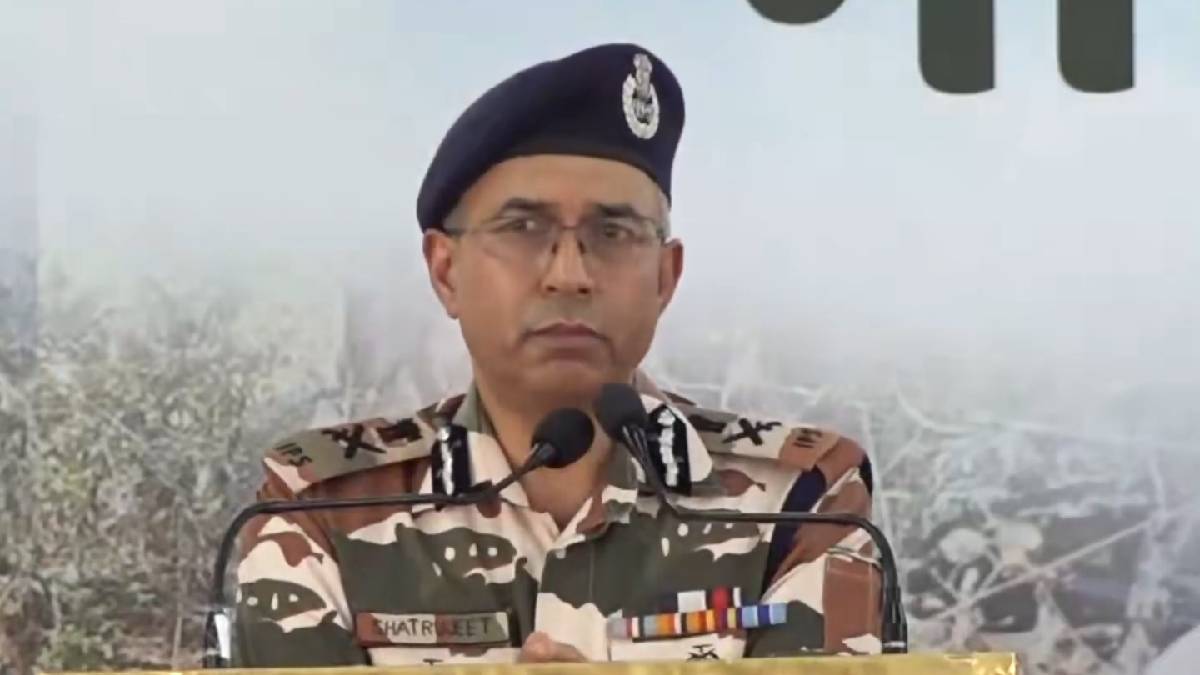
He said that " in the past few days, a situation has arose where face-offs happened in several locations in Arunachal and still continue" marking the first official confirmation of the rising tension in the Arunachal region since July this year, when allegations arose by a fact-finding team of the People's Party of Arunachal (PPA), a political party with 2 MLA's, said that PLA troops were effectively blocking India's access to designated patrolling points in Taksing. It also flagged increasing Chinese activities in the Upper Subansiri district. The BJP-led government rejected these claims made by PPA.
Kapoor also said that the newly raised Shaurya commandos had played an important role during these situations.
The weapons used by the ITBP are 50-years old and modernisation is required, said ITBP D-G Shatrujeet Kapur, who is set to retire on October 31. Stressing on the need to invest and develop drone and counter-drone technology, the ITBP chief said that it may not be possible to face China through traditional methods as it has invested a lot in the modernisation of its weapons and infrastructure. “Drones are something through which a even a small country can challenge a big country We saw how Ukraine has challenged a superpower like Russia. The war was supposed to be over in few days, but 10,000 to 15,000 Russian soldiers are being killed, they are suffering. Look at Iran, how, without even a Navy, they, with the help of drones, challenged America,” he said. Read the full story in The Hindu- https://t.co/GQuYyEYK74
— Vijaita Singh (@vijaita) October 23, 2026
China’s Military Strength and ITBP’s Preparedness
The ITBP chief also highlighted that China had invested heavily in its military and had grown stronger over the years. He reminded attendees that the ITBP was established in 1962 to guard the India-China border. In 2004, the entire 3,488-km stretch of the India-China border was assigned to the force for border-guarding duties.
Kapoor stressed the importance of retaining traditional military capabilities while adapting to modern warfare. The force's experience in mountain warfare and border patrolling remains important, even as new technologies change the nature of military confrontations.
Drones Are Changing Modern Warfare
Mr. Kapoor also highlighted how drones have transformed modern warfare, enabling even relatively small countries to pose formidable challenges to major military powers.
He cited the Russia-Ukraine war as an example. Russia's initial expectations of a swift victory in Ukraine have not materialised, with the war continuing for over 4 years and Russian forces suffering around 10000- 15000 per month battlefield casualties, according to moderate estimates, as said by Mr. Kapoor.
The war has also demonstrated the growing importance of drones and anti-drone technology. Both sides have used unmanned systems for surveillance, reconnaissance, targeting and attacks, making drone capabilities increasingly important on the modern battlefield.
Recognising these changing military requirements, the ITBP has decided to invest heavily in drone warfare capabilities as part of its modernisation efforts.
According to reports citing Kapoor, the force has received ₹400 crore in funding, with approximately 70% earmarked for strengthening its drone warfare capabilities.
A larger modernisation programme worth approximately ₹3,500 crore to ₹4,000 crore has also received in-principle approval, with ₹1,000 crore earmarked for drone and anti-drone systems.
Kapoor also said that the ITBP had started training personnel to operate drones and was developing capabilities to manufacture drones in-house. Each border-guarding battalion is being equipped with a drone platoon, according to reports.
These initiatives reflect the force's efforts to adapt to the changing nature of warfare while strengthening its operational readiness along the India-China border.
The ongoing face-offs in Arunachal Pradesh underline the importance of maintaining vigilance along the LAC. With the ITBP expanding its specialised combat capabilities and investing in modern technology, the force is seeking to improve its ability to respond to future border confrontations while remaining prepared for the challenges posed by an increasingly technology-driven military environment.





Comments
Leave a Comment