
The incident took place between Ratlam and Namli railway stations at 10:30 pm, said the report. The car was stranded on the tracks as the gate closed, and the approaching train collided with it.
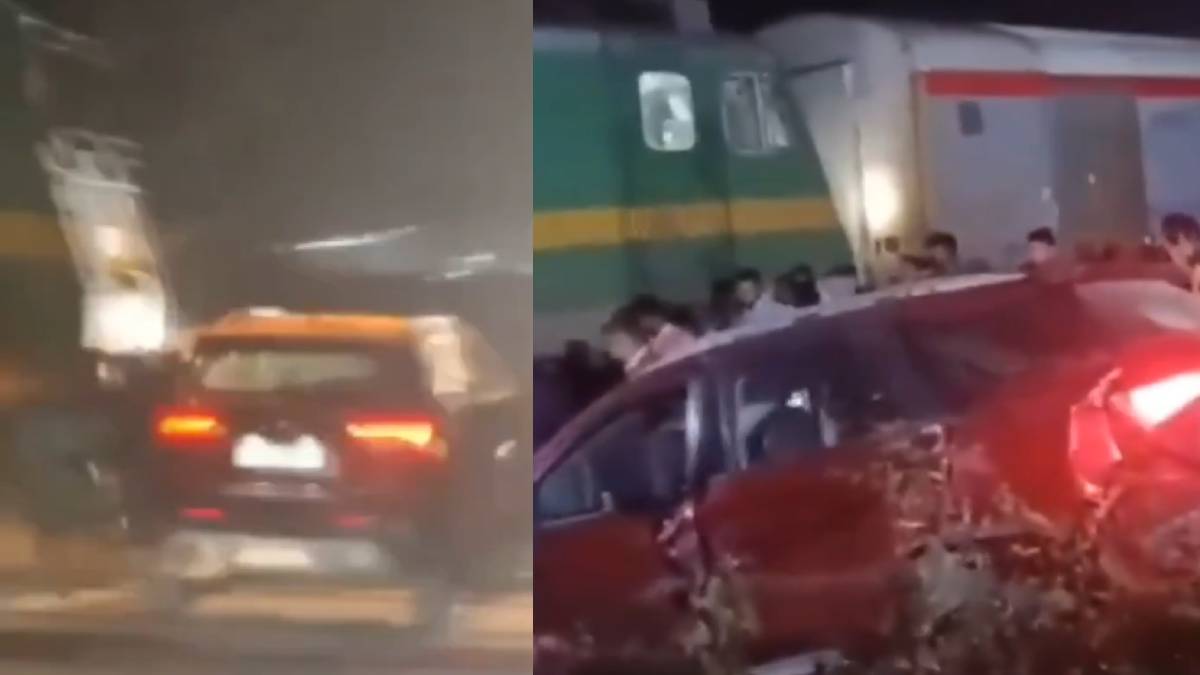
Ratlam railway division public relations officer Mukesh Kumar said the driver had tried to move the car across the tracks quickly just before the gate closed. The passengers were able to get out before the crash, while a loco pilot put the brakes on the train's speed by forcing it to slow down, he said.
The damaged vehicle was removed, and train operations resumed at 11:40 p.m. Railway officials ordered an investigation of the incident, which is still ongoing. The crossing was poorly handled, and staff on duty seemed to be at fault, the railway said.
In #Ratlam, #MadhyaPradesh, a passenger train collided with a car stuck on the railway track. Due to the sudden closure of the railway track, the car had become stranded there. Fortunately, all the occupants of the car managed to get out in time. Thanks to the quick thinking of the loco pilot, a major accident was averted. There are no reports of anyone being injured in the incident.
— Siraj Noorani (@sirajnoorani) October 16, 2026
How common are railway crossing accidents in India?
Indian Railways has eliminated the risk of unmanned level crossings on its broad gauge railway network. All such crossings have been eliminated on the broad gauge network by January 31, 2019, according to the Ministry of Railways. This has been achieved by closing, combining, manning and constructing new crossings, and consolidating and replacing such crossings. In 2024-25 and 2025-26, the Commission of Railway Safety reported one major accident that was classified as a level crossing accident. These figures are for a specific kind of serious railway accident and do not reflect all train and road accidents or all crossing accidents. As of 1 April 2025, Indian Railways had 16,499 manned level crossings nationwide, according to the Ministry of Railways statement in February 2026. And that’s why safe crossings and alternative routes are still important.
Unauthorised railway crossings.
Besides officially recognized crossings, informal paths between railway tracks can also develop in villages, farms, and residential areas cut off from the railway lines. Residents can use the routes to walk to schools, markets, workplaces, or a car-based route on roads, especially in cases where the nearest train crossing is a long detour.
These local access needs help explain why informal crossings can persist, but they do not make crossing railway tracks outside designated points legal or safe. Unauthorised openings and walking directly across tracks expose pedestrians and vehicles to approaching trains, which cannot stop immediately.
The elimination of unmanned crossings on wide-gauge routes is not the end of unsafe crossing behaviour. Informal access routes, trespassing, and getting through closed gates are different safety concerns. There are no reliable nationwide statistics regarding the number of unauthorised informal crossings. We need railways to talk to the people where they’re dividing, to understand them, and to provide safe routes for them since that is the responsibility of the government and Indian Railways.
Safer crossings are essential
Overbridges, underpasses, and level crossings that are well-built can improve connectivity and reduce the possibility of road and rail traffic sharing the same space. But these need investment, suitable land, and local government help.
The Ratlam collision reminds us that even if everybody manages to escape uninjured, a car stuck on railway tracks can be a hazard to passengers, railway staff, and road users. If an investigation is needed, then the car should be identified, and any modification of operation or infrastructure may need to be made.
For motorists, the basic rule is clear: never try to cross when a gate is closing and never stop on railway tracks. And if you are stranded, people should run to safety as soon as possible and inform the railway authorities instead of attempting a bold last-second manoeuvre.

Comments
Leave a Comment