
Chinese humanoid robots have attracted attention in Riyadh after they performed the traditional Saudi Ardah sword dance at a reception at the Chinese Embassy. Dressed in traditional Saudi attire, the robots performed a cultural dance that combined technology with one of the kingdom’s best-known traditional dances.
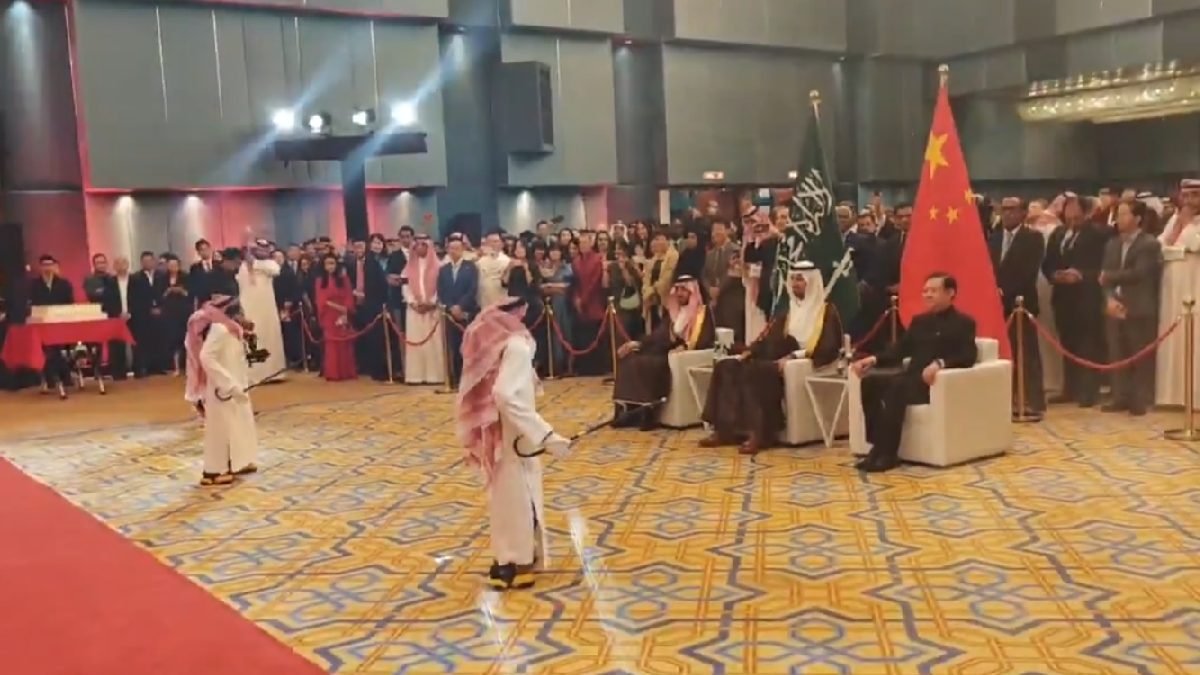
The performance was held at the Cultural Palace inside Riyadh's Diplomatic Quarter at a reception to celebrate the 77th anniversary of the People's Republic of China. It was attended by Saudi and Chinese officials such as Riyadh Region Mayor Prince Faisal bin Abdulaziz bin Ayyaf and Chinese Ambassador to Saudi Arabia Chang Hua.
The robots in traditional Saudi dress added to the diplomatic gathering and brought a different technological aspect to the diplomatic meeting. The humanoid robots were dressed in thobes and ghutras, as men in Saudi Arabia and the Arabian Gulf wear. Their performance of Ardah, a dance associated with Saudi heritage and ceremonial occasions, was one of the focal points of the event.
Chinese Humanoid Robots Take Centre Stage
Chinese Ambassador Chang Hua said that the robots were made in China and came with the Chinese Embassy to represent their capabilities in China and were brought in for the reception in order to show the robots to display them at the reception. He described their performance as an enjoyable part of the evening and thanked the guests for attending the anniversary.
The demonstration illustrated the increasing capabilities of humanoid robots, especially that of modern robots that can mimic synchronized physical movements. Performing a traditional dance is a very controlled movement, balance, and synchronization process that is crucial in the context of robotics companies and technology developers, so such demonstrations are a vehicle for showing off the progress of humanoid machines.
The use of Saudi clothes and a culturally significant performance also provided a diplomatic and cultural element to the demonstration. Instead of presenting the robots only as technological machines, the performance connected Chinese technological development with an important part of Saudi heritage.
أقامت سفارتنا مساء اليوم حفل استقبال للاحتفال بالذكرى السابعة والسبعين لتأسيس جمهورية الصين الشعبية. ونعرب عن شكرنا للأصدقاء على تشريفهم بحضورهم. وقدّمت الروبوتات المصنّعة في الصين عروضاً مبهرة تركت أثراً بالغاً في نفوس الحاضرين. pic.twitter.com/xleMfQaNG3
— Chang Hua (@AmbChangHua) September 28, 2026
What is Saudi Ardah?
The Ardah is one of Saudi Arabia’s most familiar traditional dances. It is performed at weddings, festivals, and other ceremonies. With swords and traditional music and rhythmic chanting, performers are usually moving in a coordinated fashion at the same time.
The dance is very connected with Saudi culture and is presented in official ceremonies and national celebrations there. Its inclusion in the robot demonstration made the performance so special.
The humanoid robots had to imitate Ardah’s movements as the cultural traditions were different from modern robotics. Videos of the performance have attracted the attention of people who saw this combination of heritage and advanced technology.
Technology Meets Saudi Tradition
The Riyadh demonstration is one of the more public examples of humanoid robots being presented in the mainstream. Although robots have long been employed in factories and controlled environments, in recent years humanoid robots are being developed to walk, gesture, interact with people, and perform increasingly complex physical tasks.
Dance demonstrations are especially useful for showing those capabilities because audiences can immediately observe movement, coordination, and balance. The Riyadh performance provided a culturally specific setting in which those abilities could be demonstrated.
More broadly, it also laid bare the relationship between China and Saudi Arabia, and how technology, investment, trade, and cultural exchanges are increasingly visible. A Chinese robotics show with Saudi traditional dress and dance was a symbolic meeting point between the two countries’ technological and cultural identities.
The presence of senior officials also added to the demonstration. Riyadh Region Mayor Prince Faisal bin Abdulaziz bin Ayyaf and Ambassador Chang Hua were among those who were present as the robots performed for guests in the Cultural Palace.
Robots continue to attract all the world’s attention.
Humanoid robots have become more and more a part of global technology demonstrations, and companies and research organizations are looking at their applications in manufacturing and logistics, entertainment, and public interaction.
The Riyadh performance shows that these robots can also be used to perform for cultural displays. The robots did a familiar traditional dance while wearing traditional clothing, and the robots provided guests with a great example of how quickly robotics technology is evolving.
The performance also demonstrates how robots are now regularly performed in public demonstrations to present technological developments to all. To viewers, watching humanoid machines perform the Ardah in Saudi attire was an unexpected mixture of artificial intelligence, robotics, and cultural heritage.
As humanoid robotics continues to develop, demonstrations such as this are likely to remain a popular way of introducing the technology to the public. In Riyadh, the unusual performance succeeded in drawing attention by bringing together Chinese-made humanoid robots, Saudi cultural traditions, and a major diplomatic celebration.







Comments