
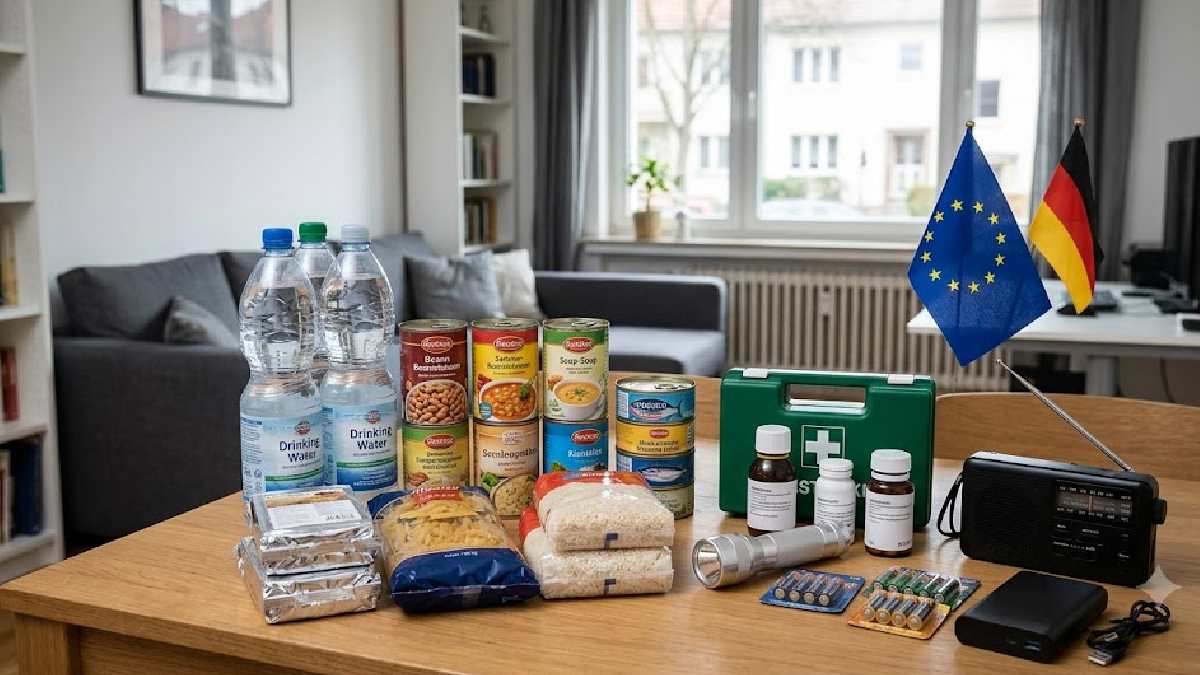
European citizens should prepare for emergency supplies of food, water and medicines at home, governments across Europe are urging. The recommendations come as extreme weather events, cyberattacks, geopolitical tensions and a loss of critical services are on the rise.
The aim is to be able to keep families up to date if the day-to-day is interrupted. There’s no indication to say that a major crisis will happen as officials are not saying that. Instead, the advice is to be able to manage basic needs on their own in the event of an emergency.
Why Europe is so focused on emergency preparedness
Governments are looking at the consequences of the various threats in relation to electricity supply, transport systems, communication networks, healthcare services and access to essential goods.
Natural disasters are one of the major concerns. Floods, wildfires and severe storms can disrupt transport routes, damage infrastructure and leave communities temporarily cut off from essential services. But having basic supplies at home can help families manage until help arrives.
Geopolitical tension has also influenced preparedness discussions. Russia’s war with Ukraine makes it clear that critical infrastructure should be kept safe and civilians should be prepared for any unexpected disruption.
If banking systems, telecommunications and electricity networks are affected, even if homes and buildings are physically intact, then we are at risk for cyber attacks. Food, water and medicines are among the most essential items for emergency supply. They provide a long shelf life for canned or dry foods and some food on hand in case shops are closed and supply chains are disrupted.
Water storage is just as important since disrupted public water systems could make it difficult to get safe drinking water. Families should follow official recommendations on the amount of water to store and how to keep it safe.
Medicines are also important. People who depend on regular prescription medication should plan ahead to avoid running out during an emergency. Basic first-aid supplies, hygiene products and other personal necessities can also prove useful.
A flashlight, spare batteries, a battery-powered radio, a power bank and copies of important documents can also be useful for households in case of power outage or a breakdown in communication.
Why the 72-hour recommendation matters
Emergency preparedness guidance in several European countries suggests that if essential services were suspended, people should know if they could manage on their own for at least 72 hours.
Emergency responders and public authorities can use this time to assess the situation and organise assistance. Recommendations are different for different countries and residents should follow national and local authorities’ advice.
Building an emergency kit does not necessarily require a big financial investment. Parents can slowly collect supplies (food, medicines, batteries, etc.) on a regular basis while shopping and check them regularly to replace expired food, medicines and batteries.
Families are encouraged to plan ahead. Individual household needs should be taken into account as emergency planning should take into account children, elderly people, people with disabilities and pets.
Families can also know how to communicate with each other if mobile networks are down. If phones are down, having the right numbers and the information you need to get help will help you to respond calmly when you don’t have the usual telephone numbers to reach out when services are down.
Finally, Europe’s growing emphasis on emergency preparedness is designed to encourage practical planning rather than fear. It is by having readiness at hand and by knowing safety guidelines that families will be able to manage temporary disruptions.
The overall message is simple: emergencies can never be predicted, but if families take some pre-emptive measures in advance, they will be able to protect their well-being and to deal with unexpected situations.






Comments