
At least 46 people were killed after two high-speed trains collided in Spain’s province of Toledo, in which several people were injured, and an emergency response became a major emergency response today, after the accident near Urda, between the towns of Mora and Orgaz, on one of Spain’s main train routes between Madrid and the southern region of Andalusia.
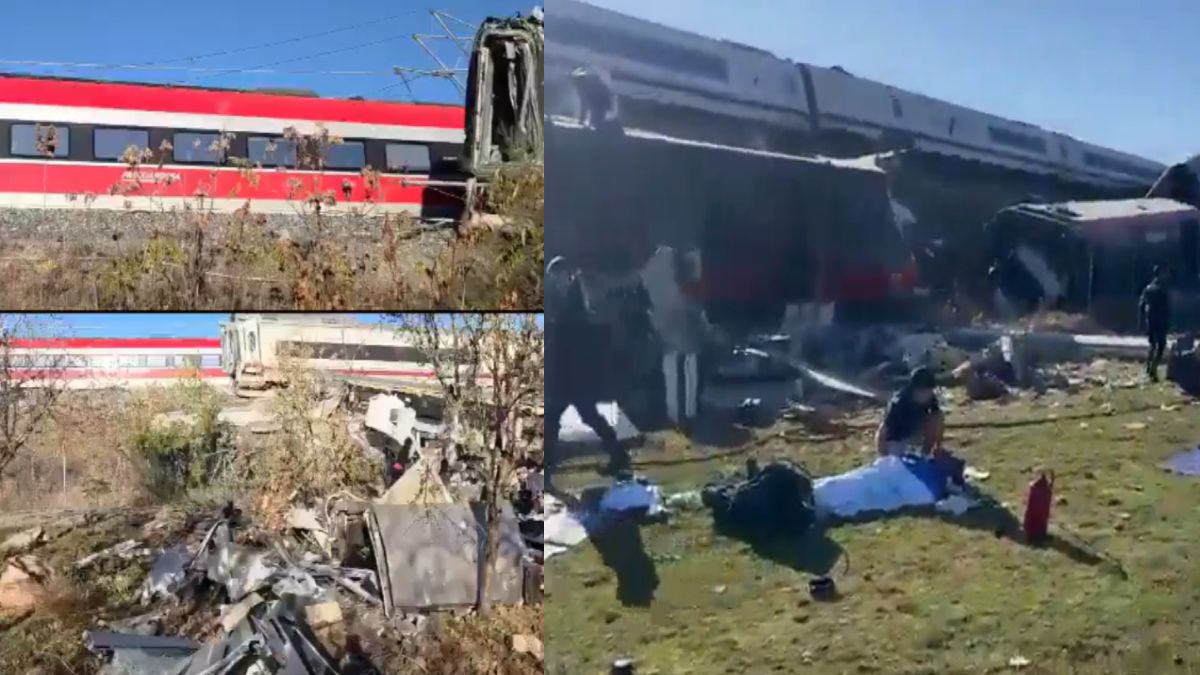
Emergency services rushed in to save passengers, treat the injured and assess the full damage. The exact number of people who died and were injured may be lower, and the number of people who were injured will be based on the investigation of the crash and the information that authorities will get at the time.
According to local media, the collision involved a Renfe-operated high-speed train and an Iryo train travelling in the Madrid-Andalusia line. Spain's railway infrastructure operator Adif confirmed that train services were suspended after a rear-end collision between the two trains. The accident took place at 8:54 am local time on a fast train.
According to emergency services information, two carriages of the Iryo train were derailed during the accident. Some of those carriages fell down an embankment, and rescue operations could be complicated, with passengers being kept in damaged coaches.
The crash triggered a mass emergency response which involved firefighters, civil protection teams, police personnel and medical workers from the region. Emergency teams were sent from Alcázar de San Juan and Orgaz fire stations, and medical evacuation helicopters and advanced emergency medical units were already operating in the area, emergency services told people during this time.
Emergency services asked the local authorities to plan a sports facility to house injured passengers, said Manuel Galán, the mayor of Urda. Rescue workers worked to reach the injured passengers, bring them to medical attention and transport them to the hospital.
Two High-Speed Trains were involved in the crash
The trains involved were identified by train operator Renfe as a high-speed train and an Iryo. The collision occurred on the Madrid to Andalusia line, the main route for passengers travelling from Madrid to the Spanish capital and the southern destinations such as Seville. The railway operator and regional authorities said one train collided with the rear of another.
The impact caused significant damage and derailed carriages, according to early reports. Photographs of severely affected train coaches from media reports, they said, were reported to be in the vicinity of the accident site. But the exact sequence of events which led to the collision was not fully understood in the initial reports.
The trains, railway infrastructure, signalling systems and operational records would have to be investigated to determine what caused the crash. It would therefore be premature to ascribe any particular operator, employee or technical failure to the accident until an investigation is concluded.
Madrid-Andalusia High-Speed Rail Line suspended
Adif’s suspension of the Madrid-Andalusia high-speed railway line was announced as a result of the accident. A main route used by passengers to travel between Madrid and destinations in southern Spain was disrupted. Emergency teams were to work at the crash site, and the railway infrastructure was to be tested.
The disruption will cause travel to be delayed, and there will be problems for passengers who use the corridor. People are advised to monitor for announcements from railway operators and check on their journey to stations. Service will be restored only after rescue work is completed and technical checks and any repair work are done.
VIDEO: Victims seen lying on ground as massive emergency response continues after trains collide between Los Yébenes and Urda in Toledo, Spain; 39 killed https://t.co/s8OtrtFXmf
— Klaxon Wire (@KlaxonWire) October 28, 2026
The accident has also been a challenge for local authorities who are scrambling to coordinate emergency assistance and arrangements for those who were affected by the accident. Medical teams are working to treat those who are hurt, and authorities will need to identify those who were killed and inform their families. In a crash with multiple casualties and severely damaged carriages, that’s a process that can take time.
Investigation Underway to Establish Cause
The cause of the collision was not specified in the initial reports. Spanish authorities and railway officials will investigate how the two trains collided, and whether the signalling and safety systems were in place and if there were any technical as well as operational problems.
Investigators may look at the trains' onboard data, speed counts, communication logs and the condition of the tracks. The findings will be important for determining what caused the collision and for determining whether changes to railway operations or safety procedures are needed. Until the official results are available, any official report on the cause should be treated cautiously.
The accident has raised the pressure on railway safety and the emergency arrangements of high-speed networks. High-speed rail is a popular mode of transport in Spain, and if there is more than one passenger train at once, the accident could be catastrophic and emergency procedures are to be carried out in an instant by railway operators, police, firefighters and medical services.
Spain Faces a Major Railway Emergency
The deaths in the crash have made the collision a major emergency for Spain, and rescue efforts, casualty verification and the investigation on the job remain the top priorities. Information about the passengers will only come to the families as they receive official notifications from the authorities and railway operators. Emergency personnel are also working to ensure that injured passengers are provided with proper medical treatment and that the crash site can be thoroughly examined.
As the investigation continues, authorities are expected to provide further information about the casualties, the condition of the injured and the circumstances that led to the collision. Passengers travelling between Madrid and Andalusia should look at official rail service updates before making alternative arrangements. The tragedy near Urda has left communities awaiting answers, while the focus remains on supporting victims and their families and establishing how the deadly collision occurred.


Comments