
India has released four publications on biodiversity conservation, biosafety and access and benefit sharing at the 17th Conference of the Parties to the Convention on Biological Diversity (CBD COP-17) in Yerevan, Armenia.
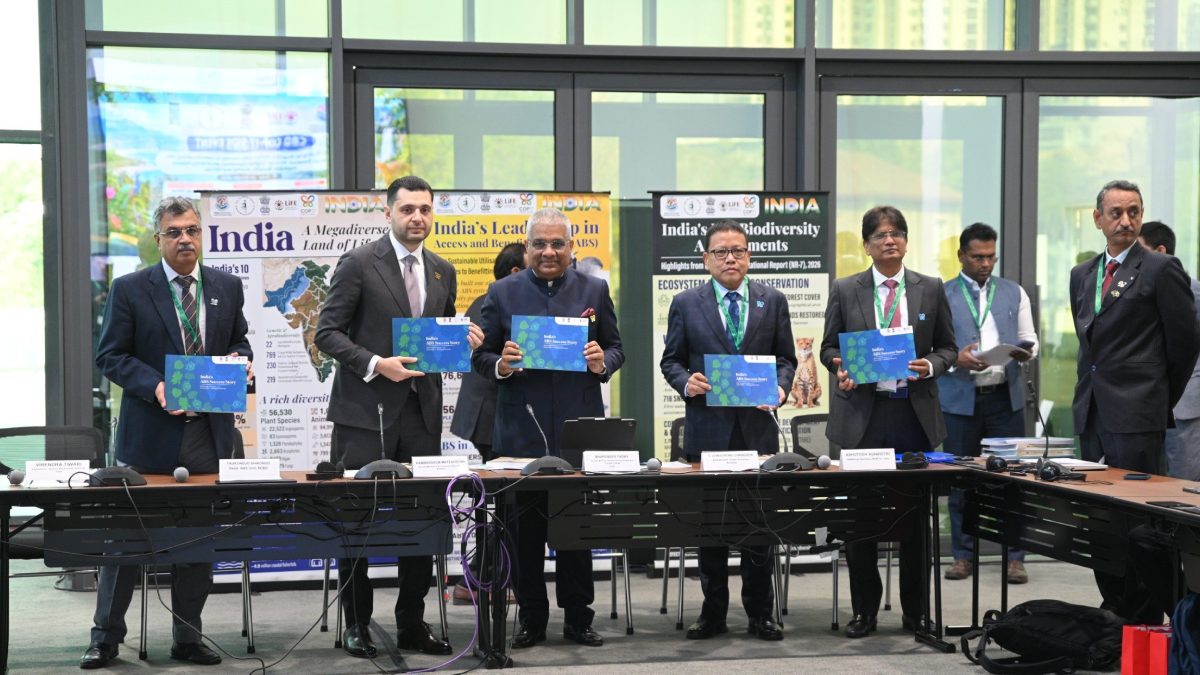
Union Environment, Forest and Climate Change Minister Bhupender Yadav used the international platform to push for the implementation of global biodiversity commitments through sustainable financing and measurable conservation results.
The announcement, made on 28 October 2026, underlines India’s commitment to a better environmental governance model and to expanding international cooperation to protect ecosystems and ensure that the benefits of biological resources are shared fairly.
The four publications were released during a side event, “From Policy to Practice: Advancing India’s Biodiversity Commitments through Innovation, Finance, ABS and OECMS.”
The event was organised by the Ministry of Environment, Forest and Climate Change in partnership with India’s National Biodiversity Authority (NBA) and United Nations Development Programme (UNDP).
The meeting also included Armenia’s Environment Minister and representatives from the Convention on Biological Diversity Secretariat, which was the opportunity to discuss how national conservation policies can be put into practice.
The first paper is I-OECMs 2026: Guidelines for the Designation of India’s Other Effective Area-Based Conservation Measures (i.e. conservation measures not just for national parks and wildlife sanctuaries).
Other landscapes can also help to protect habitats and species and clear definitions for such areas will help India in doing so and will also help to add to its commitment to the global biodiversity agenda.
The second publication the 5th National Report on the Cartagena Protocol on Biosafety indicates India’s approach to reporting and responsible biosafety governance.
The Cartagena Protocol is an international agreement under the Convention on Biological Diversity that addresses the safe handling, transport and use of living modified organisms resulting from modern biotechnology, especially where they may affect biodiversity and human health.
National reporting enables countries to communicate their progress, enhance transparency and identify places where institutional support or regulatory attention may be needed. This report highlights India’s focus on science-based decision-making and responsible oversight of biotechnology.
The third publication, The Convention on Biological Diversity Handbook: Reference Guide and Indian Perspective, aims to make the international biodiversity framework easier to understand.
The Convention on Biological Diversity is the basis of international cooperation in biodiversity conservation, sustainable use of natural resources for the common good of all and equitable distribution of genetic resources for future generations.
Through reference guide and Indian perspective, the handbook aims to help inform participation and the continuation of international biodiversity partnerships and work in the community and to meet the international biodiversity commitments. These resources can help officials, researchers and other stakeholders better understand the policies and processes involved in global environmental negotiations.
The fourth publication, India’s ABS Success Story, demonstrates the country’s experience with Access and Benefit Sharing (ABS). This principle is to ensure that the benefits of the resource utilisation in genetic resources are shared fairly and equitably with those who have knowledge and stewardship that are important to the preservation of biological resources. The Nagoya Protocol has international applications to this principle.
ABS is particularly important in India as it relates to biodiversity conservation, traditional knowledge, research and commercial use of biological resources. Better benefit-sharing practices can guarantee that communities receive a fair share of the benefits and encourage a sustainable use of nature.
Bhupender Yadav told the gathering that pursuing ambitious biodiversity targets is only the beginning. Countries must also develop the capacity of the implementation and resource mobilization to move the system forward so that sustainable conservation is achieved.
India releases Four Key Publications on Biodiversity Conservation, Biosafety and Access and Benefit Sharing at CBD COP-17, in Yerevan, Armenia. @byadavbjpI calls for translating Global Biodiversity Commitments into Effective Implementation, Sustainable Finance and International Cooperation. 🗒 https://t.co/YNz839p09E @PIB_India @moefcc #BiodiversityConservation #Biosafety #BenefitSharing #CBDCOP17 #COP17
— DD News (@DDNewslive) October 28, 2026
“Biodiversity, people’s livelihoods, traditional knowledge all need to be linked,” he said, and that environmental protection and economic growth should complement each other as people are taking care of the world’s environment. He also spoke of the Lifestyle for Environment (LiFE) model, which promotes sustainable living and responsible consumption as part of a wider conservation effort to keep the world out of harm’s way.
India’s message was on sustainable and predictable financing. Conservation commitments require long-term resources for habitat protection, scientific research, institutional capacity, community participation and monitoring. International cooperation is just as important in order for countries to exchange knowledge and for them to access technology and finance for that reason.
Yadav called for cooperation that addresses national interests and for countries to learn from successful conservation methods and to be able to share their experiences and solutions for different states.
The minister’s message is consistent with the wider objectives of the Kunming-Montreal Global Biodiversity Framework to halt and reverse biodiversity loss through coordinated action.
The 2026 COP-17 meeting in Yerevan will take place on October 19 to 30 and the participants will be from the government, scientists, international organisations and other partners to assess and enhance the implementation of the programme.
By publishing the four publications, India has shown the significance of practical guidance, transparent reporting, accessible knowledge and equal benefit sharing to enhance the protection of biodiversity. Now the task is to convert policy to real-world practice and make conservation work for the ecosystem, communities and future generations.






Comments