
The FAA has lifted the nationwide ground stop that grounded departing flights in all 50 states on Nov. 13, 2026 after a major telecommunications outage hit air traffic control operations across the country. Thousands of flights were affected as passengers were stranded at airports and airlines canceled or delayed services.
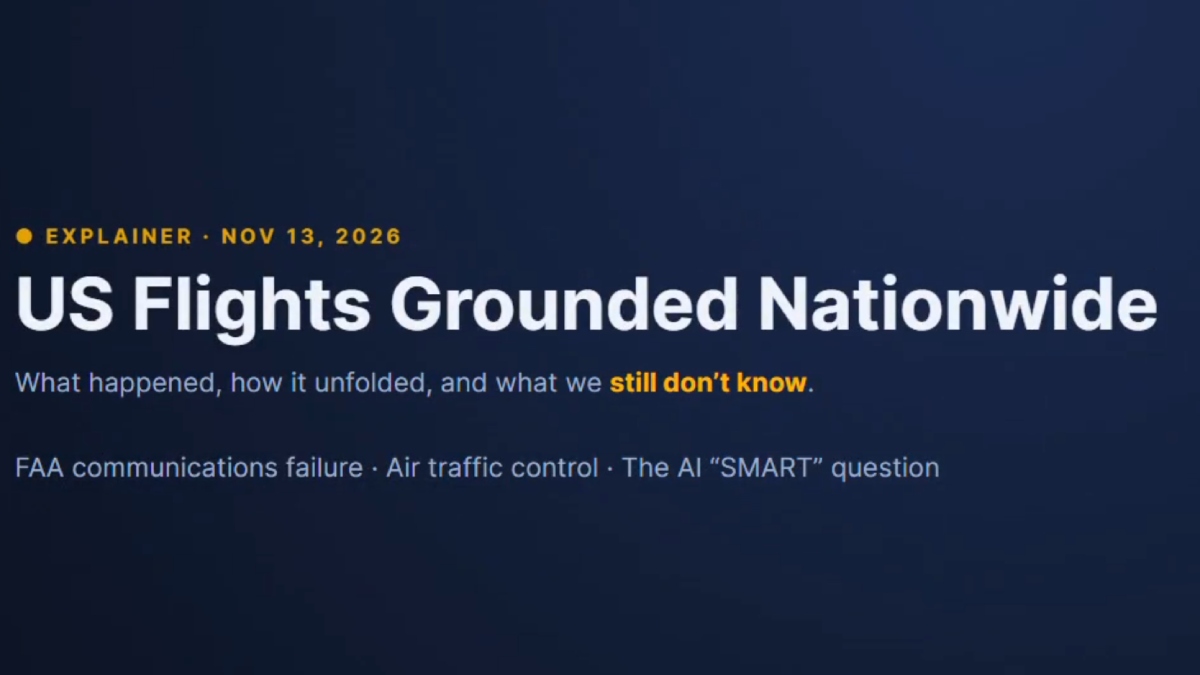
Reuters reported that over 6,600 flights were cancelled and about 8,600 delayed during the disruption. That’s more than 15,000 affected flights in total.
While the FAA lifted the ground stop on Friday evening flight operations will take time to get back to normal. Airlines still have displaced aircraft, crew scheduling issues and passengers waiting for alternative travel arrangements.
FAA Lifts Nationwide Ground Stop After Hours of Disruption
The FAA put the nationwide ground stop in place on Friday afternoon (13 November) after telecommunications problems hit air traffic control centres across the country.
The restriction was put in place at around 3:54 pm Eastern Time as a precautionary measure.
During the ground stop departing flights were temporarily not allowed to take off from airports across the US. Aircraft already in the air were allowed to continue on their route and land safely.
🚨 US GROUNDS FLIGHTS NATIONWIDE AFTER FAA SYSTEM FAILURE; AI AND CYBERATTACK INVESTIGATIONS BEGIN. -> Nearly 7,000 flights were delayed or cancelled. -> DHS is investigating whether AI or a cyberattack played any role. -> The nationwide ground stop was lifted after around 4 hours. No cyberattack has been confirmed yet.
— Kashif Raza (@simplykashif) November 14, 2026
US Transportation Secretary Sean Duffy said American airspace reopened at about 8:15 pm Eastern Time.
But he added that lifting the restriction would not immediately return normal flight schedules: Airlines needed time to reposition planes, arrange crew availability and clear up the backlog of delayed passengers.
The FAA also said systems had been tested before flights could resume.
Around 15,000 Flights Cancelled or Delayed
The outage caused widespread disruption across the American aviation network.
Reuters said more than 6,600 flights were cancelled and about 8,600 delayed which means more than 15,000 flights were disrupted.
Not only passengers at major airports were affected. Airlines also had to deal with aircraft and crew members that couldn’t get to their destinations.
Some aircraft were diverted or returned to departure airports after the ground stop was announced.
The disruption also affected international travel some overseas aviation authorities adjusted or suspended departures bound for the United States.
What Caused the FAA Ground Stop?
The FAA said the disruption was caused by a telecommunications outage that affected air traffic control communications.
“We detected instability in radar and communication systems at about 3:36 pm Eastern Time,” said US Transportation Secretary Sean Duffy.
The systems affected are used by air route traffic control centres to coordinate aircraft travelling between airports across the country.
The communication breakdown made it difficult for controllers who maintained safe separation between aircraft and managed air traffic.
The authorities decided to suspend the departing flights until the systems could be tested and their reliability established.
The technical cause was not known yet after the incident.
Was the FAA Outage Caused by a Cyberattack?
The outage raised questions about the security and reliability of America’s aviation infrastructure.
However, US Homeland Security Secretary Markwayne Mullin said there was “no indication” that it was a deliberate attack.
Officials said it was a telecommunications outage and investigations were continuing to determine the cause.
Authorities also addressed speculation that the incident was related to FAA’s new artificial intelligence-based air traffic management tools.
The company behind the new SMART system said its technology was not responsible for the ground stop.
So the incident should not be called a confirmed cyberattack or an AI system failure.
Why did the FAA stop flights across the entire United States?
A national ground stop is an exceptional measure used only when aviation authorities identify conditions that could compromise flight safety.
Air traffic controllers use communication systems to coordinate aircraft movements, give instructions and keep planes at safe distances from each other.
When these systems fail in large numbers, controllers may not have reliable information or communication capabilities to control normal traffic volumes.
In those cases stopping departures temporarily can help keep additional aircraft from entering an already disrupted airspace.
The FAA’s decision was therefore made as a precaution while technicians examined the telecommunications problem.
When Will US Flight Operations Return to Normal?
Although the FAA lifted the nationwide ground stop on Friday evening, the effects of the outage will continue beyond that first disruption.
Airlines need to restore their schedules, reposition aircraft and make sure pilots and cabin crew are on their flights.
The sheer volume of cancellations and delays also means passengers may have to wait longer while airlines try to arrange replacement services.
Travellers have been advised to:
- Check flight status through airline’s official website or mobile app.
- Check departure times before going to the airport.
- Contact airlines about cancellations and alternative bookings.
- Check refund and rescheduling policies.
- Check airport announcements for changes in departure times.
Passengers with connecting flights should also check their revised itineraries as delays on one route may affect subsequent connections.
US Air Traffic Control System Faces Modernisation Concerns
The nationwide outage has brought back discussions about the state of America’s air traffic control infrastructure.
US Transportation Secretary Sean Duffy has said the ageing equipment and communication systems used to manage the country’s aviation network need updating.
The administration has pushed for big investments in upgrading air traffic control technology (a $50 billion modernisation effort is being proposed).
The latest disruption has prompted questions about the robustness of key aviation systems and what happens when infrastructure fails through technical problems.
Aviation operations rely on pilots, controllers and airport authorities to communicate properly. A widespread disruption would have consequences for passenger safety, airport operations and airline schedules.
Conclusion
The FAA has ended its nationwide ground stop after a telecommunications outage caused air traffic control operations in the U.S. to grind to a halt on November 13, 2026.
More than 15,000 flights were cancelled or delayed as a result of the incident, causing widespread disruption to passengers and airlines alike.
Although American airspace reopened on Friday evening, restoring normal flight schedules will take time.
The incident has also raised questions about the reliability of ageing air traffic control systems and investment in modern aviation technology. Authorities are still trying to work out what caused the outage and airlines are clearing the backlog and helping affected passengers.





Comments