
France is preparing to create a new literary prize for books developed through collaboration between human writers and artificial intelligence (AI). The Prix Pascal de Littérature IA will bring AI-assisted writing into the literary world and encourage discussion about the changing relationship between authors and technology.
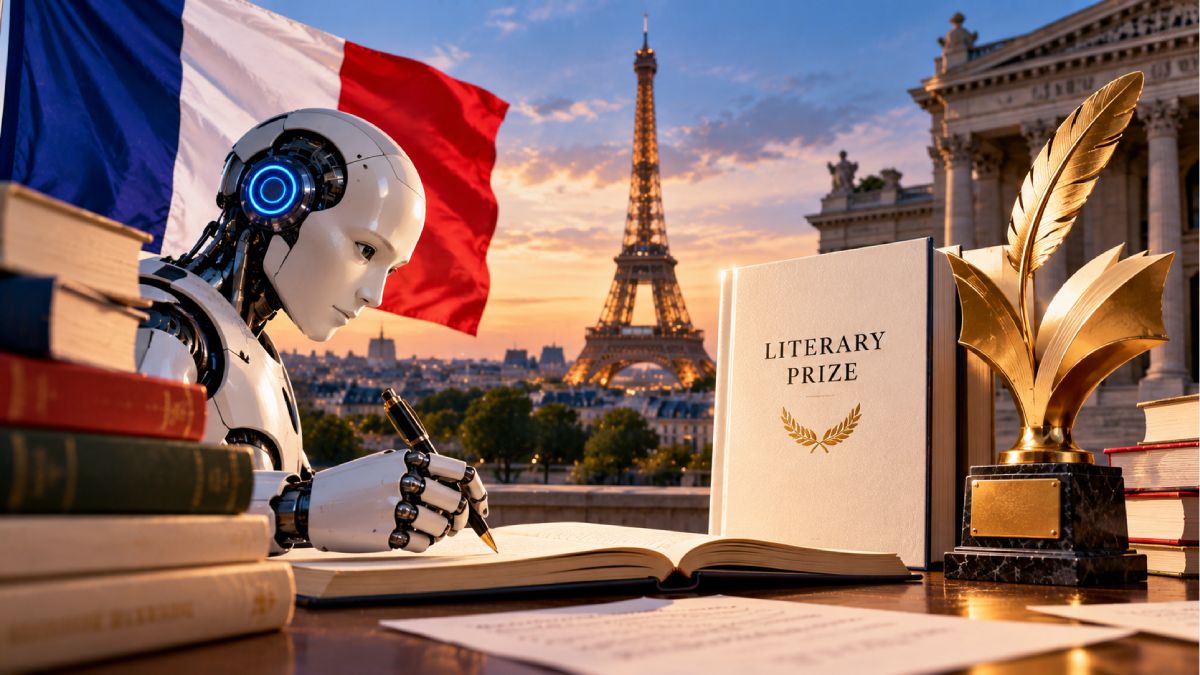
The first edition of the award is planned for 2026 and applications will open on November 2. The competition is open to French writers from all over the Francophone world and applicants do not have to have a publishing house to participate.
Unlike a literary prize that has typically recognised works written by humans, the Prix Pascal will focus on the quality of literary works co-authored by humans and AI. The prize is to recognise literature, not just to show the technological advancement of technology, the prize organizers have said.
The winning manuscript will receive a financial award and publication opportunity.
What is the Prix Pascal Literary Award?
The Prix Pascal de Littérature IA is a new literary prize that will recognise an outstanding work created using artificial intelligence.
The award is aimed at answering a fundamental question in the publishing industry: what does authorship mean when a human writer works alongside an AI system?
AI tools are being used in brainstorming, editing, developing characters, structuring stories and writing text. They have created a lot of questions about creativity and originality and the role of human authors in the writing process.
The Prix Pascal aims to answer these questions by establishing a platform for the literary works that are developed through human-AI collaboration.
The organisers also stated that the competition is not meant to be a technology contest. Rather, the literary quality and purpose of the submitted work will be the focus.
The award also encourages manuscripts addressing some of the major issues facing humanity, including environmental, social and ethical issues. It should be able to add something new to, to highlight or to solve those problems.
Who can apply for the AI literary prize?
The competition is open to applicants from all over the Francophone world. Writers do not need to be represented by a publishing house to submit their work.
However, the competition has specific requirements for manuscripts.
The entries must be written in French and must be unpublished. Each manuscript must contain approximately 300,000 characters, including spaces. Submissions are to be made anonymously so that the jury can judge these works fairly.
Applicants should also have to have technical information on how AI was used in the writing process.
This is to state the language model used, including relevant AI agents or prompts. This requirement should make the involvement of artificial intelligence in the creative process more transparent.
Entrants have to submit the manuscript, a short concept or pitch of the work and a technical file defining the AI tools and methods used.
These requirements differentiate the award from standard writing competitions and place transparency about AI involvement at the forefront of the submission process.
Application Dates and Selection Process.
The first edition of the Prix Pascal has a planned schedule from November to December 2026.
Application is due to open to the public on November 2 and submission will be due by the end of November. The jury will select 10 finalists at the end of the month.
The winner is to be selected at a ceremony in early December.
The author will receive a financial award and publication of the manuscript. The prize is therefore intended to provide recognition as well as a route to the publishing industry.
Since the award is new, the first edition will also offer an early indication of how literary judges assess works created with AI and what standards they may apply to human-machine collaboration.
Why France is recognizing AI-Assisted Literature?
The launch comes at a time when the publishing industry is at war with the use of artificial intelligence in creative work.
AI writing tools can help authors develop ideas, improve drafts and experiment with different narrative styles. But their use has also raised issues of originality, transparency, copyright and the potential impact on professional writers.
Some readers and publishers ask if a book written with significant AI assistance should be judged as much as a work written by a human person. Some say AI can be another creative tool and have another human person making decisions about ideas, structure, meaning and the final text.
The Prix Pascal provides a platform for considering these competing views in a formal literary competition.
It is particularly significant that it requires entrants to disclose AI models and prompts they used. Rather than leaving the extent of AI involvement unknown, the award seeks information about the process behind each submission.
The jury will still need to decide how literary quality should be evaluated when AI has contributed to the writing. Questions about originality, human intention, narrative coherence and the social or ethical value of a work may become important considerations.
The Competition over AI and Human Creativity.
The creation of the award comes at a time when AI’s position in literature is receiving growing attention.
There is now a lot of debate in French-language fiction about whether AI-generated writing is reliably identified, and whether allegations of AI use should affect an author's reputation.
However, AI-detection tools do not by themselves establish who wrote a text or how it was produced. Questions about authorship need to be framed in terms of evidence and writing process.
The Prix Pascal takes a different route: It encourages works that are co-written with AI and makes the applicants have to give their methods.
This could change the discussion from whether AI has been used to how it has been used and what the resulting work contributes to literature.
It may also push writers to try out AI, and be open on their creative process.
What can an Award like this mean to the publishing industry?
The Prix Pascal could be an interesting test case for publishers, authors and readers moving forward to use AI in writing.
If the award is so well received that strong submissions to it will help in the discussion of how literary institutions should respond to new writing technologies. It’s also likely to set the stage for disclosure and the ethical use of AI in creative work.
However, the long-term impact of the award will depend on the quality of the submitted manuscripts, the jury’s approach and the readers’ reaction and from the publishing world.
The prize does not remove the bigger issues of copyright, originality or human creativity. It rather sets up a space in which these issues can be brought to the fore through literature.
With applications set to open on November 2, 2026, the first edition of the Prix Pascal will provide an early glimpse of how France is working towards the intersection between artificial intelligence and literature.






Comments
Leave a Comment