
Violent unrest in France has become a key talking point in the U.S. political game heading into the Nov. 3, 2026, midterm elections and President Donald Trump and Republican leaders are using riots, looting and violence with police to hammer the Democratic Party’s policies.
Trump has framed the protests in France as a warning of what would happen to America if Democrats win the election and turn a European domestic crisis into a political issue in America’s increasingly polarised election campaign. Republicans are confronted with rising prices, economic distress and the administration’s handling of major national and international problems at a time when they are finding things very hard for Republicans to deal with.
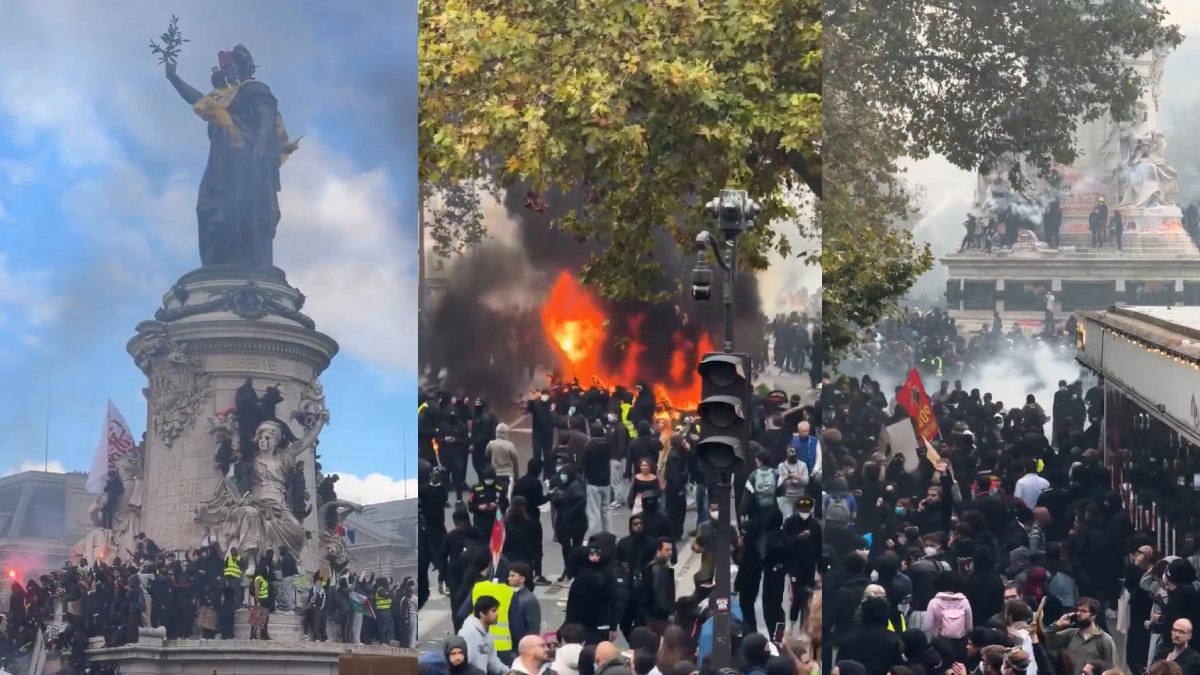
The unrest in France followed demonstrations over the rising cost of living, poor school conditions, teacher shortages and public services that are under pressure. What began as protests and demonstrations by students and other segments of the population grew into a broader expression of public discontent.
Although hundreds of thousands of peaceful demonstrations took place throughout the country, violent incidents took place in several cities, where attacks on public buildings, looting of shops, arson and clashes with police were among them. French authorities reported extensive arrests while businesses and public institutions were destroyed. The violence put a huge pressure on President Emmanuel Macron’s government, already struggling with political divisions and financial problems.
Trump seized on the situation at a campaign rally in Kansas on October 19, where he spoke alongside Republican Senator Roger Marshall in a closely watched re-election contest. France’s unrest, he said, was a sign of what Democratic policies could do and that Republicans in the U.S. could be in trouble. He used images of burning buildings and street violence to build his message on immigration, law and order and what he calls the dangers of left-wing politics. But Trump did not provide evidence of the kind of unrest that would be generated if Democrats were elected president.
Republican leaders have echoed Trump's argument, pointing to the French crisis to criticise immigration policies and the political left. House Speaker Mike Johnson and others have seen the violence as a warning of what they think might happen under Democratic leadership.
The messaging connects events abroad to common themes in American electoral politics, border security, policing, immigration enforcement and public order. For Republican candidates in tight races, the unrest is a vivid example for speeches and ads. But the political interpretation of the French events is still an open question, and it is that the causes of the violence cannot be boiled down to a single party, ideology or community. We have heard from people who say that the demonstrations were initially driven by issues about living costs, education and public services and violent acts were related to different circumstances and individuals.
The issue also shows Macron’s problems as French politics nears its next presidential election in 2027. The unrest has galvanised criticism of the president at a time of budget cuts, political fragmentation and public discontent with his government. Opposition figures have criticised the government’s response, and far-right leader Marine Le Pen may benefit politically from security fears and poor living standards.
French authorities have introduced curfews in affected areas and have said they are investigating potential failures in intelligence collection and police preparedness. The developments illustrate how domestic unrest can change political debates and open up new channels for opposition parties to challenge an incumbent administration. But France’s political conditions are very different from those in the United States, and so direct comparisons between the two countries are not as valid.
The immediate question is what effect Trump’s focus on France’s protests will have on Republican support and/or distract attention from domestic concerns when the November midterms come into play, and how we have to see if Trump will be able to keep voters’ interest and the president’s legislative agenda moving forward in the course of the rest of his term.
Republicans are attempting to keep the focus on immigration and public safety while Democrats can point back at what was at the heart of the French protests and ask why Donald Trump’s comparisons to the French were so much more than an international news story: for now the French unrest is a bigger story; it’s part of the political messaging of a big American election.
How this strategy can influence voter behaviour is uncertain, but it is an example of how international events can shape domestic politics and how so much of our politics can be used to promote domestic political arguments in an atmosphere of rising public anxiety about the economy, security and government performance at a time when the level of public anxiety about the economy, security and government performance is already high.




Comments
Leave a Comment