
The video of passengers getting off a boat in the face of rough waves at the ferry station where Valanga Port in Itbayat, Batanes, has led to calls for better port infrastructure and safer facilities to help passengers get on and off boats.
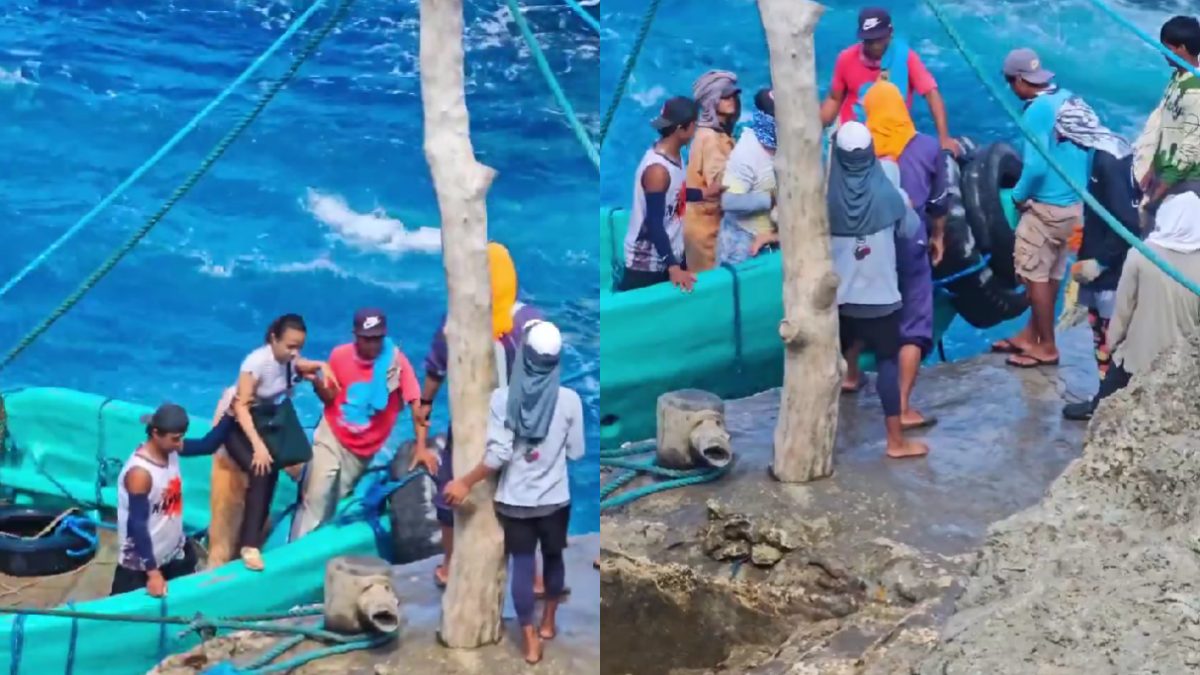
A social media post highlighted the problem and asked the Philippine government to build a breakwater or develop a suitable mechanical system (like a crane with a safety basket) for passenger transfers to be safer.
The incident makes resident and visitor problems more acute for the people using sea transport to reach Itbayat.
Passengers face difficulties when unloading at Valanga Port.
The footage shows the difficulty of unloading passengers when waves move the boat up and down close to the landing site. In such situations, passengers would need to carefully navigate the transfer from the vessel to the shore.
📍 Unloading passengers at Port VaLanga Itbayat, Batanes I really hope the national government will create a breakwater or improvise manual crane with safety basket to ease these waves for safety. 🥹🙏 https://t.co/K5ka4XKjZC
— M U L T I 🌟S T A N (@STAN_GIRLING) October 13, 2026
Children, older people, passengers who carry luggage and those with limited mobility are especially susceptible. A sudden boat movement or large wave that can cause a fall or injury might be an added risk.
Valanga Port is a port of entry to Itbayat, one of the island communities of Batanes in the north of the Philippines. It is a coastal area and it is prone to rough seas so travel and the transportation of supplies is difficult for ordinary people when the weather is bad.
The video has led social media users to wonder how this could be mitigated by additional infrastructure to reduce those risks and make passenger transfers a bit more manageable.
Calls for a Breakwater to reduce wave impact
A proposal that has been made in response to the footage is to build a breakwater at the port.
A breakwater is a coastal structure that helps reduce the force of incoming waves in a protected area. With the sea conditions and the design, it can assist in making the waters calmer for ships approaching or near the landing site.
For a port with large waves, a well-designed breakwater would likely improve berthing arrangements at sea to minimize loading and unloading the passengers and cargo.
Building one would require detailed engineering studies. The wave patterns, currents, seabed conditions, storm exposure, and environmental effects of construction would be investigated in the design to determine a good design.
The structure would also have to withstand the conditions around Itbayat, where rough seas can present significant challenges to coastal infrastructure.
Could a Crane With a Safety Basket Help Passengers?
Another suggestion in the social media post was to consider a mechanical passenger transfer system such as a crane equipped with a safety basket.
Such a system could be used to move people from a vessel to the shore when direct access is difficult. But it would have to be built and approved for passenger purposes, not cargo handling equipment.
Engineers would have to assess the boat’s movement, wave height, lifting capacity, emergency procedures, and the possibility of equipment failure. This type of system that is not suitable for the local sea conditions can create new hazards instead of improving safety.
Such a solution would therefore require a professional feasibility analysis, with passenger safety being the most important consideration.
Port Improvements Have Been Considered for Itbayat
The challenges facing Itbayat's ports are not new. The Philippine Information Agency reported in June 2022 that the Philippine Ports Authority and local officials had surveyed port sites in Itbayat.
The assessment also covers the existing facilities such as Valanga and Chinapoliran as well as the potential development of an alternative port at Tachimus on the island's eastern side.
The proposed alternative port was intended to offer a safer berthing option during the southwest monsoon, which is locally known as habagat. In this period, rough sea conditions can make docking at existing ports very difficult and disrupt the delivery of essential supplies.
The impact on emergency medical transport, food supply, tourism, and the local economy were also identified in the report.
For quite some time port accessibility and safety have been recognized as critical infrastructure issues for the island. However, the information we have does not indicate how well these improvements are being implemented.
Why Safety of Port Facilities is more important to local communities (Ferguson, 2015).
For islands dependent on the sea in remote locations, access to the ocean is key. Ports are used by tourists and also residents in the islands for work, education, medical care, and other purposes.
They are also vital for transportation of food, fuel, construction materials and emergency equipment. If rough seas take ships away from docking safely, communities will be delayed in getting much needed goods and services.
And improved passenger transfer facilities will also have benefits beyond tourism. Safer access may also allow residents to travel more reliably and reduce passenger and port workers’ risk.
At the same time, infrastructure projects in Batanes need to be well-suited to the coastal environment and the weather conditions. Any development that is proposed should be based on the specific situations and not a one-size-fits-all model.
Calls for Authorities to Review Passenger Safety at Valanga Port
The video has revived public conversations about what could be done to make passenger unloading safer at Valanga Port. Suggestions include a breakwater, better landing facilities and a passenger transfer system.
This will depend upon technical assessment, environmental considerations, funding, practical needs of the community.
For now, however, the footage has raised a serious problem for those who travel to Itbayat: reaching the island may be difficult in the sea, and getting passengers from boats to shore safely is a big problem.
A full review by the port and local authorities would not only help to determine what can be done but also how passenger safety can be improved over the longer term.





Comments