
The safety, rights and representation of Pakistan’s Hindu community have re-emerged in a new report on the condition of religious minorities in Pakistan. The report, entitled The Religious Persecution of Hindus in Pakistan, was presented by the UK-based diaspora group INSIGHT UK to the All-Party Parliamentary Group for British Hindus.
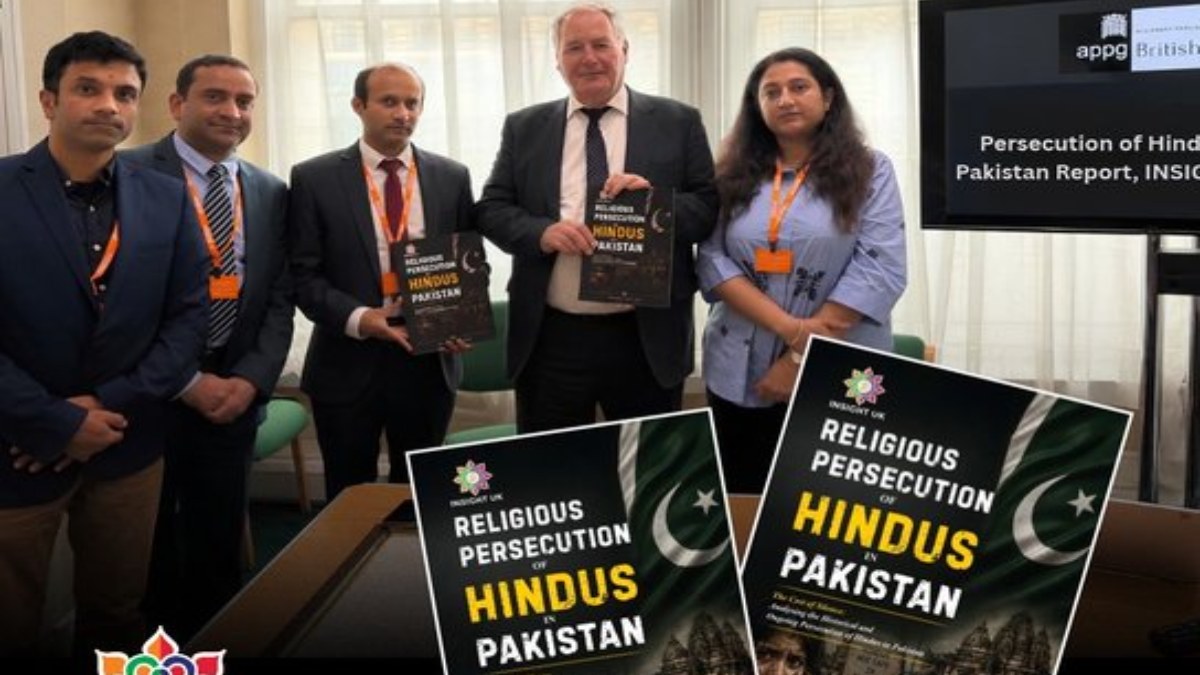
Historical population data and personal accounts of discrimination, violence, forced conversions, and threats against Hindus and other religious minorities are present in the report. Hindus (Hindu Jati) made up 14.6% of the population in the region that became West Pakistan in 1941 in the 1941 census, before the Partition of India. And their share of Pakistan's population is much lower than it used to be: the official census data shows 1.61% of the Hindu Jati population in 2023. (turn840897search0, turn840897search24)
Historical Population Figures Highlight a Dramatic Change
The 14.6% figure cited in the report comes from the 1941 census and refers to the territory which later became present-day Pakistan, not the whole of undivided British India. Partition in 1947 led to mass migration, communal violence and displacement, as millions of people crossed the new borders on religious grounds. And these events completely changed the demographic makeup of the region.
The report argues that the subsequent decline in the Hindu community’s share of the population must be taken into account as well as the historical experiences of displacement, alleged discrimination and restrictions on religious minorities. But population percentages over different census periods should be compared carefully because national boundaries, population totals and religious classifications have changed over time.
Pakistan’s 2023 census has about 3.87 million people in the Hindu Jati category. It has another 1.35 million people in the Scheduled Castes category at about 0.56% of the total population. Combined, these two categories constitute about 2.17% of the whole population. Thus, for the story’s headlines to be that Hindus make up less than 2% of the total population, we are still left to interpret them in the sense that only the Hindu Jati category is given, and there is a broader definition; we can also include Scheduled Castes.
Report Raises Concerns Over Discrimination and Religious Freedom
INSIGHT UK’s report describes a sustained pattern of discrimination and insecurity affecting Hindus in Pakistan. It cites communal violence, displacement of families and loss of ancestral property as reasons for the problems facing the community. It also highlights constitutional provisions that reserve the President and Prime Minister for Muslims, and says these barriers mean that no more than a minority of people from other faiths are given equal political representation.
Hindu places of worship are also threatened, the report says, and are difficult to build. A proposed Hindu temple in Islamabad has also been met with opposition and has been halted since protests in 2020. Rights of religion, protecting places of worship and the freedom to practise one's religion without fear are all issues that are at the heart of the national discussion on minority rights.
These allegations are part of a growing debate on the disconnect between constitutional guarantees of religious freedom and minority communities’ experiences. To assess the scale and the causes of incidents we need to examine evidence from communities that are affected and the official, government records, courts and human rights organisations.
Concerns Over Abductions and Forced Conversions
The report’s most grave concerns are about Hindu and Christian women and girls who are allegedly abducted, forcibly converted to Islam and married against their will. INSIGHT UK estimates that more than 1,000 women and girls from these communities are subjected to such abuses each year. The report says victims from economically disadvantaged backgrounds can face particular barriers when seeking legal assistance or protection.
The figures should be taken into account as estimates provided by the organisation rather than a nationwide count of all cases. But abduction, coercion, and forced marriage allegations raise profound questions about access to justice, protection of minors and the ability of vulnerable people to report abuse safely.
Human rights campaigners have repeatedly pointed out that investigations should be done, complainants should be supported, and when crimes are detected and punished, the criminals should be held accountable. And they say that individual allegations should be handled in a fair manner and safety and rights of the victims should be at the heart of the response.
Calls for Action from the United Kingdom
The report asks the UK government to make minority protection a larger part of its relationship with Pakistan. The report recommends that we raise the issue of religious freedom in bilateral negotiations, enhance protection of places of worship, support minority rights organisations and strengthen monitoring of the social and economic situation of religious minorities.
It also calls for greater attention to cases of alleged forced conversion and religious persecution, including the possibility of safe routes to protection for people at risk. The proposals are intended to encourage concrete steps rather than to rely on public statements about religious tolerance.
As such, the report will be formally made available to parliamentarians in the UK as part of the efforts to bring historical evidence and contemporary testimonies to policy. Its recommendations will be thoroughly debated by the UK government and other relevant institutions.
Census Data and Minority Protection Remain Central Issues
Population figures are a good starting point for understanding the position of Hindus in Pakistan, but percentages alone cannot tell why demographic changes have happened; migration, displacement, census definitions, and population changes in the general population are all important. The latest census shows why it is important for us to distinguish the Hindu Jati category from Scheduled Castes when looking at the size of the community in this regard also.
Aside from demographics, the larger question is if religious minorities can live safely, have equal opportunities, maintain their culture and practice their faith without discrimination. And the INSIGHT UK report has brought these concerns back into public through historical comparisons and accusations about the conditions of today.
The findings of the report and recommendations are likely to further debate Pakistan’s treatment of its religious minorities and international partners’ engagement in promoting reform. For the families of Hindu and other minorities who are at risk of violence, equal treatment under the law, justice, and the freedom to practise their religion with dignity are the key issues.




Comments