
A train derailed near Seville’s Padre Pío train station in southern Spain on Wednesday, October 28 and disrupted commuter services just hours after a tragic collision between two high-speed trains killed at least 68 people in the country. The C4 Cercanías commuter rail line was suspended as railway authorities took steps to address the derailment, the European Commission said.
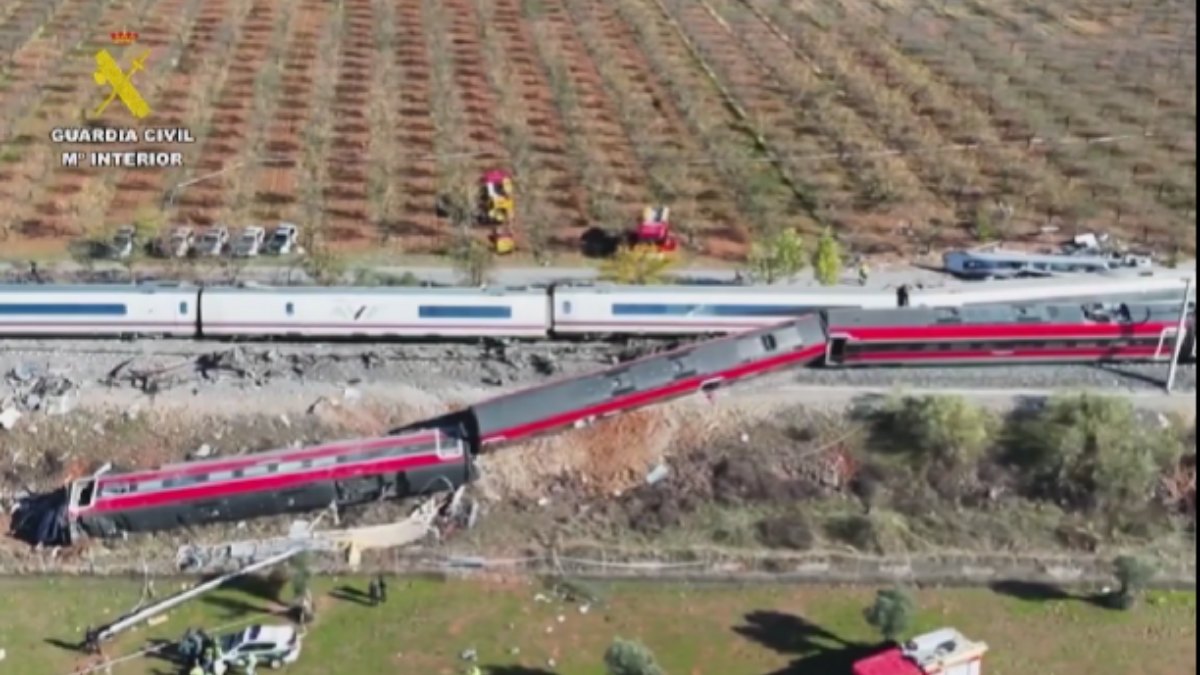
The original reports described it as a freight train. Spain's railway infrastructure operator, Adif, said it was a maintenance train whose axles came off the tracks in La Negrilla area near Seville. There were no injuries in the first reports on this incident.
The derailment added to concerns about rail travel in Spain following the fatal high-speed collision near Urda in the province of Toledo earlier the same day. But authorities have not claimed any link between the two incidents.
Train Derails Near Padre Pío Station in Seville.
The derailment took place near Padre Pío-Palmete station, part of Seville's Cercanías commuter rail network. According to initial reports, the train's axles also fell off the rails in the La Negrilla area, impacting railway operations in the surrounding section.
Adif confirmed that the incident disrupted services on the C4 line. Railway personnel worked to address the situation, but a clear timetable for restoring normal work was not available in the initial reports.
Drone footage shows mangled carriages following a high-speed train collision in Urda, 140 km south of Madrid, Spain, that killed at least 68 people and injured dozens more. Rescuers searched the wreckage for more bodies following Spain’s second deadly rail accident this year and Europe’s deadliest since 2013
— TRT Afrika (@trtafrika) October 29, 2026
Experts could not yet specify the cause of the derailment. So investigators will have to understand the circumstances surrounding the incident before determining if a technical, operational or infrastructure-related cause was involved.
The difference between freight train and maintenance train is still important because the descriptions differ. Adif's account identified the vehicle as a maintenance train.
Seville C4 Commuter Services suspended
The incident caused suspension of the C4 commuter rail line and affected passengers travelling through parts of Seville.
The C4 connects several locations in the city, including Santa Justa, Palacio de Congresos, Padre Pío-Palmete, Virgen del Rocío and San Bernardo. Disruption to the line can affect people travelling for work, education, medical appointments and connections with other transport services.
Passengers are advised to check updates from Renfe and Adif before traveling, since the length of the interruption and when the service was restored were not confirmed in the initial reports.
The derailment also raised fears that trips on Thursday, October 29 would be affected by it. Travellers are advised to check the status of their services rather than think the line has been reopened.
The incident occurred after a deadly high-speed train collision.
The Seville derailment occurred on the same day as another devastating collision between two high-speed passenger trains near Urda in Toledo province of Spain south of Madrid.
In a separate incident, a Renfe high-speed train collided with a stationary Iryo service in the Madrid-Andalusia route. At least 68 people are reported dead and around 80 injured, according to a report published on October 28.
The crash triggered a big emergency response, with rescue teams searching damaged carriages and hospitals treating injured passengers. Spanish authorities launched an investigation into the circumstances of the collision.
The railway infrastructure operator in the affected part of the country has suspended high-speed services on the affected corridor to conduct emergency operations and safety assessments.
The two incidents have put Spain's railway system under renewed scrutiny. But there is no evidence that the Seville derailment and the fatal collision near Urda were related.
Railway safety under renewed scrutiny
The incidents have brought to light railway safety, infrastructure maintenance and the procedures used to manage train movements.
Spain has a very extensive high-speed rail network as well as regional and commuter services. When an incident happens, the effects can be very far from the location and then on the schedule, connection and passenger confidence.
But the causes of individual rail incidents are different. In each case investigators need to consider what would be the reasons for each incident and why it occurred before deciding on mechanical failure, signalling systems, track conditions or decisions.
In the Seville case, the initial reports did not establish why the train's axles fell off the rails. Any assessment of responsibility or wider safety failures would therefore be premature.
What happens next?
Railways will have to assess the derailed train and the affected infrastructure before normal trains can proceed to service operations. It is expected that the C4 service will be restored only after work and safety of passenger traffic is confirmed.
As long as service in Seville is available, the people in Seville should follow official updates from Renfe and Adif for any news about service and any alternative travel plans are up-to-date with the services and travel options, it is important for commuters to know about services available and travel plans.
And investigators are also examining the separate fatal high-speed collision near Urda. The two events have created a difficult period for Spain's rail network but their causes and circumstances need to be evaluated separately.
For passengers, the most immediate priority is to get travel information and follow instructions given by railway authorities as services are restored.




Comments