
Taiwan is now calling China’s attempts to interfere in its democratic elections economic sanctions and targeting businesses that are linked with political candidates.
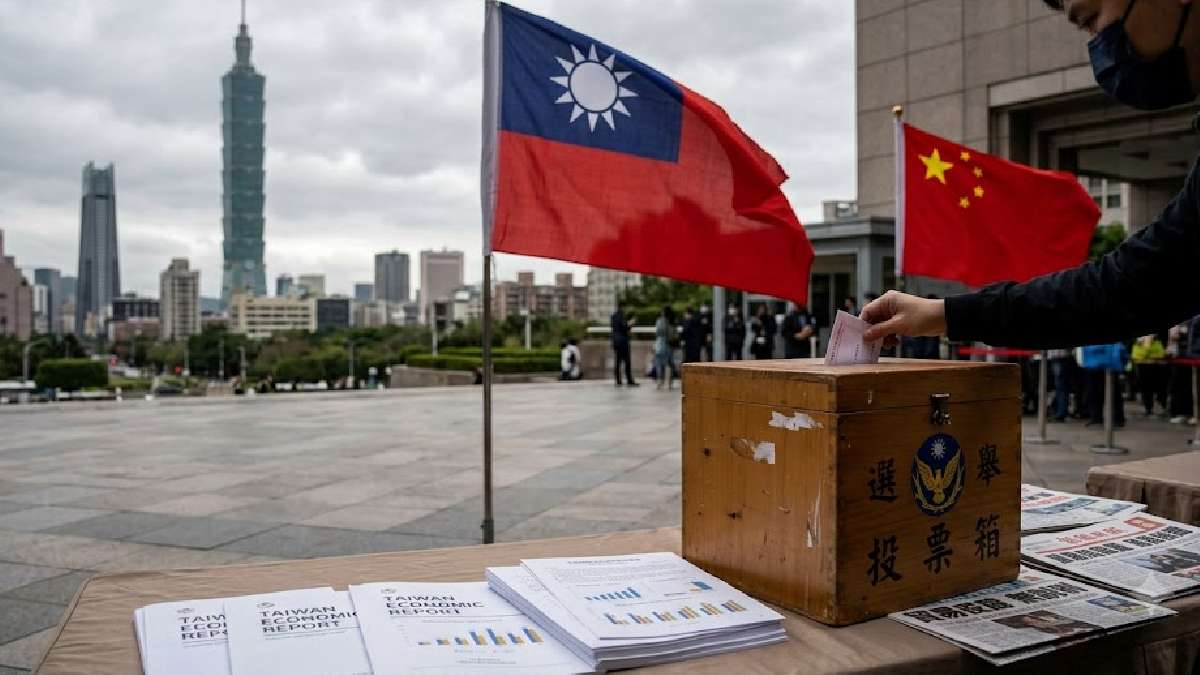
The accusation has raised fears in Taipei of Beijing’s increasing political and economic pressure ahead of local elections scheduled for November 2026.
China is using targeted media reports and punitive economic measures, the MAC said, to influence public opinion and put pressure on candidates it opposes. It’s an effort to intimidate Taiwanese society and interfere with the democratic electoral process.
The latest controversy centers on sanctions against a company linked to the father of Puma Shen, a DPP legislator and candidate in the Taipei mayoral election. China said VWAY Co., Ltd. would not be able to do business or cooperate with organisations, companies and individuals in mainland China.
China’s Taiwan Affairs Office claimed that the company was connected to Shen’s father Shen Tu-cheng, and that after sanctions were imposed on one of his businesses, he continued to work with Chinese firms. China had imposed sanctions on Sicuens International Co., Ltd. in June 2025.
Chinese officials have accused Puma Shen of supporting Taiwan independence and obstructing cross-strait exchanges. Beijing has also labeled him a separatist and imposed restrictions on him and his family members.
Shen’s campaign office, however, rejected that approach, arguing that the election should be decided by Taipei’s voters and not Beijing pressure. Such measures, the campaign argued, would not help China win public trust among Taiwanese residents.
Taiwan Raises Concerns Over Election Interference
Taiwan’s authorities believe economic restrictions and targeted media coverage could be used to shape voters’ perceptions of political candidates. The company’s management had been featured in a pro-Beijing Hong Kong newspaper just before China announced its new measures, the Mainland Affairs Council said.
Taipei views the sequence of events as part of a larger effort to exert political pressure on Taiwan during an election campaign. China and Taiwan are at odds about the island's political status and future relations with Beijing.
Taiwan governs itself democratically, while China claims the island to be part of its territory and has not ruled out using force to bring it under its control. Taiwan’s government rejects Beijing’s sovereignty claims and insists that its future should be decided by its people.
Disinformation Adds to Election Concerns
Taiwanese officials have also voiced fears of efforts to influence voters with disinformation, fake social media accounts and manipulated digital content. These kinds of methods would make it harder to discern fact from political propaganda during the campaign.
The concerns are part of a larger debate about how democratic societies can protect elections from external pressure. Economic sanctions might directly affect businesses, while misleading online content can influence public perceptions of candidates and political parties.
China has defended its actions in the latest case by saying that those who seek independence against Taiwan are using business activities to get a share of the mainland market. Beijing has said its actions have been to protect national interests.
The competing claims are emblematic of the continuing struggle between Taipei and Beijing over political power, economic relations and Taiwan’s political future.
As the Taipei mayoral election approaches, the controversy is likely to keep election security and cross-strait relations on the agenda. Taiwan’s accusations make it more difficult to guarantee that voters can make decisions without fear and intimidation, and China’s position goes to show its continuing opposition to political movements that back Taiwan independence.


Comments
Leave a Comment