
Jaipur: A fifth-generation Muslim family in Jaipur is carrying on a proud tradition by making the town’s famous 105-foot Ravana effigy for Dussehra.
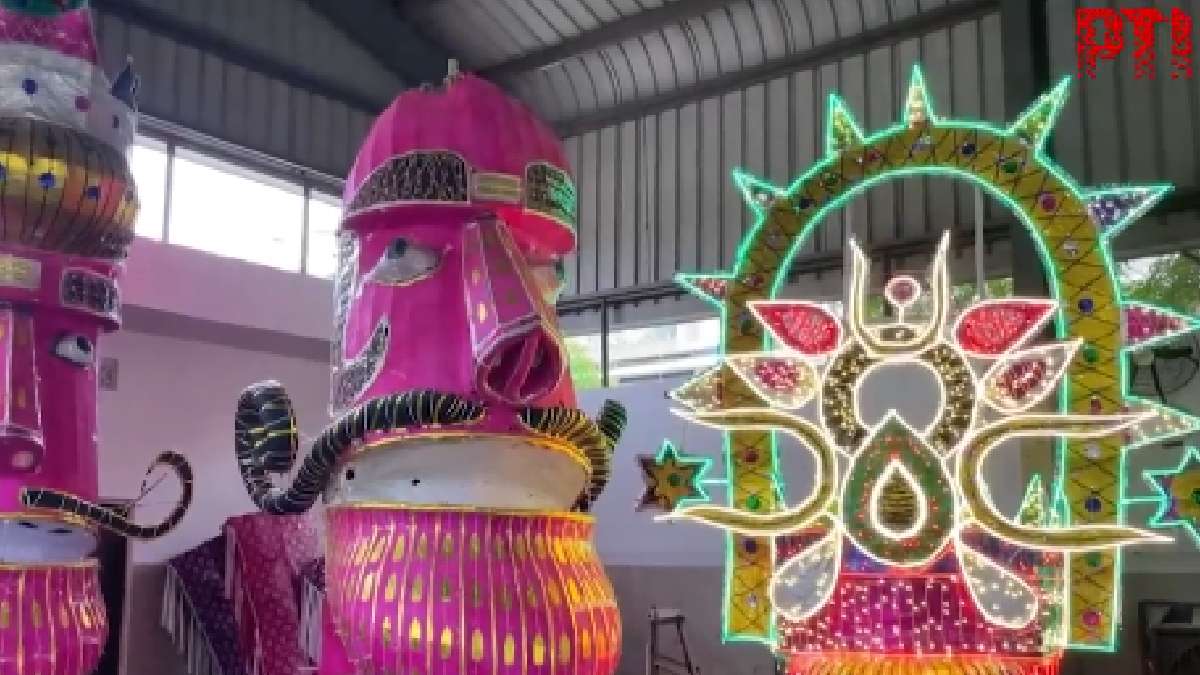
It speaks to the generations of work that have been done for decades to build the festival’s most iconic symbols, a tradition that combines culture and skilled labour and a tradition that has been passed down along with that of generations.
Chand Babu, a fifth-generation Ravana effigy maker, described how the family’s work has evolved from a modest 20-foot structure made by his grandfather to the towering 105-foot effigy created today. Weeks of preparation, coordination of multiple workers and dedicated craftsmanship are involved.
Chand Babu said that the tradition started with his grandfather who made the first Ravana effigy in the family, which was only 20 feet in height. As generations came along the structure grew, the work continued and so did the family’s craft.
Today, the family is associated with the creation of a 105-foot Ravana effigy, making the work an important part of Jaipur’s Dussehra preparations.
45 Days of Hard Work Behind the Effigy
The preparation process starts the day after Janmashtami, giving the family and its workers several weeks to complete the structure before Dussehra. Chand Babu said roughly 20 people work on the effigy and do work day and night to meet the deadline.
The entire process takes around 45 days. The building of an effigy of this size has to be planned and managed and carefully done so. Each stage must be completed just so that the structure is ready for the festival.
For the family, the work is more than a seasonal job. It’s a tradition that has been passed down over five generations. Chand Babu’s involvement shows how traditional skills are still relevant when passed on from one generation to the next.
The enormous size of the effigy also emphasizes how much work goes into planning for large public events. While you can see the mighty figure during the Dussehra celebrations, it takes weeks of labour to create it.
VIDEO | Jaipur: A fifth-generation Muslim family crafts Jaipur’s famous 105-foot Ravana effigy for Dussehra. Speaking about his family’s tradition, fifth-generation Ravana maker Chand Babu says, "My grandfather made the first effigy, which was 20 feet tall. Over the years, it grew from 20 feet to the 105-foot effigy we make today. Work begins the day after Janmashtami, with 20 members working here day and night. It takes 45 days to make the Ravana effigy, and I am part of the fifth generation to carry on this tradition." (Full video available on PTI Videos - https://t.co/bIyFWTfmBd)
— Press Trust of India (@PTI_News) October 17, 2026
A Tradition That Crosses Religious Boundaries
One of the most striking things about the story is the fact that the Ravana effigy is made by a Muslim family and so is that culture can be maintained by people of various religions.
Dussehra (Vijayadashami) is celebrated in many parts of India to celebrate the victory of good over evil. In many places, Ravana effigies are burned to symbolize Rama's defeat of Ravana in the Hindu epic Ramayana.
Artisans who are involved in the preparation of these effigies are vital in local celebrations. Chand Babu’s family helps preserve the craftsmanship of the festival’s traditions and all the other cultures over generations.
Their work is a glimpse of how cultural practices can connect communities beyond religious identities.
Five Generations Keep the Craft Alive
Chand Babu’s account portrays the journey of his grandfather’s 20-foot effigy to the 105-foot structure produced by the family today. The group of around 20 working for 45 days reflects the effort required to keep such a long-standing craft alive.
The family’s contribution in Jaipur’s preparation for Dussehra is the work of artisans that makes the festival memorable. Their five-generation legacy shows that traditional craftsmanship is still very much in the middle of India’s cultural celebrations.


Comments
Leave a Comment