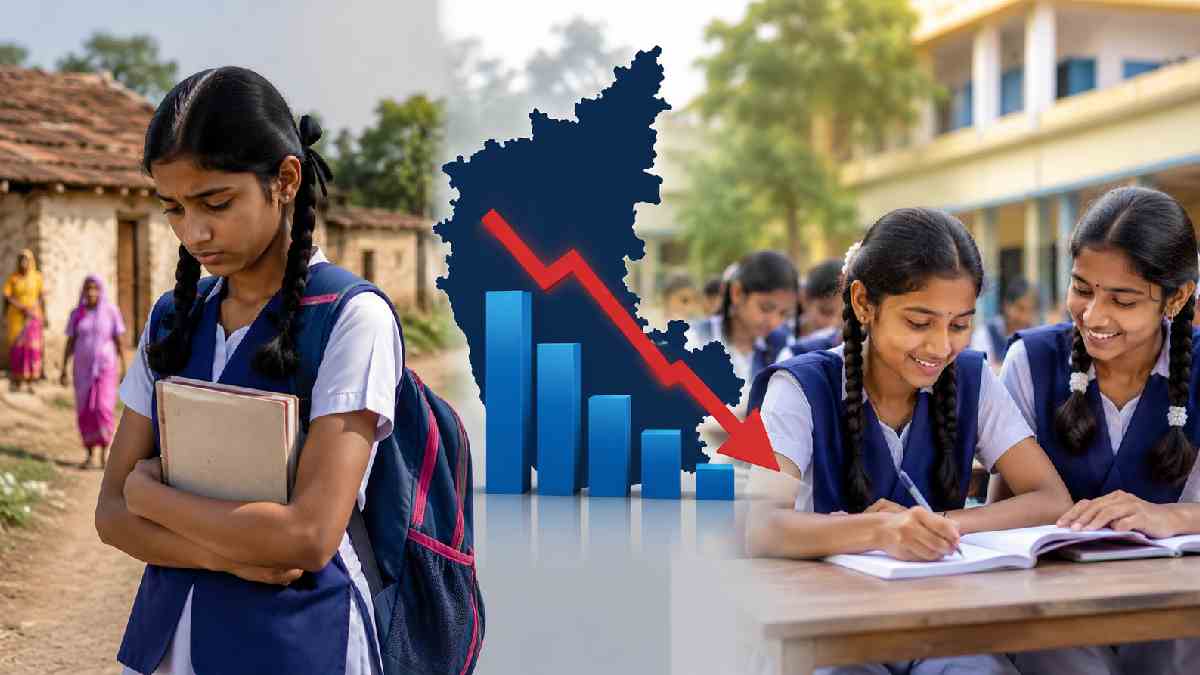
India is in a very worrying job situation in which educational qualifications no longer guarantee jobs.

In India, almost two out of three unemployed young people are graduates, according to recent data and labour market research, indicating a growing mismatch between higher education and job prospects.
For years, the youth population of the country has been one of its greatest economic strengths. But graduates, despite the increased access to colleges and universities, are not finding permanent jobs.
That paradox is a reflection of the structural problems in the labour market in India and not a lack of education.
Experts have many reasons for this trend. The greatest gap is between academic education and industry needs. Graduates leave college with theoretical knowledge but not with hands-on skills, communication skills, and experience employers want.
The other factor is the rapid pace of technological change. Automation, artificial intelligence, and digital transformation have changed hiring patterns in job opportunities.
New hires in technology-oriented sectors have emerged, but entry-level jobs have become more competitive or have completely disappeared.
India now also has the challenge of finding high-quality jobs for its expanding workforce. Each year millions of students graduate, but employment generation has not kept pace. So many young people are unemployed or take jobs that are below their qualifications, and underemployment is a result.
The situation is more acute in urban areas, where graduates prefer formal sector jobs with good pay and career growth. But the current number of jobs in this field is still low.
There are also skills shortages in manufacturing, construction, and small businesses, and they indicate job prospects’ expectations or qualifications do not match up.
Women graduates have a much more difficult task. Female labour force participation among educated youth is relatively low because of social barriers, workplace safety concerns, career breaks, and limited flexible work opportunities.
To overcome this employment paradox, policymakers, educational institutions, and industry leaders are focused on skill development, vocational training, apprenticeships, internships, and industry-academia collaboration.
Skill India, digital learning programs, and startup promotion are among the measures to help improve employability for students who have to learn practical, job-ready skills.
Entrepreneurship is also becoming a new career option. Government programs to encourage startups, innovation, and self-employment encourage graduates to create businesses rather than work traditional jobs.
Economists think that to solve graduate unemployment, there needs to be a holistic approach.
Improving the quality of higher education, expanding labour-intensive sectors, encouraging private sector investment, and strengthening job guidance services can help bridge the gap between education and jobs.
India’s demographic dividend is still a great advantage, but it can only be fully realized if young people have the necessary skills and access to productive jobs.
For the long-term development of the country and global economy, it is essential to tackle the graduate unemployment issue.