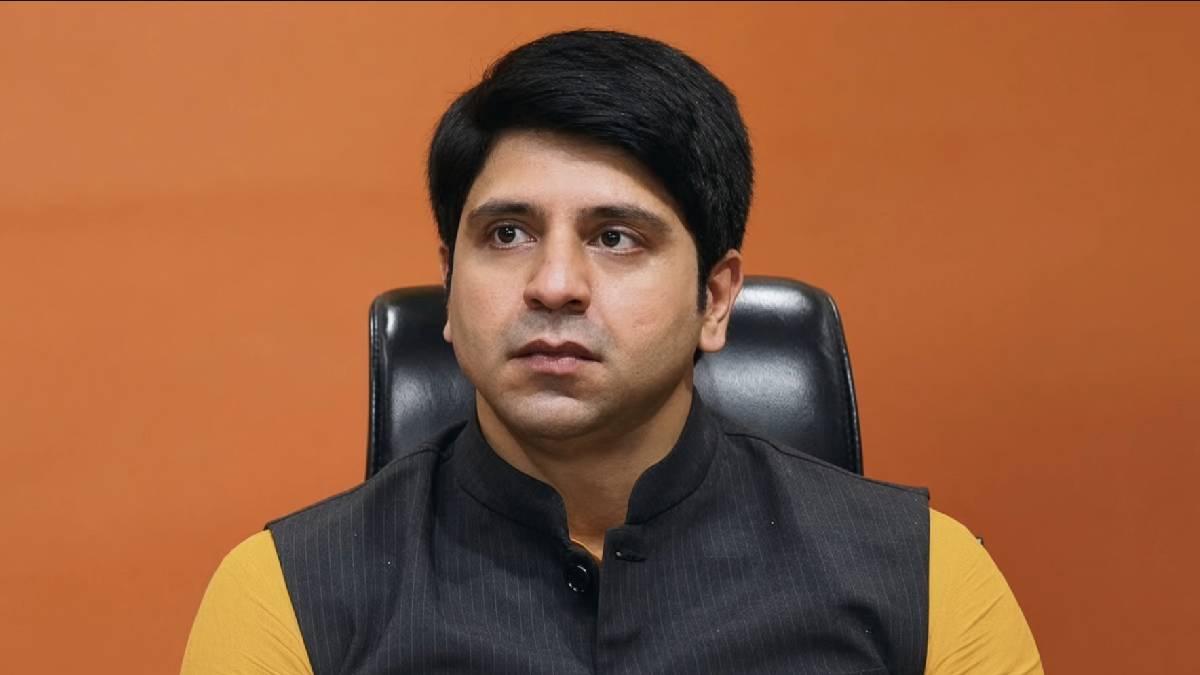
As artificial intelligence is transforming workplaces on the planet, Palo Alto Networks CEO Nikesh Arora thinks companies have to focus on AI-ready workforce development rather than laying off people entirely. Arora told 20VC podcast the biggest risk for many professionals today is not AI itself but their inability to adapt to it.

According to Arora, nearly 90 per cent of big business employees are still not comfortable using AI and will be more vulnerable as businesses expand their adoption of generative AI and automation tools. He argued that workers are no longer dependent on employers or educational institutions to prepare them for the next stage of technological change.
"I think we're back to a Darwinian moment where everybody has to figure out who's really good," Arora said, but the individual must take responsibility for learning AI because formal education systems have not yet caught up with the pace of innovation.
All these comments come at a time in which companies in various industries are re-evaluating their hiring strategies as AI becomes increasingly integrated into daily life. Orgvue found that 39 per cent of employers have already eliminated jobs owing to AI adoption in 2025. Many tech firms, including Coinbase, Block and Cloudflare have also cut jobs and focused on AI.
But according to Arora, Palo Alto Networks is pursuing a different approach, too.
Instead of mass layoffs, the cybersecurity company is using natural employee attrition to gradually remake its workforce. About 2 per cent of its employees leave every month, Arora said, and those vacancies are filled with candidates who already possess AI expertise.
The company is hiring AI talent through specialised recruitment efforts including hackathons and technical competitions, which will help it to develop AI talent without mass job cuts and to enhance its capabilities without mass job cuts, for example.
Arora estimates that this approach will change 20 to 25 percent of Palo Alto Networks' workforce within a year. The company’s mission in the next three years is to ensure that the vast majority of employees become AI-literate, so they can effectively work alongside AI-powered systems.
Referring to executives who have taken more aggressive workforce restructuring, Arora said some business leaders have decided that retraining existing employees is too difficult.
"They have figured out there's no redemption. 'I can’t train these people, I’m going to just find the people who are going to come in and help me do this stuff,'" he said, referring to leaders such as Coinbase CEO Brian Armstrong and Block CEO Jack Dorsey.
Arora’s views are in line with a growing acceptance among some of the technology industry's biggest names. Google CEO Sundar Pichai has repeatedly said that no profession is completely immune from AI-driven disruption, even acknowledging that advances in artificial intelligence could eventually transform the role of a CEO.
Fiverr CEO Micha Kaufman has similarly encouraged professionals to actively embrace AI tools and warned that those employees who fail to develop AI skills could find themselves left behind as workplaces change. Nvidia CEO Jensen Huang has also stated that workers are more likely to lose opportunities to colleagues who know how to use AI effectively than to AI itself.
Arora also spoke up earlier this year about AI’s long-term effects for software companies. Though some software businesses will experience disruption as AI makes coding and product development faster, he argued that the impact will vary across sectors.
"There’s a fear that the software industry is under attack from AI. It will make software easier and faster to build and therefore reduce the need for traditional software spending. That may be true in some subsectors," Arora said.
He added that products based primarily on analytical functions or routine workflows are more vulnerable because AI is able to replicate many of those capabilities. But he believes sectors such as cybersecurity will still need specialised expertise as AI also creates new and more sophisticated digital threats.
Arora’s message is indicative of an overall change in the way tech leaders view the future of work. Rather than thinking about AI as replacing human workers, he argues that organisations need to upskill existing workers and select AI-ready talent. The message is obvious to professionals: learning AI is not just an optional step in an AI economy, but is an essential skill for career growth over the long run.