
Birds are more than just beautiful animals; they are indispensable within ecosystems. They pollinate plants, disperse seeds and control pests. Yet unseen environmental hazards such as radiation can pose grave threats to their health, behavior and existence. Knowing the impacts of these is crucial to wildlife protection and maintaining the equilibrium of nature.
What Is Radiation?
Radiation is energy which flows in waves or particles. It could be: Ionizing radiation occurs in X-rays, gamma rays, and radioactive materials: this kind may injure DNA, tissues, and cells.
Non-ionizing radiation occurs in radio waves, microwaves, and visible light. Generally safe, but prolonged exposure still might have subtle effects.
Effects on Birds' Life Cycle
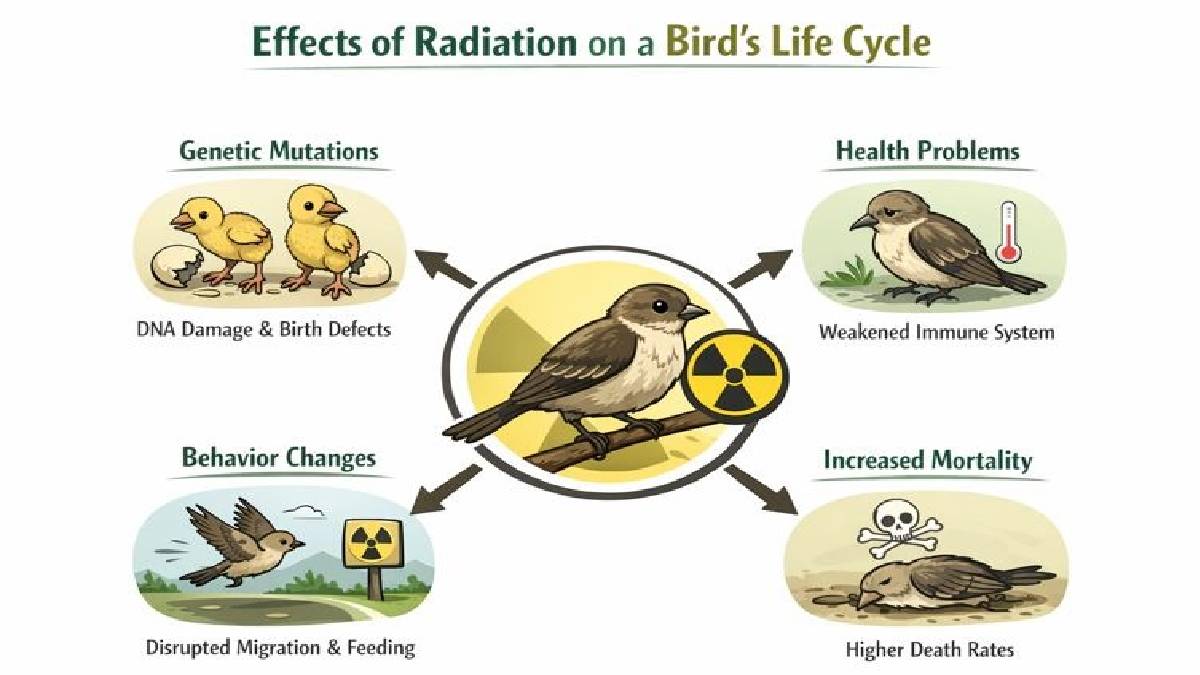
Radiation affects birds at every stage of life:
Genetic Mutations:
High radiation levels can damage DNA, leading to deformities in eggs and hatchlings.

Health Problems:
When there is radiation in air, the immune systems are suppressed, such that birds are often more susceptible to disease and thus have shorter lifespans.
Behavioral Changes:
Birds may change where and how they migrate to avoid contaminated sites or what they feed in that area, which can affect their survival chances further.
Increased Mortality:
Direct death following such heavy exposure takes place or an indirect effect in ecosystems may occur and result from both reduction in food and shelter provision.
Lessons from Chernobyl:
In 1986, the nuclear disaster at Chernobyl demonstrated how devastating radiation can be to wildlife. Bird populations shrank sharply in highly contaminated areas. Many birds had smaller body sizes, less reproductive success and mutations to their DNA. Some species adapted over time, but such environments were hard for survival.
Why It Matters
Birds represent bioindicators that speak to the health of the environment as a whole. Protecting them from radiation protects biodiversity, sustains ecosystems and can even be a lifesaver for humans. It is one of the key questions to monitor and reduce the radiation exposure for these critically important animals to have permanent life.
Learn how radiation can affect birds’ lifecycles, from genetic mutations and health risks to behavioral changes and dropping populations.
Birds sing the songs of our world, yet radiation steals their melody.
Every life lost dims the beauty of nature.
Protect their nests, their wings, their skies -
Save birds today, for a thriving tomorrow.
"Save Birds, Save Nature"








Comments
Leave a Comment