After a few decades of understated elegance and neutral-toned wardrobes in fashion, fashion is going through a seismic change. The minimalist aesthetic that defined the era of “quiet luxury” is slowly making way for a more expressive, colourful, and culturally based movement—Desi Maximalism.
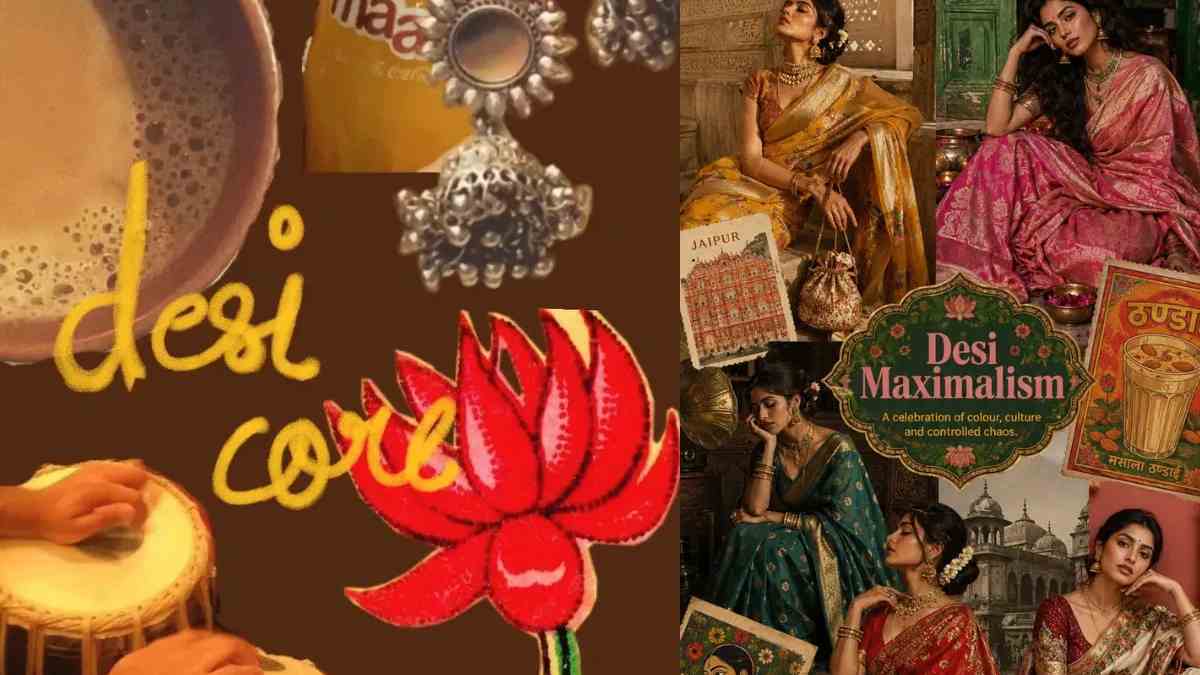
Gen Z and millennials everywhere in India and beyond are adopting bold prints, intricate embroidery, handcrafted textiles, layered jewellery, and traditional Indian silhouettes. Desi maximalism is not just a fashion statement but also a reaffirmation of India’s rich heritage, artisanal craftsmanship, and sustainable fashion practices.
Moving Beyond Quiet Luxury
For several years, global fashion was about muted colours, simple tailoring, and discreet luxury. And while this low-key approach focused on sophistication, for many the idea of fashion was about individual and cultural identity.
Desi maximalism provides exactly that.
Instead of beige palettes and understated accessories, the trend celebrates vibrant colours, elaborate detailing, handcrafted fabrics, and meaningful heirloom pieces that tell a story.
From mirror-work jackets and Banarasi saris to embroidered sherwanis and handcrafted silver jewellery, each outfit is a celebration of personal style and Indian tradition.
Why Gen Z Loves Desi Maximalism
Unlike the fast-moving internet microtrends, desi maximalism is deeply related to culture and identity.
Young consumers are turning increasingly to fashion that is rooted in their roots and allows them to be creative. Gen Z shoppers, rather than falling into the same pattern as older generations, want to combine traditional Indian textiles with modern silhouettes.
Popular styling choices include:
- Handwoven saris with sneakers.
- Embroidered jackets over denim.
- Layered oxidised jewellery with western wear.
- Bandhani, Ajrakh, and Ikat fabrics are styled in modern ways.
Statement dupattas worn with minimalist dresses.
This mixture of heritage and modernity has become one of the defining characteristics of the trend.
Celebrating Indian Craftsmanship
At the heart of desi maximalism is India’s extraordinary tradition of handcraftsmanship.
The movement has revived interest in:
Banarasi weaving
Chikankari embroidery
Kanjeevaram silk
Bandhani tie-dye
Ajrakh block printing
Ikat weaving
Phulkari embroidery
Mirror work from Gujarat and Rajasthan
Zardozi craftsmanship
Handloom cotton and linen textiles
Many of these methods of production have been practiced for centuries and are finding a new audience in younger consumers with an interest in authenticity over mass production.
Sustainability Meets Style
Another reason for desi maximalism is that we are seeing more of sustainable fashion.
Consumers are more aware of how their clothes are made and are increasingly supporting:
Handloom products. Artisan-made garments. Slow fashion. Locally produced textiles. Vintage and heirloom clothing.
Investing in handcrafted garments not only promotes traditional craftsmanship but also encourages environmentally responsible fashion choices.
Social Media Drives the Trend
Instagram, Pinterest, and fashion-focused content creators have played a major role in popularising desi maximalism.
Influencers regularly showcase:
- Colourful festive looks.
- Vintage jewellery collections.
- Handcrafted designer pieces.
- Traditional textiles styled with modern fashion.
- Wedding outfits celebrating regional crafts.
As a result, younger audiences are getting to know regional Indian craftsmanship in fresh and inspiring ways.
More Than Just Festive Wear
The biggest change brought about by desi maximalism is that traditional Indian fashion is no longer reserved only for weddings or festivals.
People are increasingly incorporating handcrafted Indian elements into everyday wardrobes through:
Block-printed shirts. Handloom kurtas. Embroidered co-ord sets. Statement jewellery. Artisan-made handbags. Colourful scarves and stoles.
This everyday approach has made Indian crafts accessible and relevant for modern lifestyles.
The Future of Indian Fashion
Fashion experts think desi maximalism is more than a passing trend. It is part of a cultural movement that values individuality, heritage and craftsmanship over uniformity.
As international consumers are looking for the most meaningful, sustainable, and locally inspired fashion, India’s rich textile traditions are gaining international recognition.
The movement, for designers, artisans and fashion lovers alike, is an opportunity to preserve centuries-old craftsmanship while adapting it to contemporary tastes.
In a time where personal expression is more important than ever, desi maximalism proves that bold colours, intricate craftsmanship and cultural pride are once more taking centre stage, making Indian fashion one of the most exciting style movements of 2026.