
In a step heralded as the “AlphaFold moment” of genetics, Google DeepMind announces the launch of AlphaGenome, an AI model which truly reads the human genome, at an unprecedented level of depth. Appearing in the journal Nature on January 28, 2026, this tool is a tool that is meant to decode the “dark matter” of our DNA the 98 percent of the genetic code that does not make proteins but is the master switches for health and disease.
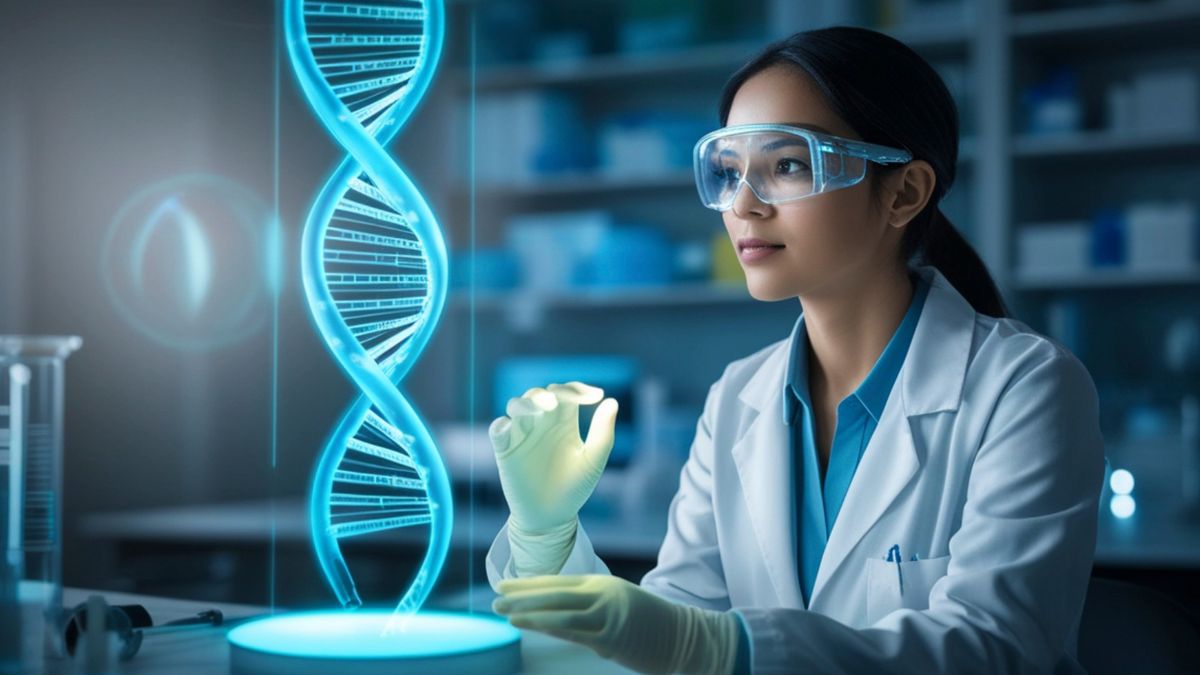
Cracking the 'Dark Genome'
For decades, researchers studied the 2% of our DNA that codes for proteins. The other 98 percent of it frequently dismissed as “junk DNA” remained a mystery. Now, however, researchers know that this “dark genome” operates as a complex control room, with genes turning on or off.
AlphaGenome is the first AI to be able to:
- Global Scale: Scaling to study as many as one million DNA letters (base pairs) simultaneously almost 50 times more than previous models.
- Single-Letter Precision: Recognizing how a single “typo” in those million letters can initiate diseases like leukemia, diabetes, or heart disease.
- Regulatory Decoding: Predicting how mutations intervene in gene regulation including when, where and how much a particular gene is expressed in different parts of the body.
A Virtual Medical Lab for Physicians
Traditionally, to observe how a genetic mutation impacts a person’s health would have entailed years of costly lab “wet work.” AlphaGenome becomes a virtual lab, and scientists can simulate the mutations in mere seconds.


| Feature | What it means for you |
| Disease Triage | Doctors can instantly prioritize which genetic variants in a patient are "causal" (dangerous) and which are "incidental." |
| Cancer Research | Already used at UCL to identify mutations that drive cancer growth versus harmless "passenger" mutations. |
| Rare Disease Diagnosis | Speeds up the "diagnostic odyssey" for children with rare, unexplained genetic conditions. |
| Gene Therapy Design | Enables scientists to design custom DNA sequences that activate a gene only in a specific organ, like the liver, without affecting the rest of the body. |
The "Nobel" Pedigree
AlphaGenome follows in the footsteps of AlphaFold, the DeepMind AI designed to solve the 50-year-old “protein folding” problem and win a 2024 Nobel Prize in Chemistry for its creators. In the space between AlphaFold and AlphaGenome, AlphaFold mapped the 3D-structures of life, and AlphaGenome is mapping the instructions that create those structures.
Is it Ready for the Clinic?
Nevertheless, the Francis Crick Institute and a team at King’s College London advocate for caution. Dr. Robert Goldstone says it’s a big achievement; one should not say that it saves you from certain circumstances. “The AI is unable to spot things like environmental factors such as diet and pollution that also play a massive role in disease.”
At present, AlphaGenome is being released to the public for use with non-commercial research, with over 3,000 scientists in 160 countries already using the API to search for cures.












Comments
Leave a Comment