In Andhra Pradesh, a distinctive project has generated interest in schools. The International Society for Krishna Consciousness is distributing copies of the Bhagavad Gita to schoolchildren. This initiative is about students being inducted into Krishna bhakti from an early age and helping them develop a sense of Indian values. The event has raised questions around faith and culture and the power of spiritual education to mould young minds.
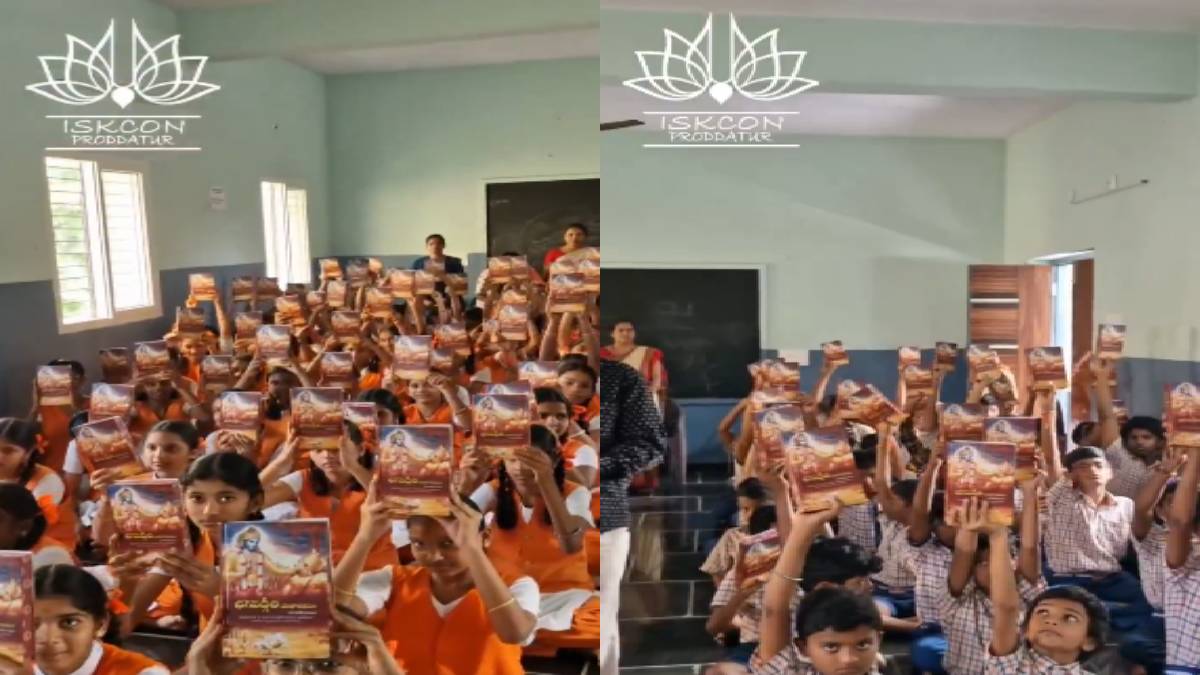
In addition, children in classrooms were handed copies of the Bhagavad Gita during the distribution program. They proudly held the books, symbolising their own initiation into spiritual education. ISKCON said the point of this is to read and share religious books but also to teach virtues like discipline, respect and devotion. The organization hopes making the Bhagavad Gita available to children will encourage them to explore teachings that have guided generations, ISKCON said.
Andhra Pradesh where conversions were at peak during Jagan rule, ISKCON took an initiative of distributing Bhagwatgita at various schools
— Sheetal Chopra 🇮🇳 (@SheetalPronamo) February 7, 2026
Teaching them Krishna Bhakti at right age
Hare Krishna 🙏🏼 pic.twitter.com/9jFsguuarQ
In the context of the data collected, the context is summarized as follows. Over the years Andhra Pradesh has experienced diverse religious influences over the past several centuries. ISKCON’s efforts now, during a period of growing discussions around cultural identity and spiritual consciousness among those with whom ISKCON is taking place there is no denying the reality that the people of India has grown to some of it. Bhagavad Gita, thought to be the most important text in Hindu philosophy which contains moral values based on duty, right behaviour, righting wrongs that people may bring, is a guide on duty. It is perceived by supporters to reinforce moral foundations through positive thinking and introduce these ideas to children at an early age.

There have been mixed reviews of the distribution program. Among more than 70 parents and community members, much of the response was positive, with many saying this experience allows children to reflect back on who they are culturally. They say that going to the Bhagavad Gita is a great way to learn that people have access to in daily life, primarily in terms of shaping your character and developing your resistance. Others have questioned whether religious texts must be taught in schools, in a way which strikes a balance between faith and secular learning.
In Andhra Pradesh, as with other Indian states, ISKCON shows the continuing dialogue in learning between traditional and modern education. The organization works on instilling devotion and responsibility in kids by passing the Bhagavad Gita as a bhakti to schools. While considered cultural enrichment or religious outreach the program has certainly created a sense of interest and debate. Simply put, one reason this endeavor is taking center stage today is to retain spiritual instruction in a way that the spiritual teachings do not die out, so the children will grow up with both wisdom and values which they will use in their daily lives for life.