New Delhi: Seventy-nine years ago the Constituent Assembly of India adopted the Tricolour as the national flag of a country on the verge of Independence. The saffron, white and green bands, with the Ashoka Chakra at the centre, would soon become one of the most recognisable symbols of India.
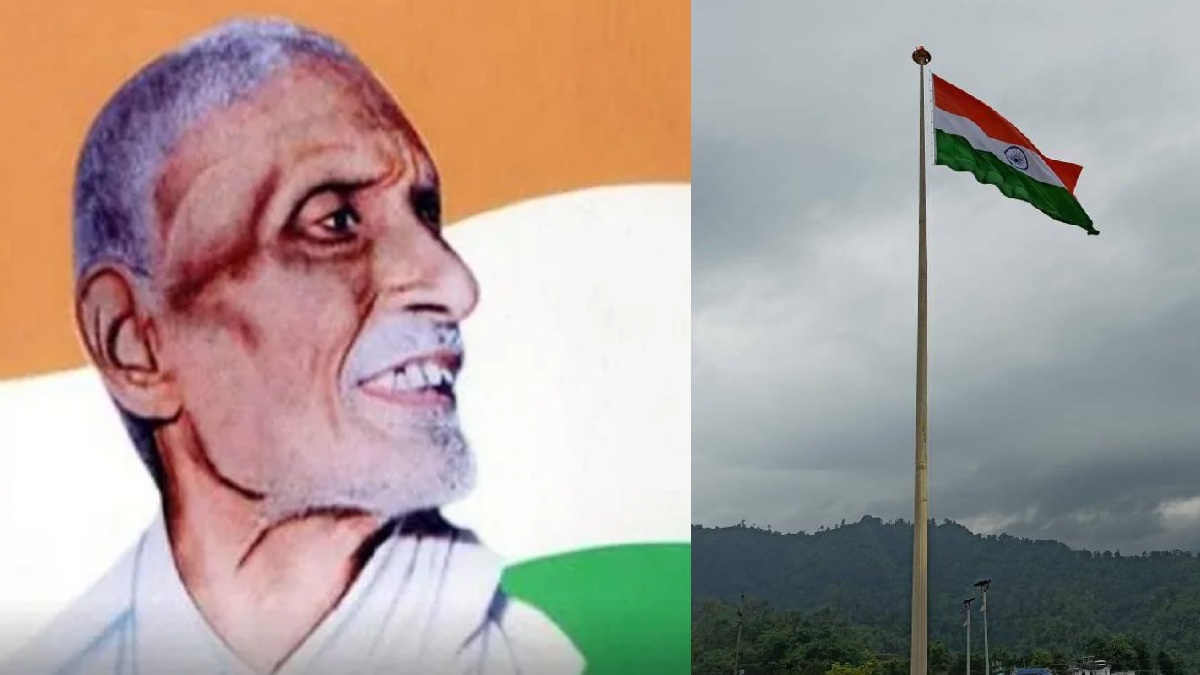
But the man whose vision formed the foundation of the flag was not present in the Assembly hall.
His name was Pingali Venkayya.
Born in 1876 near Machilipatnam in present day Andhra Pradesh, Venkayya was a soldier, scholar, agriculturist, geologist, educationist and linguist. But history would remember him most fondly for the lifelong obsession he had with the idea of making a flag for India.
A Soldier’s Question
Venkayya joined the British Indian Army at the age of 19 and fought in the Boer War in South Africa. It was there, while watching Indian soldiers salute the Union Jack, that he started thinking about the need for a flag that belonged to India.
South Africa also brought him into contact with Mohandas Karamchand Gandhi. That meeting would have a profound influence on his life.
Venkayya studied flags from all over the world and came up with some designs. His intellectual curiosity went far beyond vexillology. He studied agriculture, geology, languages and precious stones. His knowledge of Japanese gave him the name “Japan Venkayya”; cotton and gemstones gave him other names.
But the name that would ultimately define him was “Jhanda Venkayya—Flag Venkayya”.
Gandhi’s Role In The 1921 Design
The decisive moment came in March 1921 at a Congress session in Vijayawada which was known as Bezawada.
Venkayya presented a design with red and green bands representing the Hindu and Muslim communities. Gandhi suggested adding a white band to represent other communities and suggested placing the spinning wheel, or charkha, at the centre.
The design became associated with the freedom movement and was closely linked to the ideals of khadi, self-reliance and Swaraj.
Over time the design changed. The colours were honed and, in 1947, the Constituent Assembly replaced the charkha with the Ashoka Chakra, inspired by the Lion Capital of Sarnath.
The basic concept of a distinctive Indian flag, however, had originated decades earlier, from Venkayya’s work.
The Man India Forgot
While the Tricolour rose over a newly independent India, Venkayya’s own life moved in the opposite direction.
He spent his later years in Vijayawada in financial hardship and in relative obscurity. The man who designed the national flag was not greatly benefited from the nation's symbol.
Venkayya died on 4 July 1963 at the age of 86.
According to accounts of his last wishes, he wanted to be wrapped in the Tricolour—the flag he had spent his life creating.
Recognition came slowly after his death. A memorial was established in his honour, a commemorative postage stamp was issued and institutions in Andhra Pradesh were named after him.
And the debate over greater national recognition of Venkayya continues.
The Legacy Of A Forgotten Designer
Every time the Tricolour is raised over a government building, school, village square or Parliament, it carries a story that goes beyond its colours.
It is the story of a soldier who questioned why India had no flag of its own, a scholar who studied the symbols of nations and a man who spent his last years in poverty while the design he helped create became a symbol of a billion people.
On the 79th anniversary of the adoption of India’s national flag, Pingali Venkayya’s story is a reminder that nations often remember the symbols they inherit more easily than the people who created them.
The Tricolour flies proudly through India.
But behind it is a name that deserves to be remembered: Pingali Venkayya.