
Ramadhan is the ninth month of the Islamic lunar calendar, which is the most sacred time of year for Muslims. It is a month of fasting, prayer, reflection, and spiritual growth, observed by Muslims. In 2026, Ramadhan started on 19 February and is expected to end on the evening of 19 or 20 March, depending on the sighting of the moon.
History of Ramadhan
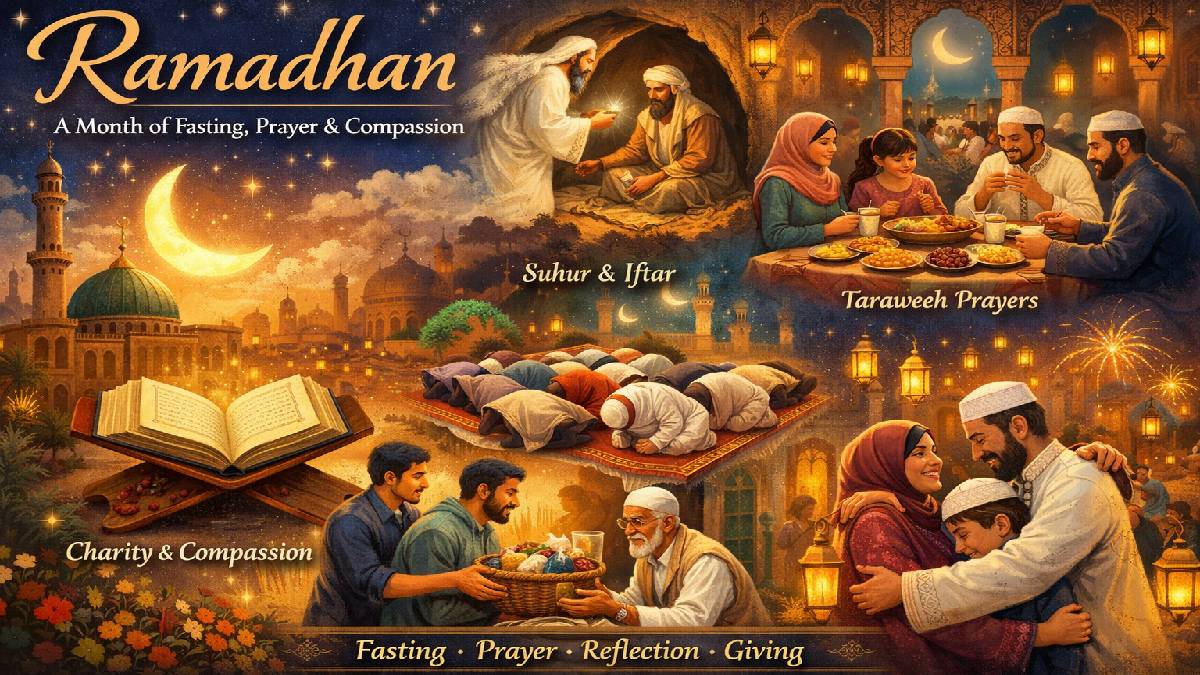
Islamic history has it that during the seventh century, the Prophet Muhammad (peace be upon him), as part of the Ramadhan in the Arabian Peninsula, received the first revelation of the Qur'an. The Qur’an has guided morality, social responsibility, and spiritual life from God’s perspective. Thus, from self‑discipline to self‑restraint to relationship to God, it is a spiritual month, and thereafter, it has been observed as a time of devotion.
Why Ramadhan Is Observed
Fasting (Sawm):
Muslims don’t eat, drink, or have any other physical desires from pre‑dawn (Suhur) to sunset (Iftar). Fasting requires that you refrain from everything that gives rise to your energy and it can be considered an act of self‑discipline as well as an effective discipline to develop patience, empathy, and mindfulness.
Prayer and Reflection:
Nightly special prayers called Taraweeh are done and the Qur’an is read often. This enhances spiritual awareness and fortifies beliefs.
Charity and Compassion:
Ramadhan also focuses on acts of charity, like Zakat al‑Fitr. Helping people and the needy brings social harmony and compassion.

Spiritual Purification:
Fasting, prayers, meditating, and reflection bring purification to mind, heart, and character. It helps in the month of forgiveness, patience, and moral improvement.
How Ramadhan Is Celebrated
Suhur and Iftar:
Suhur or pre‑dawn meal and Iftar (breaking the fast at sunset) with dates and water are among traditional practices.
Taraweeh Prayers:
In mosques or at home, you can recite the Qur’an during extended night prayer.
Community Meals:
Several mosques and local organizations offer free Iftar meals to unite the community.
Eid‑ul‑Fitr:
Ramadhan ends with Eid, a festive celebration with family, prayers, and sharing meals.
Ramadhan is believed to celebrate the first revelation of the Qur'an and to promote the development of faith, self‑discipline, and compassion. It provides a season of spiritual maturity and communal harmony with fasting, prayer, charitable giving, and reflection.








Comments
Leave a Comment