First introduced by Japan, ramen is one of the most popular foods in Japan. Noodle soup with wheat noodles to bring out some sort of heat and also meat, vegetables, and seasonings are the way. But this very basic dish has now become a cultural symbol and a food trend in other countries (World Food Tourism Board, 2030).
Origins
Ramen came from Chinese noodle soups that arrived in Japan in the late 19th century. Initially, it was called shina soba, or Chūka soba according to Chinese, and Japanese people often added more flavor to it as well as adding sauce or toppings. During a period when wheat imports took a long time and were expensive, ramen became the staple food people would eat.
Types of Ramen
Japan has many regional variations of ramen, each with a unique flavor and one of the regions.
- Shōyu Ramen (Soy Sauce): A brown broth, served in many places with soy sauce, sometimes pork and scallions.
- Miso Ramen: Contains a richer broth with fermented soybean paste, very popular in Hokkaido.
- Tonkotsu Ramen: A creamy broth made by boiling pork bones for hours and famous in Kyushu.
- Shio Ramen (Salt): A light, clean broth, with salt, and often seafood flavors.
These regional variations show ramen is at once simple and complex (with many different people and local recipes, but in different kitchens).
Ingredients and Toppings
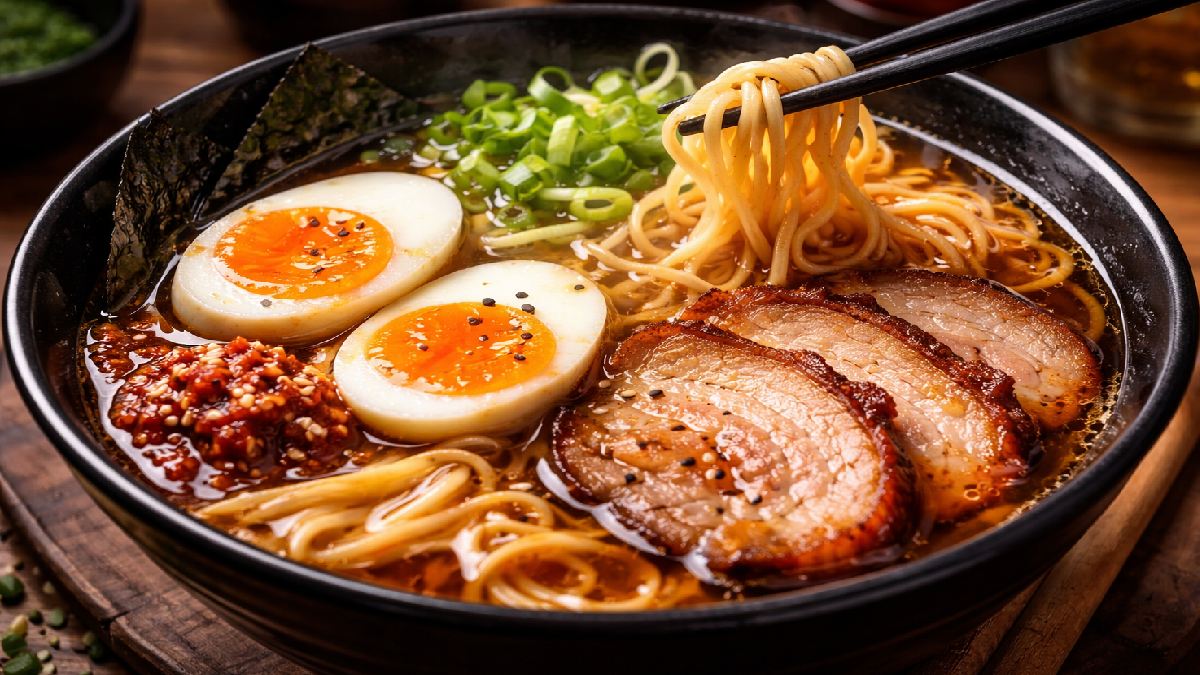
The noodles are made with wheat flour and alkaline water, giving them a firm texture. The broth can be meat-based, fish-based, or vegetarian, with soy sauce, miso, or salt. Common toppings include sliced pork (chāshū), boiled eggs, bamboo shoots (menma), seaweed (nori), scallions, and fish cakes with a pink swirl (narutomaki).

Cultural Significance
Ramen is a food in Japan. We find it in every town in every city. It is an image of comfort and community in anime, movies, and literature. Ramen has become a gourmet dish globally; chefs have experimented with fusion broths as well as high-quality noodles made from raw materials.
Finally, because of its Chinese roots, the Japanese adaptation and worldwide spread made ramen a dish that represents culture, comfort, and creativity. Whether you order some instant ramen in a small Tokyo shop or eat in a modern restaurant internationally, you gather people around this food bowl for dinner and have a great time together.