
From the variety of treats that India is famous for there was someone to have this. It’s a soft syrup‑soaked dessert of choice not only for people of a certain age but for most generations. Gulab jamun is a meal that always starts with a wedding, a festival, an assembly in the family. Its rich taste, cultural significance as well as the simple ingredients make it one of India’s popular sweets in the world of things.
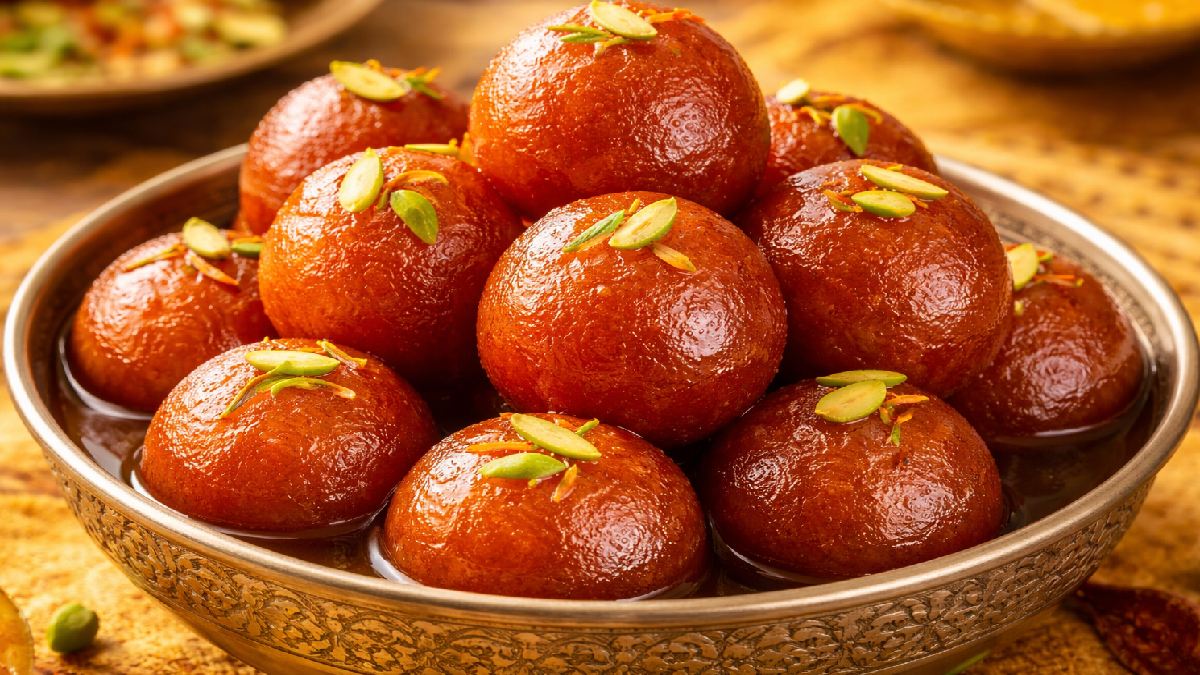
What is Gulab Jamun?
What is Gulab Jamun and, like the name itself, a story. “Gulab” stands for rose (rose‑flavored syrup), and we know that “Jamun” is for the color of a dark purple fruit found in India, that is a shape and color to which this sweet is very similar in nature. Gulab jamun is made of milk solids cut into pieces that the merchant eats into little balls, so the ball turns black in color until it hits a golden brown area and is then soaked in a sugar syrup based on rose water, cardamom and sometimes saffron. And the result is a soft, soft spongy sweet that melts in your mouth.
Ingredients and Preparation
Gulab jamun is usually made with khoya (milk solids produced by slowly heating milk in an oven (e.g.– most water evaporates). Modern recipes often incorporate milk powder. It is easy to make the dough by mixing khoya or milk powder with flour and perhaps half of a little of the leavening agent. It is then rolled out into balls which are laid in the ghee or oil at low temperature.
Once they’re fried, the balls are soaked in warm sugar syrup. The syrup is flavoured strongly by rose water, cardamom, or saffron, helping to make gulab jamun a very fresh taste. It’s served warm, garnished with nuts and possibly chilled.
Variations of Gulab Jamun
Over time, gulab jamun has undergone a number of variations:
- Kala Jamun: A darker version—sometimes stuffed with some nuts or dried fruits.
- Dry Gulab Jamun: Rolled in powdered sugar or coconut instead of syrup.
- Fusion Desserts: In cakes, cheesecakes, ice creams and parfaits, gulab jamun is a popular addition—traditional but creative.
Cultural Significance
Gulab jamun is more than just a flavor; it is a song about happiness and bond so it is celebrated around festivals like Diwali, Eid, Holi. Wedding and family celebrations have the gulab jamun which is seen as a warm welcome to someone. It’s in the mainstream and that they have it that Indian restaurants in Europe, the US, and the Middle East are sold as gulab jamun.
Health and Storage
Gulab jamun is delicious but it is also full of calories which contribute to 150–200 calories within the mix. The diet is in moderation and should definitely be experienced. Fresh gulab jamun would be the most delicious but it could still be kept in the fridge for 3–4 days. The soft texture and the flavour is instantly restored if it was slightly heated about an hour before we serve it.
Gulab jamun is not a dessert so much as something that has been part of India’s heritage since ancient times. It is always the best way to eat food, and it may be made but not never eaten. That's why, as long as gulab jamun has tradition, enjoyment, or just food for generations to come in all stages and how that goes in fusion cuisine the food must unite people.







Comments
Leave a Comment