Paris is not just a city, it represents culture, history and creativity. Often called the “City of Light” it is known for its wide streets, classic buildings and famous landmarks. From the Eiffel Tower to the quiet neighborhoods with old stone streets, Paris shows a mix of tradition and modern life. For centuries, it has been a place that inspires writers, artists and thinkers. Through its cafés, fashion, museums and monuments. Paris reflects human expression and continues to stand out as one of the most recognized and memorable cities in the world.
Who is Victor Noir?
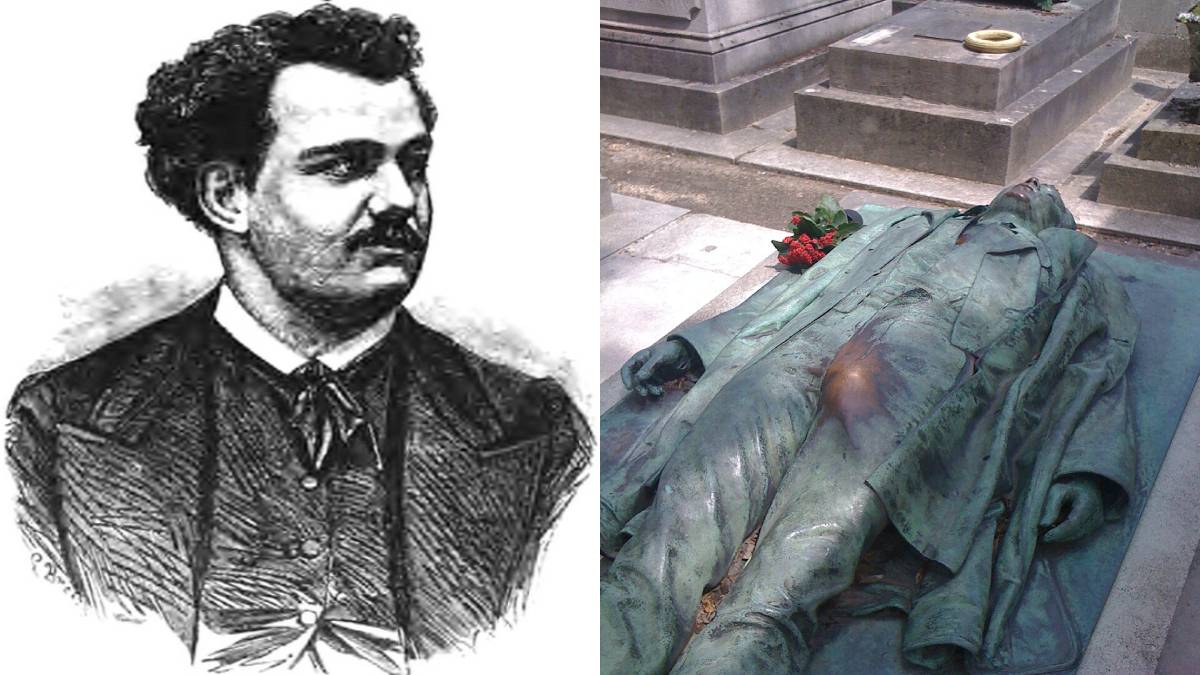
Inside Père Lachaise Cemetery is the grave of Victor Noir, a young journalist who was shot in the 1800s. His bronze statue, crafted with realistic detail has become a well‑known attraction over time. Visitors often interact with the statue by touching its lips, feet and other features. For many, these gestures are linked to traditions and beliefs about luck, love, and fertility. What began as a memorial has gradually turned into a cultural ritual, drawing people from around the world who are curious about the story and symbolism surrounding Victor Noir’s resting place.
Why Victor Noir Was Shot Dead?
- Victor Noir’s real name was Yvan Salmon, and he worked as a young journalist for the republican newspaper La Marseillaise.
- The newspaper published articles critical of the imperial regime, which angered Prince Pierre Napoléon Bonaparte (cousin of Emperor Napoleon III).
- Noir, along with colleague Ulric de Fonvielle, was sent to deliver a message arranging a duel between Bonaparte and the paper’s editor, Paschal Grousset.
- When Noir and Fonvielle arrived at Bonaparte’s residence, tensions quickly escalated.
- Reports say Bonaparte slapped Noir during the heated argument.
- Immediately after that, Bonaparte shot Noir at close range, hitting him in the face and killing him instantly.
Why is the statue there famous?
At first glance, Noir’s statue looks peaceful. A man lying as if asleep, hat by his side. But visitors don’t come just to mourn. They come to touch, kiss and even rub the statue’s lips, feet and most shockingly its genitals. Over the years, the bronze has been polished smooth by countless hands.
Why do people do this?
The answer is as strange as the ritual itself. Many women believe that touching the statue will bring fertility, a blissful sex life or luck in love. Men join them too, hoping for passion and prosperity. It’s not just curiosity it’s raw human longing, played out in the most unlikely of places.
The scene is surreal. Some visitors giggle nervously, embarrassed by the act. Others approach with solemnity, treating it like a sacred ritual. Shock, humor, hope and vulnerability collide in front of a grave. It’s unsettling yet deeply human proof that emotions often overpower logic.
Why Is this More Than a Grave?
Victor Noir’s statue has become more than a memorial. It is a symbol of desire, superstition and the eternal search for love. It shocks us because it blends opposites death with fertility, grief with passion, mourning with intimacy. In that collision, people find meaning or at least comfort.
Every year, millions continue to touch Noir’s grave, turning a journalist’s resting place into one of the strangest shrines in the world. Strange, shocking and undeniably human, this ritual reminds us that even in the silence of a cemetery, emotions lust, hope, longing find a way to speak.