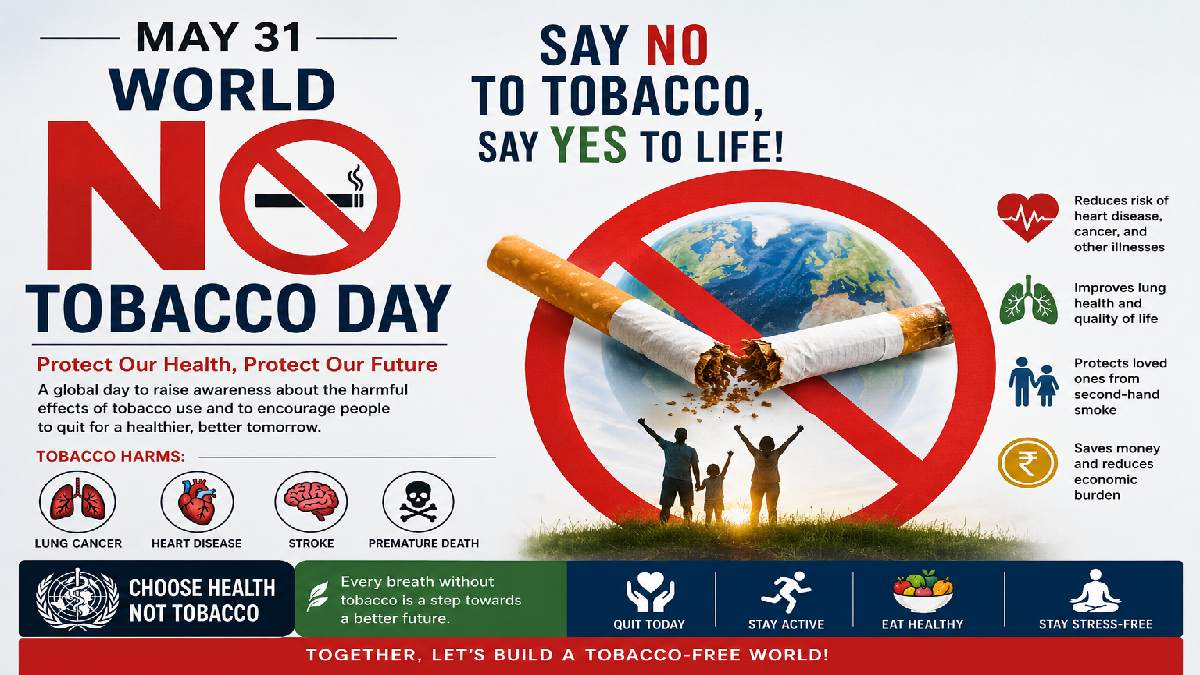
World No Tobacco Day is observed every year on May 31 to raise awareness about the harmful effects of tobacco use and encourage people to quit smoking and other tobacco-related habits. The global campaign focuses on protecting public health by reducing tobacco consumption and preventing diseases caused by smoking.
The observance was established by the World Health Organisation (WHO) in 1987 to draw worldwide attention to the growing tobacco epidemic and its deadly consequences. Since then, World No Tobacco Day has become one of the most recognised global health awareness events and is now observed in more than 180 countries.
The date of May 31 was chosen to encourage governments, healthcare organisations, and communities around the world to speak openly about the dangers of tobacco and support stronger public health policies. Every year, the WHO selects a specific theme highlighting major tobacco-related issues, including health risks, environmental impact, youth awareness and tobacco industry influence.
Tobacco use is considered one of the leading causes of preventable deaths worldwide. Smoking and tobacco consumption are linked to serious health conditions such as lung cancer, heart disease, stroke and chronic respiratory illnesses. The harmful effects of tobacco are not limited to smokers alone. Non-smokers, including children and pregnant women, are also affected by second-hand smoke, which can lead to severe health complications.
According to global health experts, millions of people die every year due to tobacco-related diseases. In addition to health problems, tobacco use also creates economic challenges by increasing healthcare costs and reducing productivity. In many developing countries, tobacco addiction and tobacco farming continue to create social and financial burdens for families and communities.

To spread awareness, governments, health workers, non-governmental organisations, and social activists organise campaigns, educational programs, seminars and public events on World No Tobacco Day. These initiatives encourage people to quit smoking and promote healthier lifestyles. Many countries also use this occasion to discuss stricter tobacco control measures, including warning labels on cigarette packets, bans on tobacco advertisements and smoking restrictions in public places.
In today’s fast-moving and stressful world, tobacco use remains a serious public health concern. Health experts warn that lifestyle pressures and stress can increase the risk of smoking addiction, especially among young people. World No Tobacco Day serves as a reminder that quitting tobacco can significantly improve physical health, mental well-being and quality of life.
The day is more than just a health campaign; it is a global movement encouraging individuals to make informed choices and protect future generations from the dangers of tobacco addiction. Promoting awareness and stronger health policies can help create a healthier and smoke-free society.
As the world observes World No Tobacco Day on May 31, the message remains clear: every step away from tobacco is a step toward a healthier, safer and brighter future.