On the auspicious day of Dhanteras (also known as Dhantrayodashi) — which marks the first day of the five-day Diwali festivities — a special ritual called Yama Deepak (lit lamp dedicated to Yama Rāja, the lord of death) is performed. This ritual involves lighting a lamp (deepak/diya) outside the home facing the south direction, symbolising invocation of the protective energies of Yama, seeking longevity, protection from untimely death or accidents, and purification of the household.
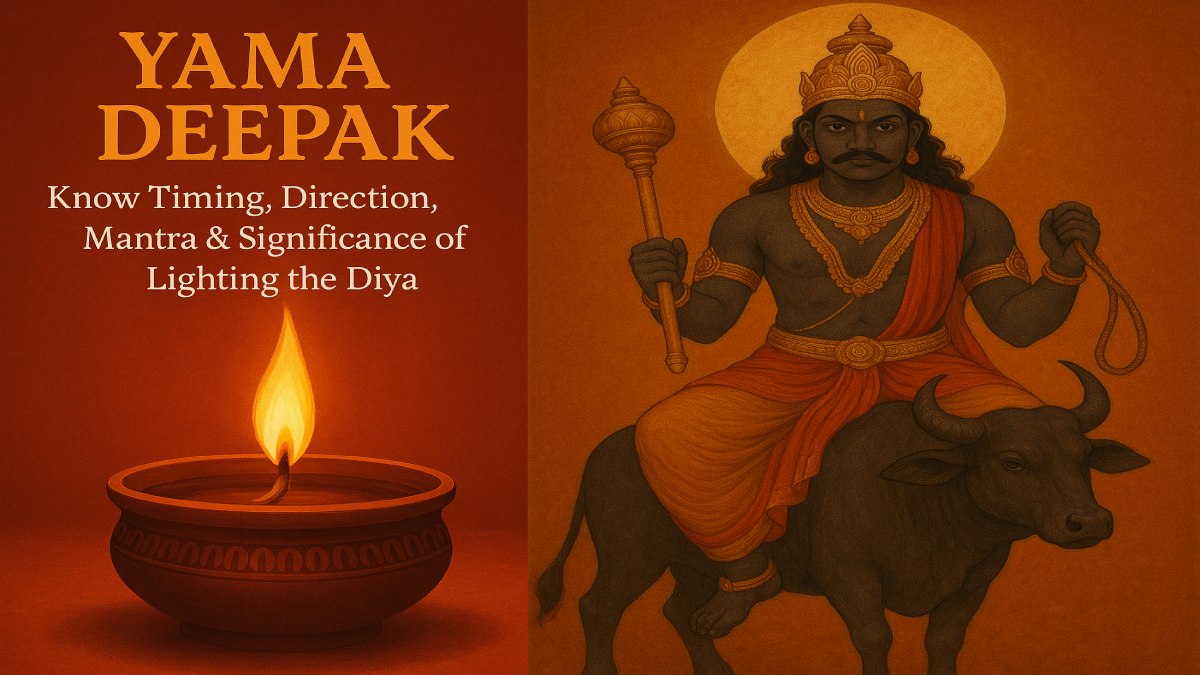
In traditional belief, the act of lighting the lamp for Yama helps ward off negative influences, accidental death, and invites divine protection and auspiciousness for the family.
Yama Deepak Date & Timing
According to trusted panchang sources:
- The festival of Dhanteras (Dhantrayodashi) in 2026 falls on Friday, 6 November 2026.
- The puja muhurat for Dhanteras in New Delhi is given as 06:02 PM to 07:57 PM (IST).
- For the Yama Deepak ritual specifically, the window in many panchangs is aligned with the Prādoṣha Kāla (twilight period) on that same Trayodashi tithi. For example, one source gives for a generic location: 05:03 PM to 06:26 PM (local time) for Yama Deepak on 6 November 2026.
Thus, for Bengaluru / Karnataka (IST) you should aim to light the lamp in the early evening twilight of 6 Nov 2026, ideally soon after sunset and during the Trayodashi tithi, within the Prādoṣha window (approx. ~17:00-18:30 IST, but confirm local city muhurat).
Direction & Placement of the Lamp
- The lamp (deepak) is traditionally placed outside the main door of the house, on the threshold or verandah.
- The lamp is to be lit facing south (dakṣiṇa-disha) — since Yama Rāja is associated with the south direction in Hindu tradition. Lighting it facing south symbolises appeasing Yama, and thereby safeguarding family members from premature death and misfortune.
- Use good quality ghee or sesame/mustard oil for the lamp, and a cotton wick. The flame should burn steadily during the ritual. Some traditions suggest using a four-faced diya (chaturmukha deepak) for enhanced effect.
- Ensure the area is clean, safe, and free from drafts so the lamp burns without interruption.
- After lighting, you may keep the lamp burning for a certain period (say 15-30 minutes) while offering prayers, mantras and contemplation.
Suggested Mantra & Prayer
Here is a commonly cited mantra for invoking Yama Rāja during Yama Deepak:
“ॐ सूर्यपुत्राय विद्महे महाकालय धीमहि तन्नो यमः प्रचोदयात्।”
Om Sūryaputrāya Vidmahe Mahākālay Dhīmahi Tanno Yamah Prachodayāt.
In addition, you may recite:
“ॐ यमाय नमः” – Om Yamāya Namah
“ॐ यमराजाय नमः” – Om Yamarājāya Namah
You may also offer the lamp along with these words:
“यमदयिताय हेतवे दीपं प्रज्वालयामि।
त्वमेव रक्षसि मां तथा मम कुटुम्बम्।”
Yam dayitāya hetave dīpam prajvālayāmi. Tvameva rakṣasi māṁ tathā mama kuṭumbaṁ.
(“I light this lamp for Lord Yama for the cause of what is beloved; You alone protect me and my family.”)
Significance & Symbolism
- Lighting the Yama Deepak is deeply symbolic of victory of light over darkness, of life over death, and of protection and auspiciousness.
- It acknowledges the inevitability of death (Yama Rāja) yet seeks divine safeguard, emphasizing longevity, health and harmony for the household.
- Placing the lamp outside the home facing south also symbolises the outward facing act of inviting protection and turning away misfortune — the threshold becomes a boundary between the safe zone and external negativity.
- Because Dhanteras marks the opening of the Diwali festival of wealth and light, Yama Deepak integrates the theme of protecting the wealth of life (health, family, longevity) before the wealth of material prosperity (symbolised by the subsequent Lakshmi Puja). In other words: protect life and family first, then wealth.
- It’s believed that by performing this ritual, one honours the cycle of life & death, shows respect to cosmic order, and receives blessings for continued well-being.
Ritual Step-by-Step for Yama Deepak
- Clean the entrance/threshold area of your home in the evening of 6 Nov 2026 (soon after sunset).
- Place a clean small mat or plate just outside the door, facing south.
- Fill a lamp (preferably diya) with ghee or sesame/mustard oil, insert a cotton wick.
- Light the lamp during the Prādoṣha period (approx 17:00-18:30 IST in Bengaluru, you may check local muhurat).
- Recite the mantra(s) mentioned above: “Om Sūryaputrāya Vidmahe…” and other devotional words.
- Offer a small bowl of water or a flower garland if you like, at the base of the lamp. Bow or fold hands, silently pray for the safety of your family, longevity of your ancestors, and removal of obstacles.
- Let the lamp burn until it naturally dims (for 15-30 minutes) or for the duration of the muhurat window. Do not extinguish it prematurely.
- After ritual, you may offer light snacks or sweets to the family, as it’s the start of the Diwali festivities.
- Dispose of the remaining oil/wick in a clean, respectful way (not on the street, etc).
- Now proceed with preparations for the rest of the Dhanteras and Diwali observances.
Things to Note / Precautions
- Ensure safety: place the lamp on stable surface away from flammable materials, pets, children.
- Confirm local time and sunset for your specific city (Bengaluru) as muhurat may vary slightly from the pan-India general window.
- If it rains or wind is strong, you may use a lantern with glass to protect the flame.
- While the ritual is outside the home, it also symbolically ensures the interior is prepared — so you may clean the entrance, decorate with rangoli, and light other lamps afterwards (as per your Lakshmi puja tradition).
- The intention matters: the ritual is not superstitious fear-mongering, but an act of gratitude, protection, and invoking positive energy. Keeping the heart sincere makes it meaningful.
Why Perform Yama Deepak Before Lakshmi Puja?
- As said, Yama Deepak is about life, health, protection — ensuring that the inhabitants are safe and live to partake of the prosperity. After this comes the worship of Kubera (lord of wealth) and Lakshmi (goddess of prosperity) on Dhanteras and Diwali. The sequence symbolises: first secure life & well-being, then attract wealth & prosperity.
- In the festival timeline, Dhanteras is the inaugural day: starting with protection sets the tone for auspicious celebrations ahead.
- It also honours the cosmic balance: death (Yama) is acknowledged, but light is placed as symbol of transcendence – thus you step into Diwali (festival of lights) with full consciousness.
Frequently Asked Questions (FAQs)
Q1. Can Yama Deepak be lit indoors?
Yes it can, if outdoor space is unavailable or unsafe. But traditional practice emphasises outside the main door facing south.
Q2. What if I miss the exact muhurat?
If you miss the narrow window, try to perform it as close as possible in the evening twilight of the same tithi (Trayodashi). Avoid doing it on a later date.
Q3. Is it mandatory to use a four-faced (chaturmukha) lamp?
No, it is not strictly mandatory. A simple deepak is acceptable; the chaturmukha deepak is considered more potent in some traditions.
Q4. What is the significance of facing south?
South (dakṣiṇa) is symbolically the direction of Yama in Hindu tradition; facing the lamp that way is an act of invocation and respect.
Q5. Can I combine the Yama Deepak ritual with Lakshmi Puja or Kubera Puja on Dhanteras?
Yes—with awareness. Typically Yama Deepak is done first (early evening) and then you proceed to Lakshmi/Kubera puja later in the evening during their muhurat. Ensuring sequence and respect for each ritual’s timing is advisable.
Yama Deepak is a beautiful, meaningful ritual that often goes less noticed than the glitter of the main Diwali pujas, yet its depth is profound: it reminds us that light isn’t only about wealth and celebration but also about life, protection, and transcending fear. On 6 November 2026, as you light that lamp outside your door facing south, you are not just observing a tradition—you are consciously inviting safety, longevity, harmony for your family and yourself. Let the flame burn steady, the mantra echo in your heart, and may the upcoming Diwali truly shine with inner light, outer prosperity, and enduring peace.