
The Adani Group’s proposal to divert part of Mumbai’s international flights to the newly developed Navi Mumbai International Airport (NMIA) has met with resistance from foreign airlines such as Emirates and Air France-KLM. The move is part of a larger redevelopment plan for Chhatrapati Shivaji Maharaj International Airport (CSMIA) which requires temporary changes in flight operations and passenger capacity.
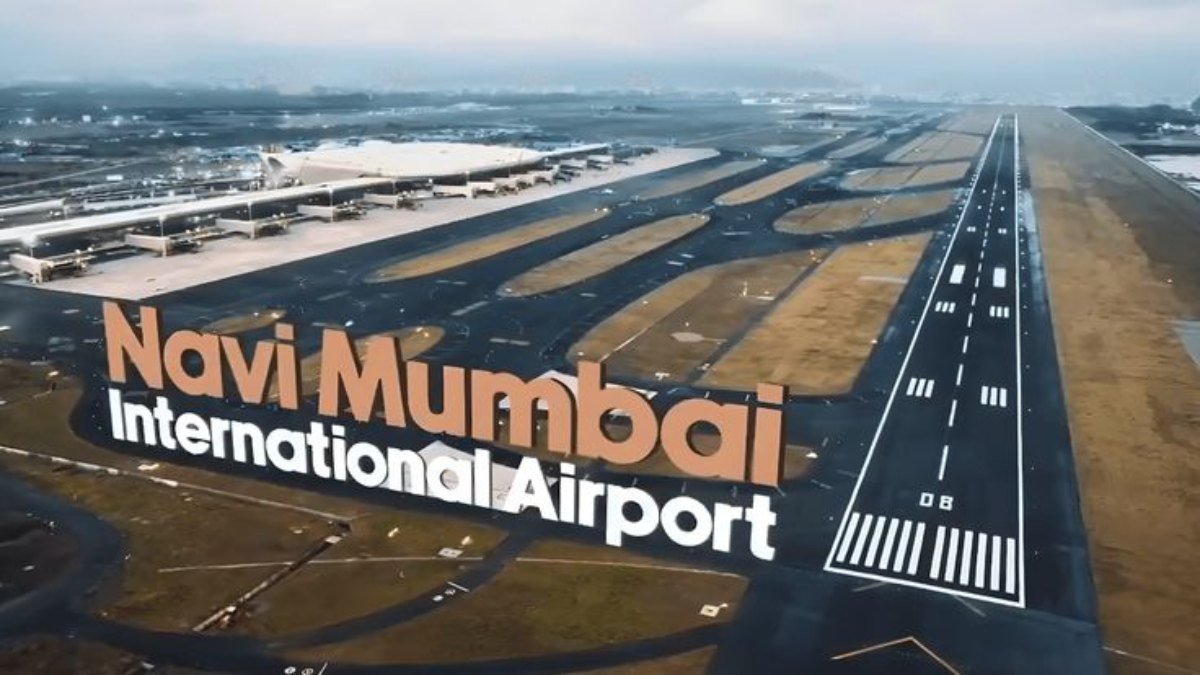
MIAL (owned by Adani Airport Holdings) wants to move international traffic (around five million passengers a year) to Navi Mumbai by March 2027 but airlines have said operational readiness is not there, additional costs are being incurred on passengers, inconvenience to passengers and process for reducing existing capacity is not followed.
The disagreement has also reached the Union Ministry of Civil Aviation where foreign airlines want to know what is being proposed for transition.
Why does Adani want to shift international flights to Navi Mumbai?
The relocation is linked to the redevelopment of Terminal 1B at Mumbai’s existing airport.
MIAL will demolish and redevelop the northern section of Terminal 1B to improve passenger facilities and increase capacity overall. Construction work will require the temporary redistribution of passenger traffic currently served by the existing airport.
To deal with the displaced passengers MIAL initially suggested reducing international departures from Terminal 2 by about 33%.
Of the 770 weekly international departure slots at Terminal 2 proposed to be withdrawn from October 25, 2026, around 265 were proposed to be temporarily withdrawn (see chart above).
The airport operator then asked airlines for voluntary transition plans to move some international operations to Navi Mumbai or temporarily suspend some services.
MIAL’s goal is to shift traffic equal to five million passengers per year by the end of March 2027.
Why Are Emirates and Air France-KLM Opposing the Move?
Foreign airlines objected to moving existing international operations from Mumbai’s established airport to Navi Mumbai.
Their objections are primarily operational efficiency (how efficiently you operate), infrastructure readiness (are airports ready?), and the costs associated with operating from two airports.
1. Concerns over Navi Mumbai Airport operational readiness.
Emirates asked whether Navi Mumbai International Airport has operational capacity and infrastructure to handle large-scale international airline operations.
The airline has also flagged facilities such as cargo warehousing, catering and other services needed for international operations.
Large international carriers rely on a lot of ground infrastructure (baggage handling, aircraft servicing, cargo operations and coordination between teams at airports).
Emirates operates 28 weekly flights from Mumbai. Moving some of those operations to another airport would require careful planning and infrastructure.
2. Splitting Operations Between Two Airports
Air France-KLM has called the proposal to split its Mumbai operations between two airports operationally inefficient.
Mumbai's existing airport and Navi Mumbai International Airport are about 40 kilometres apart. Airlines operating flights from both sites could have separate ground-handling teams, crew arrangements and operational support systems.
For airlines that already have operations at CSMIA shifting only some flights would add complexity.
Passengers travelling on connecting itineraries may also have problems if their domestic and international flights operate from different airports.
3. Additional Operating Costs
Flying from two airports can cost airlines more.
They may need to arrange separate ground handling services; staff deployment; equipment, transport and other operational facilities.
Airlines are also assessing the passenger costs associated with Navi Mumbai (airport access and user development fees).
The additional costs could impact the economics of operating existing routes (if airlines are not voluntarily expanding their services from the new airport).
Why Does MIAL Insist on the Flight Relocation?
MIAL says the temporary relocation is needed to finish redevelopment of Terminal 1B and improve Mumbai’s long-term airport infrastructure.
An audit by IIT Bombay had reportedly found structural problems at parts of the existing terminal corrosion, concrete deterioration and cracks.
The operator has said redevelopment cannot be put off indefinitely and some passenger traffic needs to be shifted around in order to run the business during construction.
According to MIAL, the redevelopment will increase Terminal 1’s annual passenger-handling capacity from about 15 million to 20 million.
The operator has also reassured airlines that international traffic temporarily moved to Navi Mumbai will be returned to CSMIA after redevelopment is complete.
How many airlines have agreed to shift their flights?
Indian carriers have already announced plans to move selected international operations to Navi Mumbai.
IndiGo, the Air India Group and Akasa Air have agreed to transfer operations serving about three million passengers annually.
Services to West Asia and other international markets are part of the relocation plans.
Foreign airlines have been hesitant though and MIAL still has a gap of about two million passengers against its five-million annual passenger target.
A meeting between MIAL and airline representatives on October 28 failed to resolve the dispute. Foreign carriers wanted more information about transition while the airport operator insisted it needed capacity reduction.
Airlines Question the Consultation and Slot Allocation Process
The disagreement is not just about airport infrastructure. Airlines have also questioned how MIAL went about its business before proposing changes to existing international flight slots.
The Mumbai Airline Operators Committee (AOC) has said capacity changes should be based on the Ministry of Civil Aviation’s 2013 slot allocation guidelines.
These guidelines provide a framework for communicating proposed capacity changes and consulting airlines and other stakeholders.
The AOC has also asked for confirmation of historical slots for the Summer 2027 schedule (which starts in late March).
A joint committee of airport authorities and airline representatives would prepare a mutually agreed transition plan. Airlines have suggested that an airport authority be represented on the joint committee along with airline representatives.
The Ministry of Civil Aviation had earlier stepped in and asked both sides to work towards an acceptable arrangement.
How Will the Navi Mumbai Airport Shift Affect Passengers?
This relocation could affect passengers flying to/from Mumbai (especially those with connecting flights).
The two airports are separated by about 40 kilometres. Passengers connecting between domestic and international flights will have to plan additional road travel, transfers and longer journey times.
Passengers might also be inconvenienced if their onward flights depart from a different airport than their arrival flight.
To improve connectivity airport authorities have announced shuttle and bus services between the two airports and other parts of Mumbai but travellers still need to plan their journeys carefully.
Passengers should check the departure airport mentioned on their tickets rather than assume that all international flights will continue to operate from CSMIA.
What Happens Next?
MIAL had set November 3, 2026 as the deadline for airlines to submit transition plans for the Summer 2027 schedule. The dispute remains about how the proposed capacity reduction and flight relocation should be implemented.
Foreign airlines want to know how ready it is, what flights are already booked and how much the move will cost them. MIAL says transition is needed so redevelopment can proceed.
It will be a matter of discussions between airport operator, airlines and aviation ministry as well as decisions on slot allocation.
The issue is that expanding Mumbai’s aviation infrastructure poses a major challenge: redevelopment of the airport against airline operations and passenger convenience.






Comments