
Consequently, traffic congestion is still a major problem in cities worldwide and affects everyday commuters, businesses, public transport and urban life in general. As population increases and more cars turn up to the road, many cities in the world face the challenge with increased travel traffic.
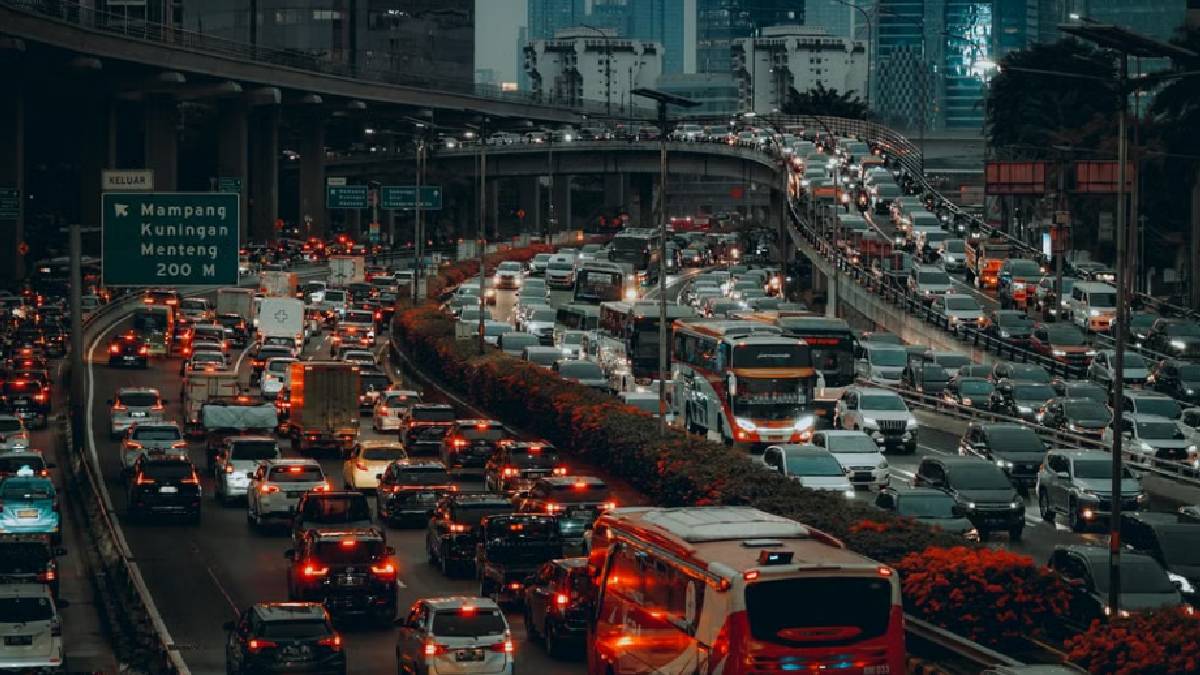
An international ranking of the highest traffic-congested cities has even identified two Indian cities among the top cities, but Mumbai was not on the list and so it is a new area of concern for India where the city’s urban mobility problems are very much in the news.
India's ranking in international traffic rankings is evidence of the challenges cities face as they grow. Increasing population, rising ownership of cars, limited access in busy areas and clustering of offices and business places can put a heavy strain on city transport networks.
But the absence of Mumbai from a ranking does not necessarily mean that Mumbai is not experiencing congestion problems. The results depend on the methodology of the report, the period covered, and the indicators used to measure traffic.
Why is traffic congestion a growing global problem
Traffic congestion impacts cities across the world, from major financial centres to rapidly developing cities and the capital city to fast growing cities. The causes can be attributed to urban areas, such as high population density, limited road capacity, traffic congestion, construction activity, roadblocks, roadworks, traffic accidents, and a lack of road networks and the mismatch between the transportation demand and available infrastructure.
In many cities, many people travel at similar times to reach offices, schools, commercial districts and transport hubs. When road networks can’t handle the volume of traffic, cars move slowly and journey times become unpredictable. Even relatively short trips can take considerably longer during peak hours.
Congestion has economic impacts as well. Delayed delivery times, longer commutes and unreliable travel times can affect productivity and operating costs for businesses. Drivers will spend more on fuel, and vehicles that slow down or repeatedly accelerate and brake will contribute to local air pollution.
Therefore, cities are going to try different methods to improve mobility: better public transport; better road signals; safer walking routes and cycling infrastructure. How well these measures are implemented is dependent on local travel patterns and how well transport systems are integrated.
Why two Indian cities could be in the rankings?
India’s rapid urbanisation has led to growing demand for efficient transport systems. Major cities attract workers, students, businesses and visitors, and daily movement is a lot of things in residential and commercial areas. In some places, road infrastructure has been unable to cope with the increase in travel demand.
The concentration of workplaces and commercial activity in particular districts can cause bottlenecks, especially during early morning and evening peak hours. And in some places very narrow roads, roadside parking, frequent intersections and ongoing infrastructure projects can slow traffic even more.
Public transport availability also matters. Metro lines, suburban rail networks and bus connections can reduce reliance on private vehicles when they provide good quality connections. But overcrowding, lack of connectivity and the difficulty to reach stations from residential areas can be reasons people still drive cars and two-wheelers.
The two Indian cities listed in the ranking should be evaluated in the context of the indicators used by the organization that compiled it. Some reports focus on average time taken to travel a fixed distance, while others examine congestion levels, delays during peak periods or the additional time required compared to free-flow conditions.
Without the original report, it would be misleading to name the two cities or place them in the top 10 of the world.
Mumbai's absence does not mean traffic is no longer a concern
Mumbai is so associated with heavy traffic because of its dense urban environment, major commercial districts and large daily commuter population. But a city’s position can differ significantly from traffic studies, depending on how congestion is calculated and which roads or travel periods are included.
Some rankings measure the average time required to travel a given distance, while others compare peak-hour travel with those made in lighter traffic conditions. A city may perform differently under these measures because road layouts, average speeds and commuting patterns vary.
Therefore, Mumbai's absence from this list should be seen as a result of the scope of the ranking rather than proof that the city has solved its traffic problems. The result also emphasizes the importance of studying the publication year, methodology and geographical coverage before comparing cities.
In addition, infrastructure improvements, commuting behaviour and the availability of alternative transport options can all affect congestion measurements over time. Rankings can be useful for comparisons, but they are only a subset of a city's transport system.
How cities can alleviate traffic congestion in the city?
Addressing congestion is more than simply widening roads. More road capacity may be helpful for some situations, but it depends on how travel demand and the wider transport network actually work in the long term.
Public transport can be better supported by the need to expand through reliable networks so that commuters don’t have to use private cars as transportation. Connected metro and bus networks, easy interchange points and better access to stations are two factors that make public transport more feasible for everyday operations.
Cities can also improve traffic flow through coordinated signals, better management of intersections, restrictions on illegal parking and the use of real-time traffic information. Walking and cycling for shorter journeys may reduce the number of vehicles on selected routes when safe infrastructure is available.
Urban planning is also an important factor. Housing, workplaces and essential services can be better placed in locations so long as people can access them close together and make long day-to-day trips less of an issue. Flexible working conditions and staggered office hours may also help to distribute travel demand across the day.
Ultimately, global traffic rankings offer a good starting point to understand the scale of urban mobility problems. That two Indian cities are on the list and Mumbai is missing speaks to the need for a more detailed investigation into congestion in terms of how congestion is measured and how cities respond to the increasing travel demand.
The exact cities and their positions should be confirmed with the original ranking before publication.






Comments
Leave a Comment