
A six-month-old female leopard was killed after being hit by a train on the Gondia–Ballarshah railway line. It is alleged that the cub might have been passing through the area with her mother when the incident took place.
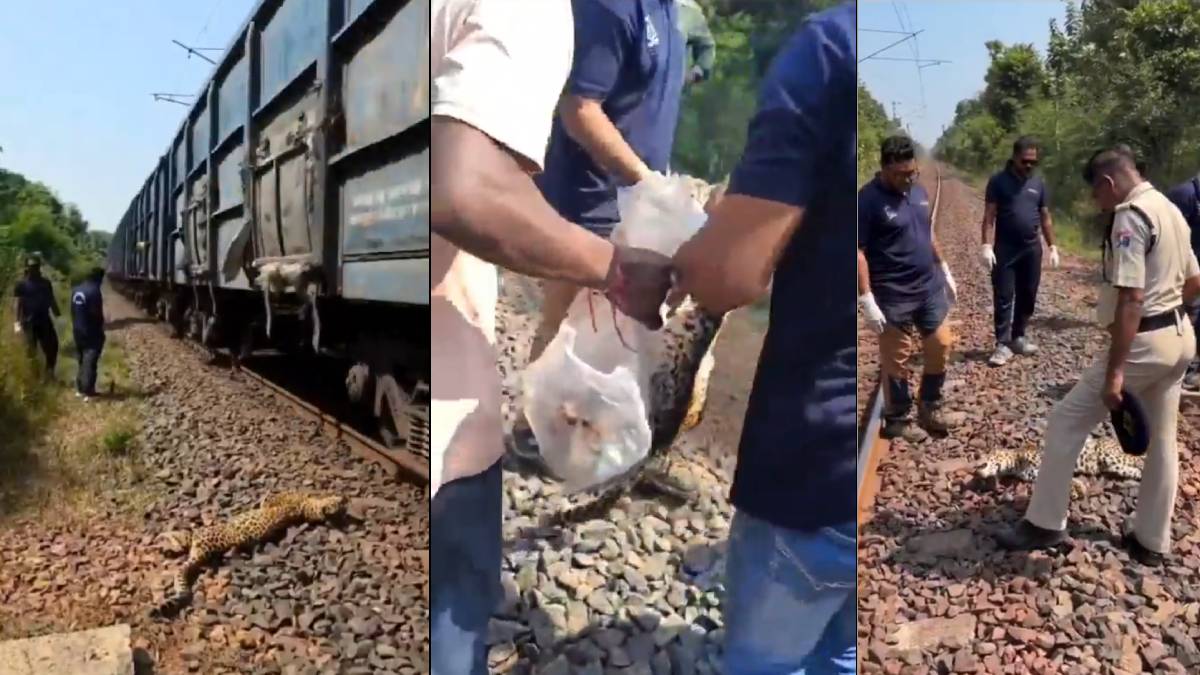
According to figures shared by wildlife conservationists, 17 tigers, 27 gaurs, 26 spotted deer, 19 sambar deer, 15 sloth bears, four hyenas and now eight leopards have reportedly been killed on the railway line.
with a total of More than 140 wild animals have reportedly killed on the Ballarshah–Gondia railway line between 2017 and 2026.
The line passes through dense forest areas and is part of an important wildlife corridor connecting Maharashtra's Tadoba-Andhari Tiger Reserve to Telangana's Kawal Tiger Reserve. serving as a passage for many animals moving between the two regions.
In April last year, the government approved the doubling of the railway line to reduce congestion and improve connectivity between northern and southern India. The project, estimated to cost around ₹4,819 crore, is also expected to make the movement of coal and other goods easier and boost regional tourism.
It was also presented as a project that would boost tourism because the route passes through areas with forests and wildlife attractions.
But now, it has come to light that the same line has been killing endangered species.
Why should animals also pay the cost of human development?
We always demand that humans pay the price. Quite often, people from weaker, rural and tribal sections of society are asked to leave their ancestral homes and make a new life elsewhere in the name of development. They are criticised when they protest, with their national pride questioned and their willingness to sacrifice for the betterment of the country challenged.
It is also not new that wildlife has paid the price for human advancement. We have driven so many species to extinction and are driving many more towards the same fate. This is a similar story of humans passing through wildlife habitats and accidentally killing animals in their own homes.
We have always known that there is a solution, and it has been tested.
In many places, conservationists have found ways to protect wildlife in such situations by building animal crossings and corridors over or under transport routes, allowing both traffic and animals to move without being harmed.
The underpasses along NH44 near the Pench landscape are one example of infrastructure designed to allow wildlife to cross roads more safely without fragmenting their habitat.
Development and conservation do not have to be mutually exclusive. If we can invest thousands of crores in railway infrastructure, we should also be able to invest in measures that protect the wildlife living alongside it.




Comments