
On Saturday, October 24, 2026, Delhi's air quality improved considerably, with the overall air quality index of the city (AQI) dropping to 193 at 6 a.m. The national capital was now in the moderate air quality zone, and the air quality had improved for a couple of days after high levels of air pollution had been recorded. But the improvement was patchy as there were still many monitoring stations in Delhi and the National Capital Region (NCR) recording poor air quality.
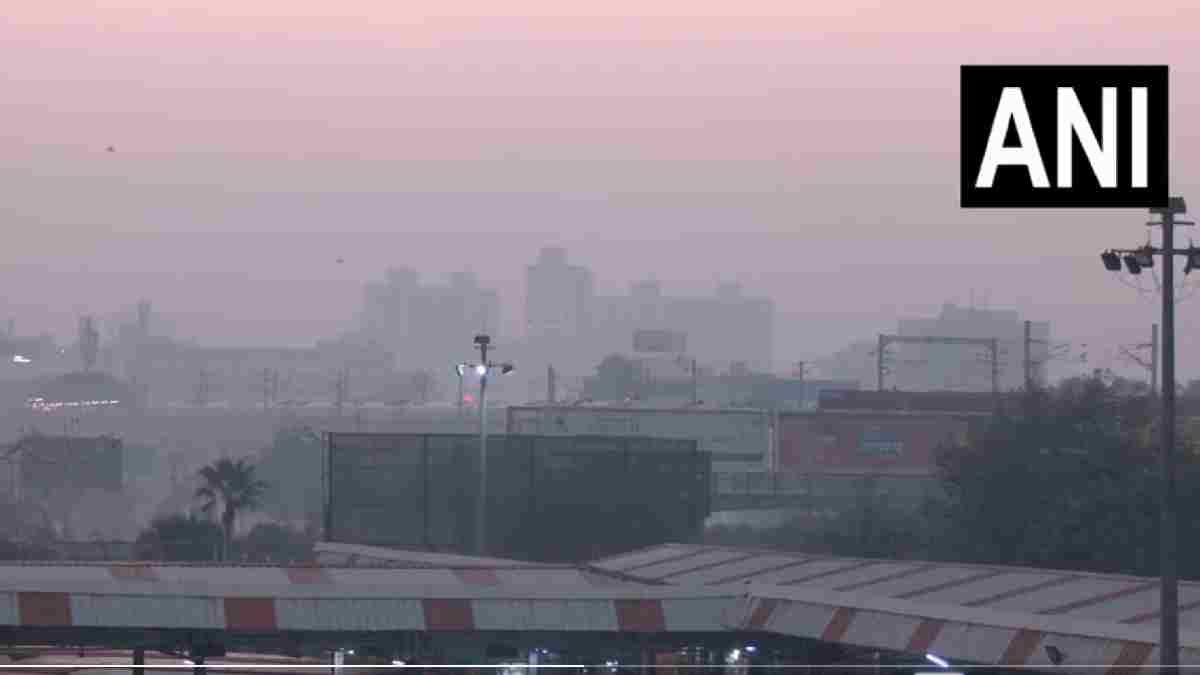
According to the reading, Delhi’s overall AQI was 230 on Friday and 244 on Wednesday. The recent uptick does show some improvement, but pollution levels still need to be kept in mind for residents in the areas where the AQI is above 200.
The Commission for Air Quality Management (CAQM) introduced Stage-I measures under the Graded Response Action Plan (GRAP) across Delhi-NCR on October 21 after pollution levels increased following Dussehra.
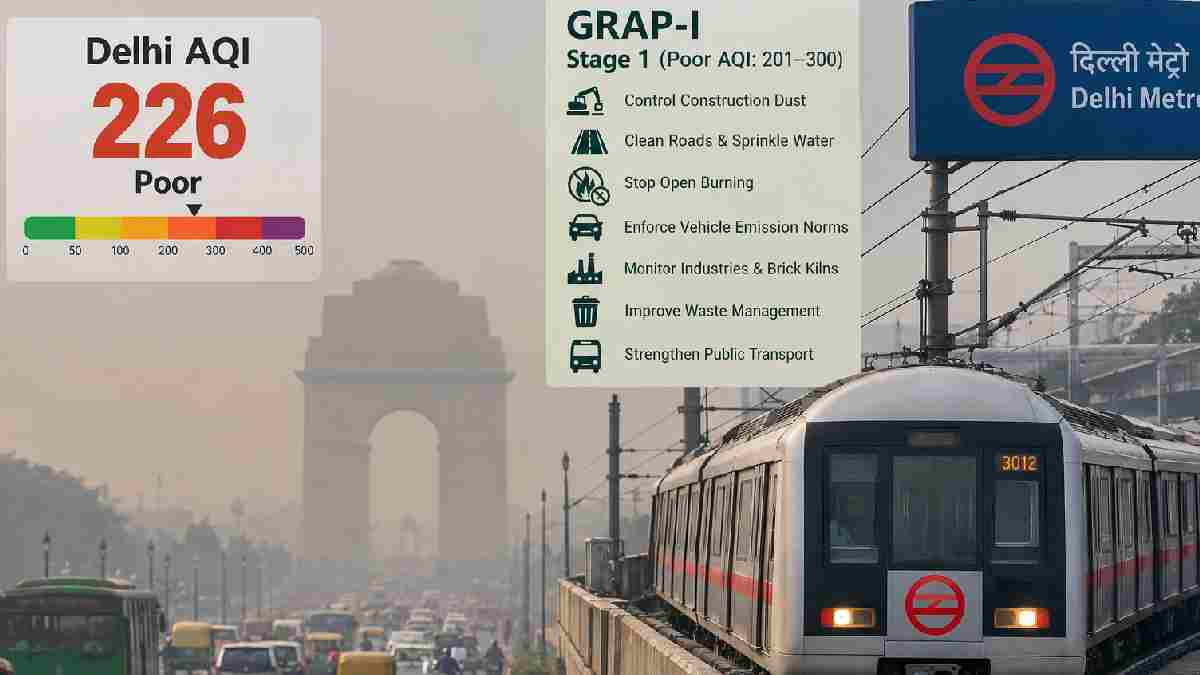
Delhi AQI Today: Narela Records the Highest Pollution Level
Area-wise monitoring data revealed significant differences in air quality in the capital. Narela recorded the highest listed AQI at 284, so it is considered to be poor. Jahangirpuri followed with 279, while Punjabi Bagh and RK Puram had 257.
DTU reported an AQI of 256, and Rohini was 247. The other places with poor air quality were North Campus of Delhi University at 233, IIT Delhi at 231, Siri Fort at 225 and Dwarka Sector 8 at 216.
Jawaharlal Nehru Stadium had an AQI of 211, while Chandni Chowk was 206. Patparganj had an AQI of 208, indicating that pollution was still high in many residential and commercial areas.
In contrast, some areas of the city also reported moderate air quality. Badarpur had an AQI of 115, Lodhi Road reported 144, and Ashok Vihar 148. Sri Aurobindo Marg had 155 and Anand Vihar 168.
These variations show why residents should check their nearest monitoring station instead of relying only on the city’s overall AQI figure.
Noida AQI: Sector 62 Records 270
Air quality in Noida and Greater Noida also varied considerably on Saturday morning.
Noida Sector 62 recorded an AQI of 270, making it one of the more polluted areas in the region. Noida Sector 125 had 211 and fell into the poor category.
Noida Sector 116 recorded an AQI of 135, and Sector 1 recorded 141, both in the moderate range.
Greater Noida’s Knowledge Park III reported an AQI of 161, while Knowledge Park V was 167. And although those stations remained in the moderate category, residents must watch for pollution levels throughout the day.
NCR AQI Today: Ghaziabad and Sonipat Report Poor Air Quality
The rest of the NCR region continued to have uneven pollution levels, and some monitoring stations reported poor air quality.
Ghaziabad Indirapuram recorded 208 AQI while Sonipat's Murthal recorded 253. Both locations fell into the poor category.
Gurugram Sector 51 reported an AQI of 181, putting it in the moderate category. Faridabad had lower readings, with Sector 11 at 121 and Sector 30 at 104.
The readings suggest that pollution remains concentrated in some areas of the region, even though other parts of the region are experiencing relatively better conditions.
What do Moderate and Poor AQI mean?
India's AQI system divides air quality into six categories, from good to severe. An AQI between 101 and 200 is moderate, and one between 201 and 300 is poor.
Moderate air quality can cause breathing discomfort to some people with asthma, lung disease, and heart disease. In this category of air quality, poor quality may cause breathing discomfort in people who are sensitive to air pollution, and the poor category may lead to breathing discomfort for more people, especially those who are sensitive to air pollution.
Residents in areas with poor AQI levels should prevent themselves from doing prolonged and strenuous outdoor exercise. Children, older adults, and those with respiratory or cardiovascular disease may take precautions as well.
Why is Delhi's air quality still an issue?
Despite the latest improvement, unfavourable weather conditions are expected to remain a challenge for pollution management. Poor winds and a lack of ventilation in air can prevent pollution from dispersing, and therefore pollution particles and other pollutants can end up on the ground.
Transport is the largest contributor to Delhi's pollution as per the source breakdown, and accounts for 20.3%. Residential sources contributed 5.2% and stubble burning contributed 5.1%, while industries contributed 4.2%.
Gurugram was reported to contribute 8.8% to Delhi's pollution among other neighboring NCR districts, followed by Jhajjar at 6.1% and Gautam Buddha Nagar at 4.7%.
The figures point out that the problem is regional, with emissions from transport, residential activities, industries, and agricultural burning adding to the pollution burden.
#WATCH दिल्ली: CPCB (केंद्रीय प्रदूषण नियंत्रण बोर्ड) के अनुसार, आनंद विहार इलाके में एयर क्वालिटी इंडेक्स (AQI) 175 है, जिसे 'मध्यम' (moderate) श्रेणी में रखा गया है। https://t.co/HVNnV87xCV
— ANI_HindiNews (@AHindinews) October 24, 2026
Stage-I GRAP Measures Continue in Delhi-NCR
Stage-I GRAP measures focus on preventive measures to control pollution before conditions deteriorate further. These include mechanised road sweeping, water sprinkling to suppress dust, regular collection and disposal of waste, and enforcement against open waste burning.
So authorities could beef up dust control measures at construction sites and monitor activities that contribute to particulate pollution.
The effectiveness of these measures depends on consistent implementation, public cooperation and weather conditions. Residents can help by avoiding the burning of waste, using public transport where practical and following official pollution advisories.
Delhi Weather Today: Maximum Temperature Around 33°C
The India Meteorological Department forecast partly cloudy skies in Delhi on Saturday with an average temperature of about 33°C and a minimum of 19°C.
On Friday, Safdarjung had a maximum temperature of 32.2°C and a minimum of 19°C, but no rainfall was reported.
The absence of rain and weak winds could limit the removal of pollutants from the atmosphere. The report said air quality may remain poor through October 26, and then similar conditions will persist over the next six days. Actual AQI readings may vary with local weather and emissions.
Delhi’s overall AQI improved to 193 on October 24, moving the city into the moderate category after several days of poor air quality. But readings from Narela, Jahangirpuri, Punjabi Bagh, RK Puram and other places show that the improvement has not been uniform.
Pollution is still high in areas of Noida, Ghaziabad and Sonipat. Residents should check local AQI readings, follow official health advisories and take precautions when pollution levels are high. The next few days will be the key to seeing whether the improvement continues or weak weather conditions lead to pollution going back up again.







Comments
Leave a Comment