
The Delhi High Court has ordered removal of six AI-generated social media posts against Delhi Chief Minister Rekha Gupta as political satire cannot be used to attack an individual’s dignity. The court directed AAP’s social media accounts to remove the disputed content published through them (AAP) since videos and images “crossed the limits” of permissible political criticism.
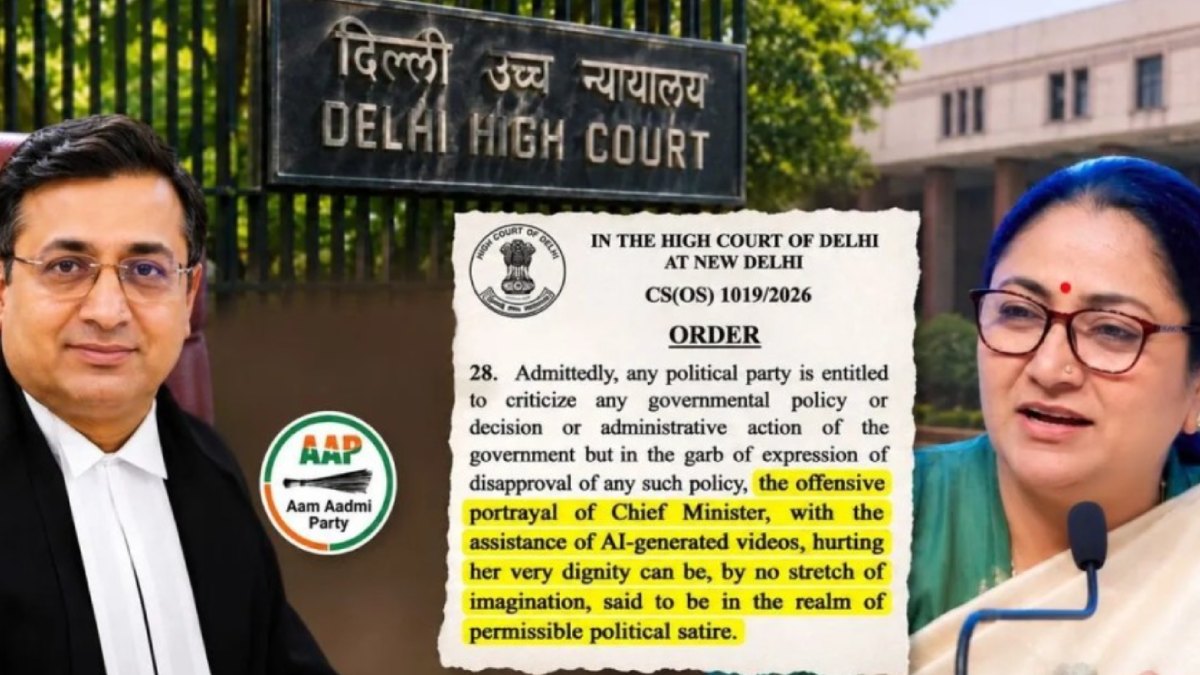
Justice Manoj Jain gave the interim order on November 6, 2026 while hearing a defamation suit filed by Rekha Gupta against AAP and others. The Chief Minister had moved court seeking permanent injunction restraining publication and circulation of allegedly defamatory AI-generated videos, images and posts.
The court said that political leaders must be open to criticism and satire but content that damages an individual’s dignity cannot automatically qualify as protected speech and expression.
Why Did Rekha Gupta Approach Delhi High Court?
Rekha Gupta filed the defamation suit against AAP over several AI-generated videos and images allegedly posted through AAP’s official and verified social media accounts.
The petition alleged that the content in dispute showed Chief Minister as a liquor vendor, hawker and delivery agent; some posts also showed her as head of a fictitious liquor distribution scheme ‘Har Har Rekha’ or ‘Ghar Ghar Theka Yojana’.
Defaming a woman CM is not political satire: Delhi HC orders AAP to remove AI videos targeting CM Rekha Gupta The Delhi High Court on November 6 ordered the Aam Aadmi Party (AAP) to remove six AI-generated social media posts targeting Chief Minister Rekha Gupta. The Court observed that political satire cannot be used to defame a woman public representative and directed the removal of the controversial videos, warning against personal attacks. #RekhaGupta #DelhiHighCourt #AamAadmiParty
— Ritam English (@english_ritam) November 7, 2026
One video allegedly showed Gupta serving liquor to men at night while a fight is happening in the background and romantic music is playing. Another AI-generated video reportedly showed her with Delhi Deputy Chief Minister Parvesh Sahib Singh pouring liquor and ice cubes.
Gupta’s counsel said the videos and images were highly derogatory, defamatory and damaging to her reputation. The petition sought removal of content immediately so it could not be circulated further on social media platforms.
The Chief Minister also sought a permanent injunction restraining the defendants from publishing circulating or disseminating the defamatory material.
What did Delhi High Court say about AI-generated videos?
When the court looked at disputed content Justice Manoj Jain said that AI-generated visuals were “really realistic” and created “a near perfect imitation”.
The court said such portrayal could create a false impression of the Chief Minister and damage her personal dignity and moral character too.
It also made the distinction between political criticism and personal attack.
The court said political parties have the right to criticise government policies, administrative decisions and actions of public representatives but “offensive portrayal of a Chief Minister by AI generated videos cannot be treated as permissible political satire”.
The court said that holding public office makes one more subject to scrutiny but that does not mean personal dignity can be sacrificed.
It also said that satire may hurt somebody’s feelings but it cannot be allowed to cause irreparable damage to someone’s dignity.
Court Draws Line Between Political Satire And Defamation
One aspect of the ruling was that the court observed about limits of political humour and satire.
The court said politicians have to be criticised, jokes made at them and public scrutiny in a democratic society that is how it works. Political parties also need to be allowed to disagree with government policies and decisions.
However, the judge said there is a difference between criticising what a political leader does and portraying that person in such a way as to attack his personal dignity.
The court said that when humour and satire become offensive depictions ridiculing an individual judicial intervention may be required.
The order also raises legal questions about AI in political communication when AI-generated visuals are used to depict public figures in situations that never happened.
Delhi HC Orders Removal Of Six Social Media Posts
After hearing the arguments and seeing the disputed material, Delhi High Court directed removal of six URLs listed in defamation suit.
Six posts were reported in all one Facebook post and five on X.
The court held that Rekha Gupta had made out a prima facie case in her favour and the balance of convenience favoured interim relief.
It also said it was concerned about how fast AI generated content can spread across social media platforms and so cause lasting reputational damage before corrective action could be taken.
The court issued summons to AAP and the other defendants and asked them to file their written statements within 30 days of receiving summons (i.e., within one month).
What Happens Next In Rekha Gupta’s Defamation Case?
The Delhi High Court’s November 6 order was an interim direction about the removal of the disputed content. The broader defamation suit will continue as the case progresses.
The court has listed the matter for further hearing on December 4, 2026.
The case is important because it raises awareness about legal responsibilities regarding publishing AI-generated images and videos (especially when public representatives are involved).
Political parties can criticise governments and their policies on digital platforms but the case asks where political satire ends and potentially defamatory content begins.
The proceedings could also stimulate wider debates about accountability for AI-generated content and protection of individual reputation in the digital age.
Comments