Ten years since the United Kingdom voted to leave the European Union, Brexit continues to shape global trade in unexpected ways. Brexit had a lot else to do with political and economic consequences, but the UK had to make its own commitments to the World Trade Organization (WTO) on agriculture.
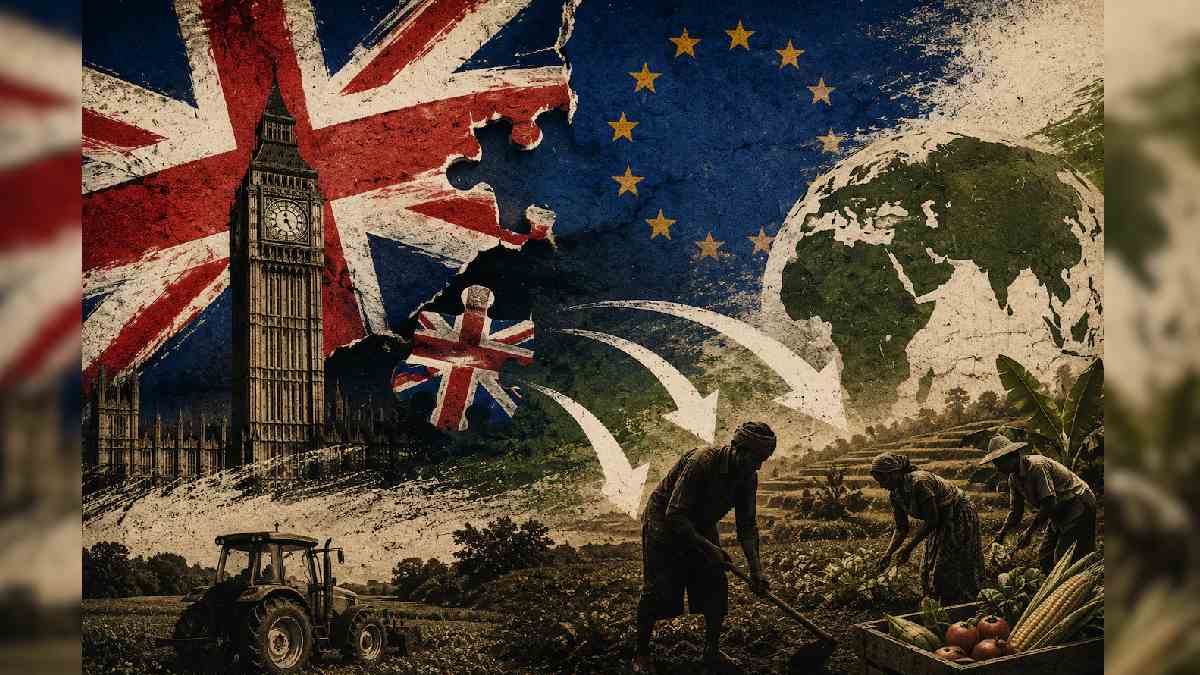
As trade experts say, the UK's new commitments have quietly expanded its capacity to support domestic farmers and are part of a wider debate on whether the WTO offers equal policy flexibility to developed countries and developing countries.
Why WTO Agricultural Commitments Matter
Under the WTO's Agreement on Agriculture, countries agree to limits on farm subsidies, import tariffs, and trade protection measures. The commitments determine how much assistance governments can legally give to farmers, when they can intervene to help farmers, and when they can act to prevent a surge in imports and protect domestic agriculture from import surges.
Countries with more policy flexibility can respond more efficiently to market shocks, falling commodity prices, or sudden increases in imports.
Brexit allowed the UK to Rewrite Its Commitments
Before Brexit, the UK was subject to the European Union’s WTO commitments, which were denominated in euros.
After leaving the EU, Britain had to form an independent WTO schedule. During this process, the UK converted its agricultural commitments from euros to pounds based on the average exchange rate between 2015 and 2019 instead of the exchange rate in the original 1986-88 reference period.
Since the British pound had weakened considerably against the euro over the decades, this technical adjustment greatly increased the UK's agricultural policy space.
Greater Room for Farm Support
Experts say the new calculation provides Britain with nearly £1 billion more flexibility in the support of its agricultural sector under WTO rules.
The updated exchange rate also increases the external reference prices used to calculate agricultural subsidies. As such, the UK government can provide more price support to farmers before breaching WTO subsidy limits.
This extra flexibility may be important in times of falling agricultural prices or in markets that are unstable.
Stronger Protection Against Imports
The new commitments will impact agricultural import tariffs as well.
For products that are subject to fixed duties rather than percentage tariffs, Britain can now impose higher import duties. For instance, the WTO-bound tariff on imported rice increases from about £142 per tonne to £177 per tonne, so Britain can protect domestic producers from cheaper imports.
Also, the UK's new commitments strengthen its ability to use the WTO’s Special Safeguard (SSG) mechanism, which allows temporary tariff increases when imports surge or global prices collapse.
Concerns Raised by India and Other WTO Members
The UK’s approach has drawn objections from several WTO members, including India, Brazil, New Zealand, Paraguay, and Canada.
These countries have questioned whether using a more recent exchange rate is consistent with the original basis of WTO commitments.
India and the United Kingdom are still in discussions on the issue, and the situation is still not resolved.
Lessons for Developing Countries
Experts argue that the debate goes beyond exchange rates.
Many developing countries have long advocated for reforms in WTO agricultural rules which still rely on benchmark prices dating back nearly four decades ago.
India has repeatedly argued that outdated reference prices make it difficult to support farmers through its Minimum Support Price (MSP) system without exceeding WTO subsidy limits.
For instance, under current WTO calculations, even modest increases in procurement prices can be classified as trade-distorting support because the benchmark prices are based on the 1986–88 period rather than current market realities.
According to them, if developed countries are allowed to modernise technical calculations to reflect current economic conditions, developing countries should be provided similar flexibility to address food security, rural livelihoods, and agricultural development.
The Bigger Debate
The discussion about Britain's post-Brexit WTO commitments highlights a broader challenge within the global trading system—that policy flexibility is fairly applied rather than selectively.
Supporters argue that keeping policy space is essential for governments to respond effectively to future crises and protect domestic agriculture and food security.
As WTO members negotiate agricultural reform, the issue of equal treatment for developed and developing economies is expected to remain a central issue in international trade discussions.
We note that the authors of this article summarize the views of the original opinion piece, and therefore, the views presented in this article are summarized. The analysis is based on WTO agricultural rules and is not necessarily the position of governments or the World Trade Organization.