The latest test launch by China’s intercontinental ballistic missile (ICBM) has raised alarms in Washington that Beijing’s “rapid and opaque” expansion of its nuclear arsenal poses a growing threat to regional and global security.
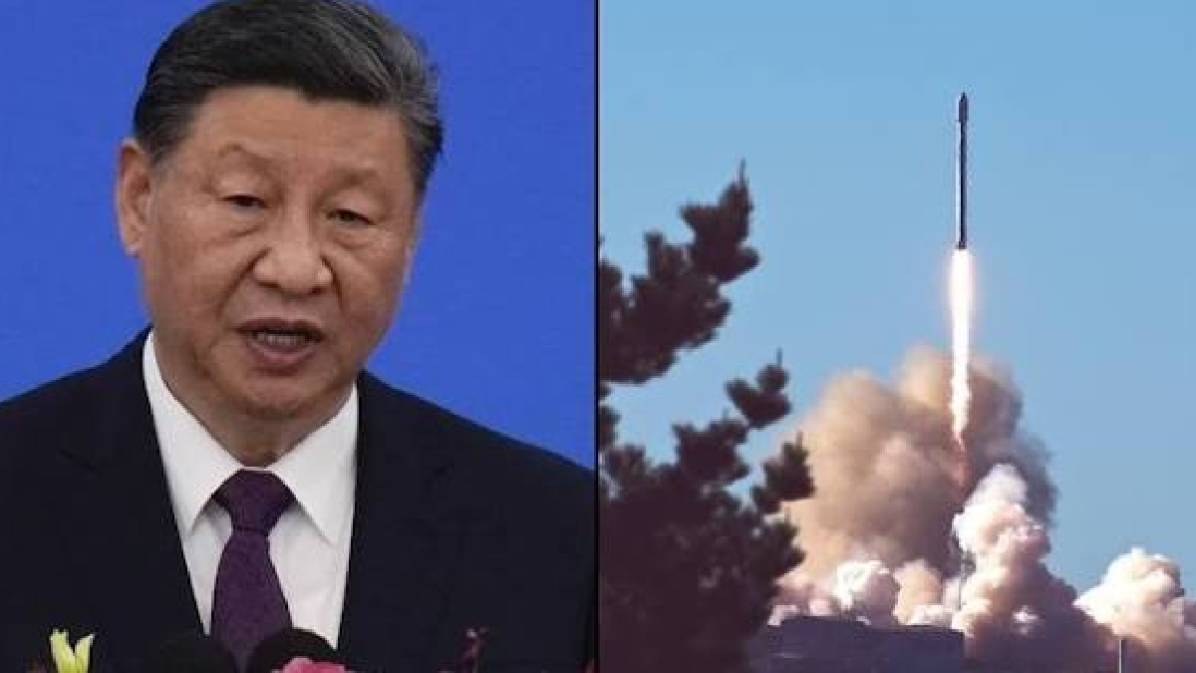
China’s long-range missile launch has added to tension with the United States at a time when the United States is trying to keep a close eye on the world’s two largest nations.
The missile test, the U.S. officials say, is indicative of China’s growing resolve to modernize its military and increase its nuclear weapons program.
Beijing’s own nuclear development is accelerating at a pace that the Pentagon has warned is worrying because China is creating more nuclear weapons and not being transparent about its motives, doctrine or future plans, it says.
The recent ICBM test sent the missile into the Pacific Ocean, which China’s nuclear-armed weapons can project over great distances.
Beijing claimed the launch was part of a routine military training exercise and is standard practice internationally, but the launch has attracted the attention of the United States and allies in the Indo-Pacific region.
US defense officials emphasized that transparency is critical for global strategic stability.
The lack of concrete data about China’s nuclear modernization efforts in the midst of geopolitical tension is problematic, they said, and the lack of explicit information about China’s nuclear modernization efforts could lead to miscalculation at times of increased geopolitical tension, they said.
Beijing has had to engage in dialogue with Washington on nuclear risk reduction and arms control, as other major nuclear powers have done in discussions about nuclear risk reduction and arms control, and has been repeatedly approached by Washington.
China, however, has defended its military expansion, saying its nuclear capabilities are defensive in nature and are intended only to safeguard national sovereignty and security interests.
Chinese authorities have also criticized the United States for having one of the world’s largest nuclear arsenals and questioned Beijing’s comparatively smaller force.
The missile launch came as China and the U.S. have been at odds over the South China Sea, Taiwan and the rest of the Indo-Pacific.
Analysts believe that displays of advanced missile capabilities are meant not only to reinforce deterrence but also indicate China’s growing confidence in its military capabilities.
Experts say China’s investment in next-generation missile systems, hypersonic weapons and missile silo construction has been increasing rapidly over the past few years.
Many intelligence assessments have said that Beijing is trying to increase the number of operational nuclear warheads drastically in the next 10 years, but Chinese officials have not publicly disclosed specific targets.
The United States has also maintained its longstanding commitment to working together with allies like Japan, South Korea, Australia and other Indo-Pacific partners to maintain regional stability.
And it has also emphasized strengthening missile defense cooperation and credible deterrence against emerging threats.
The new missile test shows that in the Indo-Pacific the nuclear competition is increasingly focused on advanced military technologies and nuclear deterrence.
With Washington and Beijing upgrading their armed forces the rest of the world should keep an eye on the situation and urge diplomatic engagement to prevent a conflict.
The growing attention on nuclear transparency has led to growing concerns that the most important communication between major powers will be key in avoiding a misinterpretation and for long-term strategic stability as the world security context is more complex.