The construction of the Vadodara bullet train station has reached a significant milestone with slab casting completed at the concourse, track and platform levels and structural steel erection now progressing at the site. The project is a part of the ambitious Mumbai-Ahmedabad High-Speed Rail (MAHSR) corridor which is India's first dedicated bullet train project.
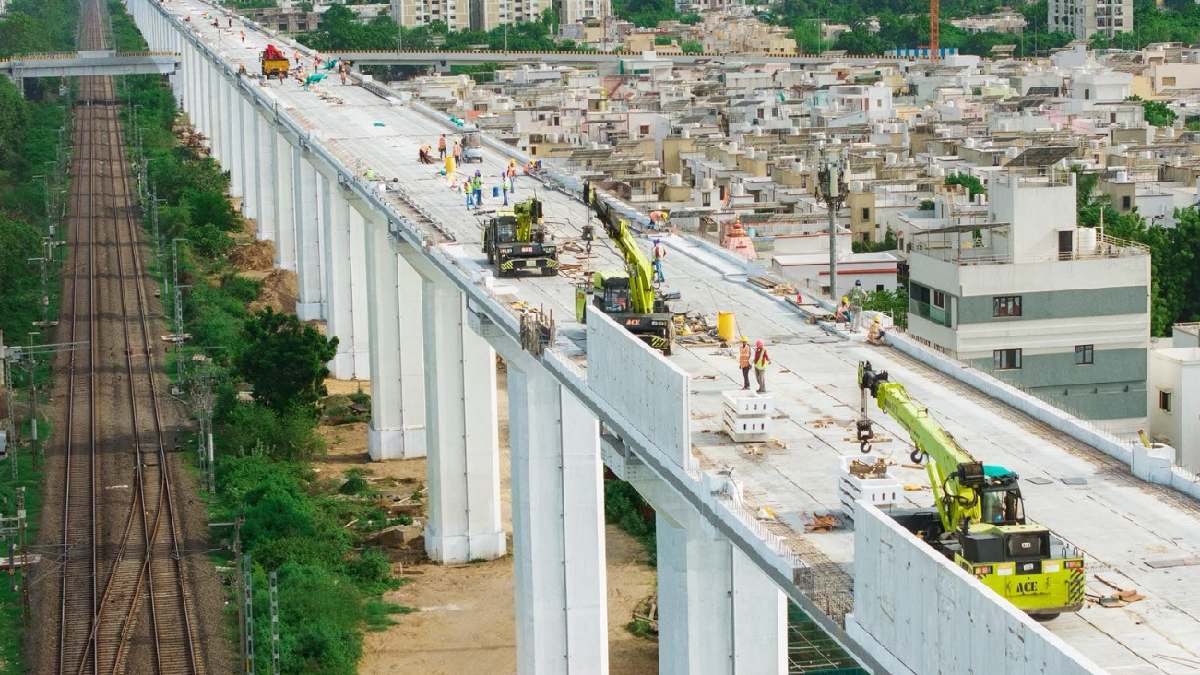
The Vadodara railway station will be constructed near the existing Vadodara Railway Station, on the Pandya Bridge. One of its key features is that it will be integrated with railway infrastructure. The high-speed rail station will be built above Platform No. 7 of Vadodara Railway Station for easy transfers between the railway services and bullet trains.
In the latest construction update, slab casting across the concourse, track and platform levels has been completed. Structural steel erection has started and is progressing on site. Steelwork is one of the key elements of the station’s superstructure and will be followed by architectural finishing, passenger amenities and other infrastructure as the project goes forward.
The railway station should provide seamless commuter connections between Gujarat and other major cities in high-speed rail. It will be close to the existing railway station so that the way of moving people will be easier and there will be a lot of multimodal transport.
The National High Speed Rail Corporation Limited (NHSRCL) has highlighted the station's connection with the Western Railway network and to local and interstate bus depots. It is supposed to make the bullet train service more accessible to passengers who arrive by regular trains, buses, cars and auto-rickshaws.
Vadodara is among 12 stations on the 508-kilometre Mumbai-Ahmedabad High-Speed Rail corridor that will connect Mumbai in Maharashtra to Ahmedabad in Gujarat via a dedicated high-speed railway line. Once it is operational, it will reduce travel time between the two major cities drastically and will be a new benchmark for high-speed rail infrastructure in India.
Vadodara station is also unique in its design. The banyan tree, or Vat tree, is the basis for the construction and the source of the name of the city is associated with it. The architectural approach aims to give the station a visual identity that is rooted in Vadodara’s local character and yet modern infrastructure suitable for high-speed rail.
The interior design is one of natural daylight and open views and the interiors are designed to give passengers a better sense of space and open space in the station. Modern engineering and local architecture will make the station a landmark in the corridor and it will likely be integrated with the modern architecture.
When Vadodara bullet train station comes to fruition, there will be several passenger facilities (waiting lounges, baby care room, restrooms) and retail outlets. Cars, buses and auto-rickshaws will also have parking areas and designated pick-up and drop-off zones. These were built to increase convenience and decrease congestion in passenger flow areas.
Work on the entire Mumbai-Ahmedabad High-Speed Rail corridor has continued in Gujarat and Maharashtra. Major projects are station construction, viaduct development, bridge launching and track-related infrastructure. The progress at Vadodara shows that there is construction activity across the whole corridor as different elements of the project are being put into place.
The Vadodara station has entered an important phase of construction with slab casting and structural steel erection. The collaboration of the station with the existing railway network, multimodal connectivity and banyan tree-inspired architecture will make it a unique element in the first bullet train corridor in India. As work is carried out it will become a transport junction between high-speed train and the existing railway and road networks in Vadodara in the future.