China's AI industry has achieved another significant success with Kimi K3, developed by Moonshot AI, finishing at No. 1 on the Frontend Code Arena leaderboard with a score of 1,679 points, surpassing Claude Fable 5. The achievement has renewed China's competitive edge in the global AI industry and the efficiency of its AI development process.
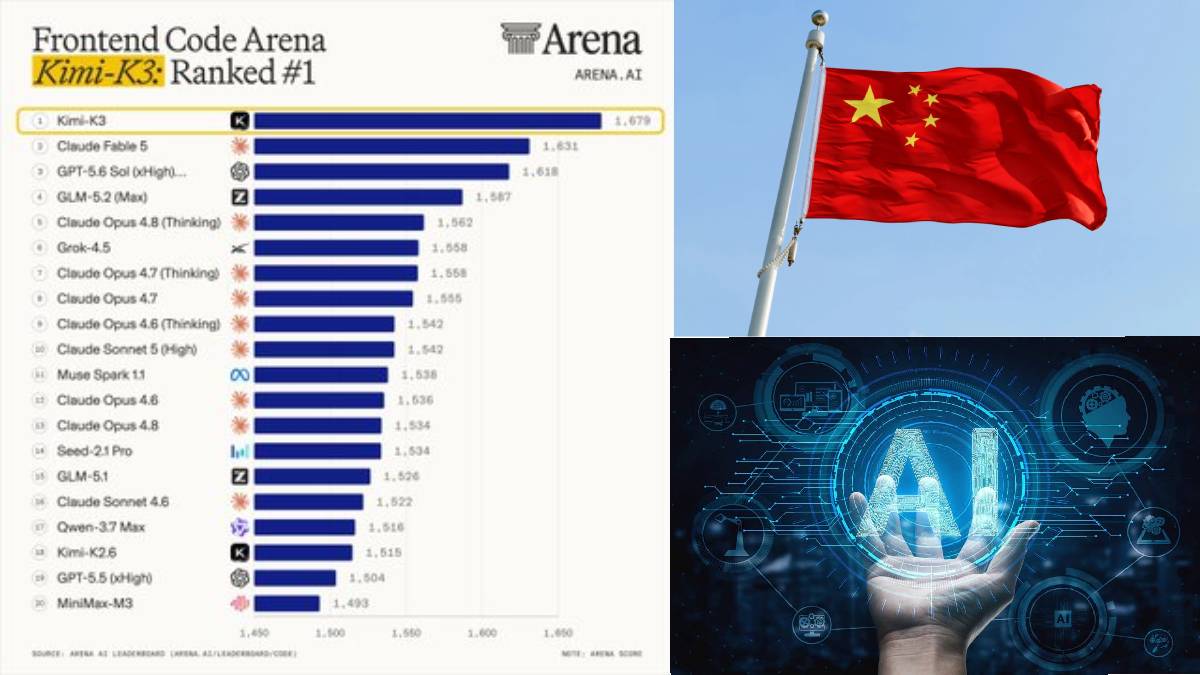
The latest benchmark result comes as Chinese AI companies are producing very highly capable large language models that are much cheaper than their U.S. counterparts. Although these cost comparisons vary and are difficult to verify independently, China's recent AI advances have shown that competitive performance can be achieved through optimization, efficient model design, and innovative training techniques.
Kimi K3's top spot in the Frontend Code Arena shows its ability for software development tasks that include writing, debugging, and optimizing frontend code. Coding benchmarks have become a critical measure to assess the abilities of modern AI assistants in the development field and how well they help developers to design web, user interface, and programming challenges.
The rapid rise of Chinese AI models has changed the competitive landscape of artificial intelligence. Companies like Moonshot AI are joining a growing number of Chinese companies developing advanced large language models for enterprise, consumer, education, and research applications.
The global AI race is no longer limited by the size of the computing infrastructure or financial investment, analysts say. Algorithmic efficiency, model architecture, data optimization, and inference performance are improving, and companies can build competitive AI systems with lower development costs.
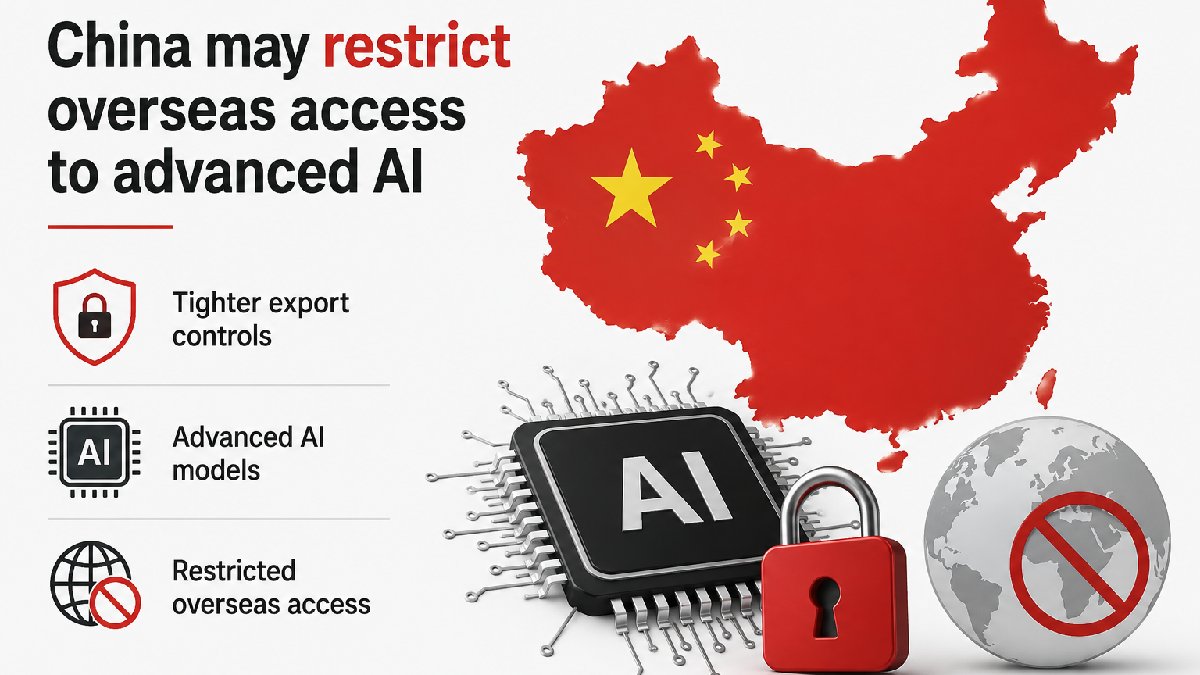
China has made artificial intelligence a national strategic priority, investing heavily in AI research, semiconductor development, cloud computing infrastructure, robotics, and digital technologies. Government support, academic research, and private sector innovation have together accelerated the country’s progress in developing world-class AI capabilities.
At the same time, the United States continues to lead in several areas of AI innovation, such as frontier model research, advanced semiconductor technologies, venture capital investment, and the commercialization of cutting-edge AI systems. Leading American AI companies remain at the forefront of foundational model development and enterprise AI adoption.
The development of Kimi K3 as the best coding model in AI indicates that the race for AI leadership in the world is on its way up. Developers and businesses now have a wider range of high-performing AI systems from different countries and can rapidly advance.
But experts warn that benchmark rankings are only one aspect of AI performance. Real-world deployment will depend on reasoning ability, safety, reliability, multilingual support, cost of operation, enterprise integration, and user experience.
As AI takes hold and transforms industries such as software engineering, finance, manufacturing, and education, competition between Chinese and American AI developers is likely to grow in pace. Model efficiency and cost optimization will play an increasingly important role in determining future leadership in the global AI ecosystem.
Kimi K3’s success is a sign of China’s rising influence in artificial intelligence and the country’s drive to become an international leader in next-generation technology. While the AI race is much more competitive, the latest benchmark shows that innovation is driven by technology, and it is also a result of resource utilization that is much more efficient.