China has unveiled a mosquito-sized spy drone measuring only 0.6 centimeters, a step in the development of tiny unmanned aerial systems. The drone was designed to conduct stealth surveillance and reconnaissance missions, and it’s evidence of how robotics, microelectronics, and artificial intelligence are transforming intelligence gathering today.
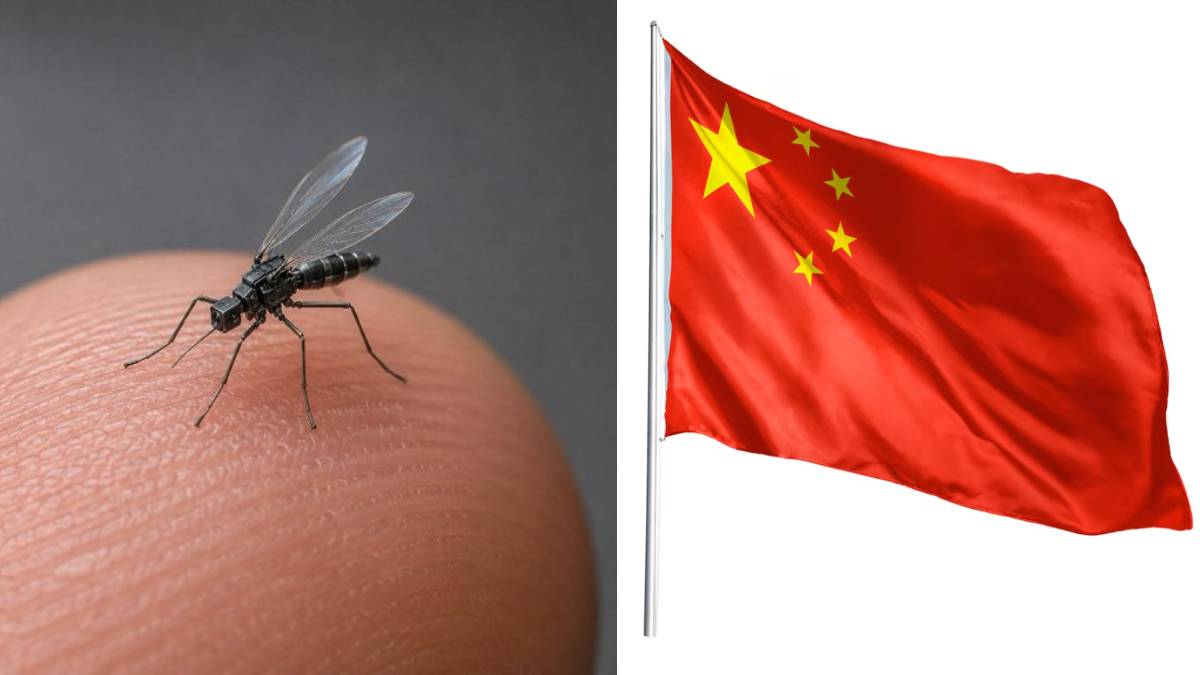
Despite its tiny size, the drone is designed to perform tasks that drones that are much larger than it do. It can be discreetly moved around in small spaces and will be more effective for covert surveillance, intelligence collection and reconnaissance in environments where drones are usually unseeable.
The mosquito-inspired drone looks and moves like an insect, which makes it extremely difficult to detect during operations. Biomimetic design is increasingly a trend in defense research worldwide as researchers look to nature for inspiration to create machines that can navigate complex environments at a low power.
Miniature drones like this could be deployed for monitoring sensitive locations, collecting visual or environmental data, or for military and security purposes in urban settings. Their small footprint also makes them potentially useful in disaster response missions, hazardous industrial inspections, and scientific research in which access to confined spaces is vital.
The unveiling has drawn international attention because of its potential implications for military strategy and national security. Drones are shrinking in size but are equipped with much more advanced sensors and communication capabilities, so experts say the future battlefield and intelligence operations will likely be dependent on swarms of micro-UAVs that can rapidly fly autonomously or in a synchronized manner.
But that development has also raised privacy, cybersecurity, and misuse fears. Tiny drones that are hard to detect could be used for unauthorized surveillance, espionage, or data collection, presenting new challenges for governments and security agencies. To detect and counter such miniature aerial systems, we would need new technologies, such as advanced radar systems, acoustic sensors, radio-frequency detection tools, and AI-powered counter-drone solutions.
China has extensively invested in next-generation military technologies, including artificial intelligence, autonomous systems, robotics, and advanced drone platforms. The mosquito-sized drone is in line with the country’s larger strategy for developing new defense capabilities that leverage miniaturization and intelligent automation.
More recently, many countries, including NATO members, have also been developing robotic drones inspired by insects for both military and civilian purposes. Researchers have been looking at designs that mimic birds, insects and other flying creatures so that they can fly like them, be more efficient and camouflage themselves.
Though the details of China’s mosquito-sized drone have yet to be revealed, the announcement points to a growing race for micro-drone technology. Future versions may also have high-resolution cameras, microphones, environmental sensors, encrypted communications, and AI-driven autonomous navigation to enhance the drone's capabilities.
As drone technology continues to evolve, innovations like this are expected to reshape surveillance, reconnaissance, and security operations worldwide. A 0.6 cm mosquito drone to spy on a target is an example of how, in modern defense technology, smaller could be smarter and even more powerful.