A major diplomatic and political controversy has erupted following a highly provocative statement made by a retired Brigadier General of the Bangladesh Army. Brigadier General (retd) Abdullahil Amaan Azmi sparked outrage by asserting that Bangladesh will not achieve "complete peace" until India "breaks into pieces."
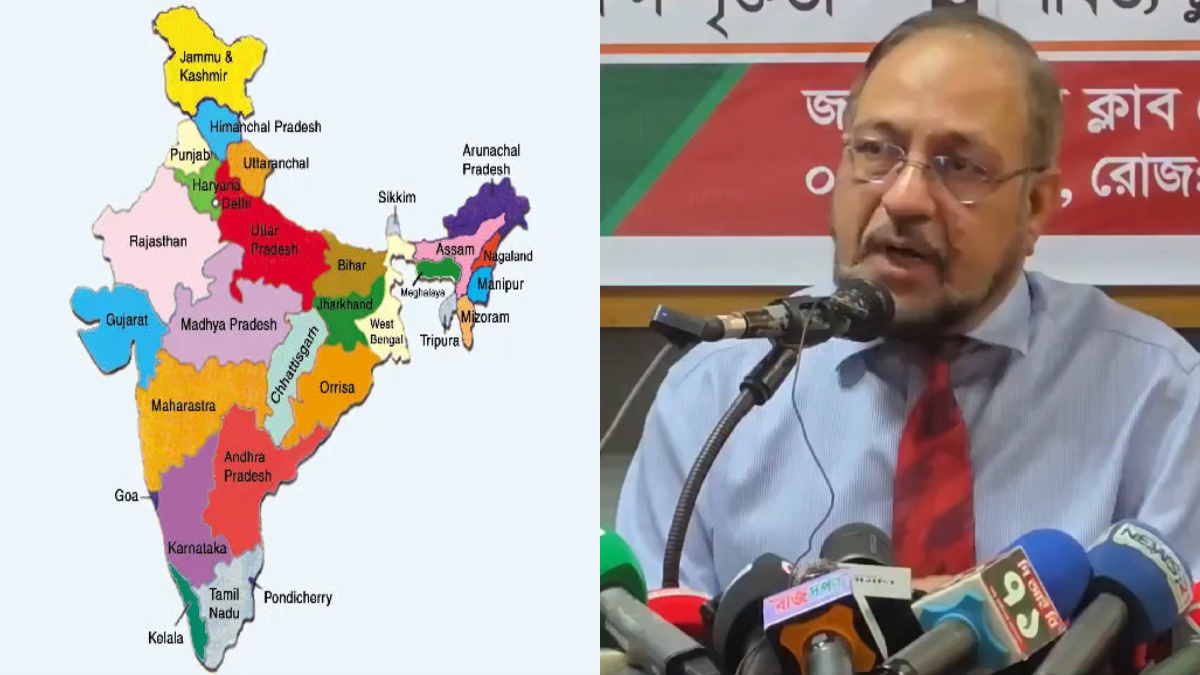
The inflammatory comment was made by Azmi, the son of the late convicted war criminal and former Jamaat-e-Islami leader Ghulam Azam, during an event held at the National Press Club in Dhaka. Azmi directly accused New Delhi of deliberately orchestrating instability in its neighbouring nation. “Bangladesh will not see full peace as long as India does not break into pieces,” he stated, alleging that India constantly keeps unrest alive inside Bangladesh.
Allegations of Indian Destabilization
Azmi further escalated his rhetoric by blaming India for long-standing tensions in the Chittagong Hill Tracts (CHT) region, which borders India. He claimed that New Delhi had supported armed groups in the CHT during the 1970s and 1990s, specifically mentioning that India had trained and armed the Shanti Bahini, the militant wing of the Parbatya Chattogram Jana Samhati Samiti (PCJSS), which was involved in violent conflict until the 1997 Peace Accord. He dismissed the disarmament efforts under that accord as "only for show."
This statement is the latest in a series of anti-India comments from figures associated with opposition groups in Bangladesh since the change in government. Earlier this year, another former military officer linked to the current interim administration had also made provocative remarks about aligning with China to potentially "occupy" India's northeastern states, a statement which the current Bangladesh government promptly distanced itself from.
India's Reaction and Context
Azmi's remarks have drawn sharp condemnation and criticism from Indian analysts and political commentators, who view his comments as deeply hostile and reflective of an extremist mindset, particularly given his familial ties to the 1971 war criminal Ghulam Azam. The comments echo similar hostile rhetoric from some elements in the region, seeking to destabilize bilateral relations between India and Bangladesh, which were historically strong under the previous government.

While the current interim government in Bangladesh has not immediately issued an official statement on Azmi’s specific comments, such calls for India’s disintegration are widely seen as fringe rhetoric that contradicts the principles of peaceful co-existence and mutual respect that underpin the bilateral relationship. The row highlights the continued undercurrents of political tension and extremist ideology within the region that pose challenges to diplomatic ties.