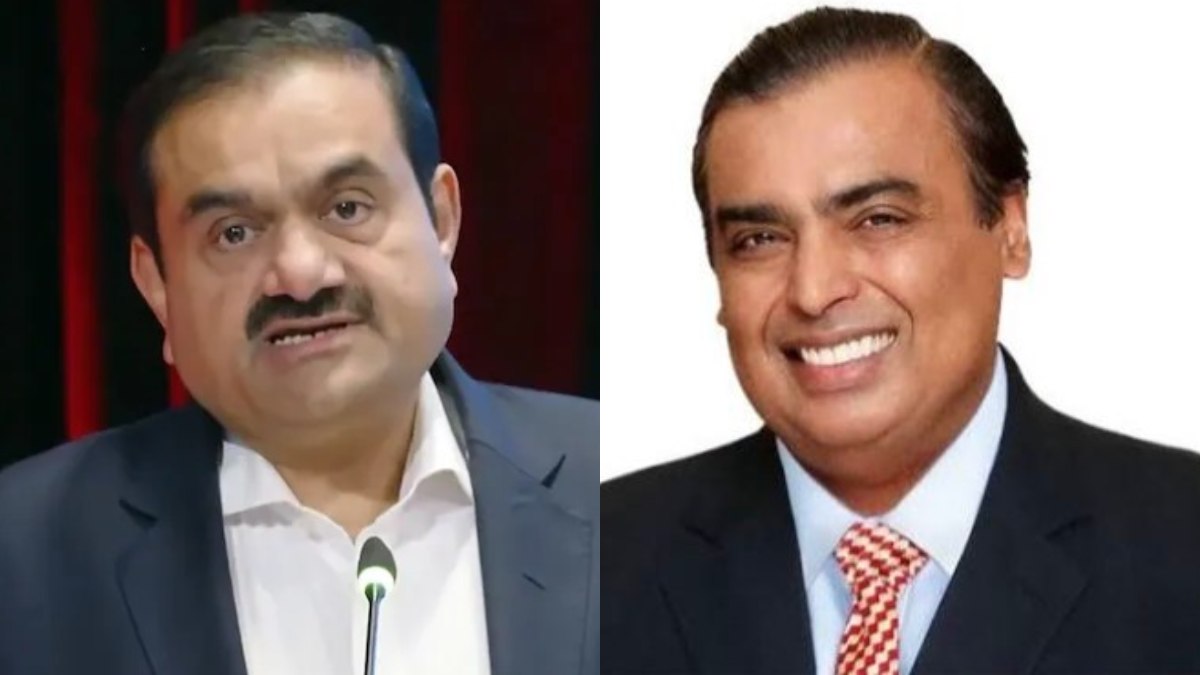
A major legal development has brought much relief to Gautam Adani after a US federal judge approved the dismissal of the criminal charges against Gautam Adani in the US and sharply criticized the US Department of Justice (DOJ) for its decision to abandon the case.

U.S. District Judge Nicholas Garaufis of the Eastern District of New York approved the government’s request to end the criminal prosecution involving Adani. The case has attracted international attention since U.S prosecutors in 2024 accused Adani and others of having been involved in an alleged bribery scheme involving solar-power projects in India and misleading US investors. Adani and the Adani Group have denied wrongdoing.
The judge’s decision is a major legal victory for Adani, but it also raised questions about how DOJ decided to withdraw the prosecution. Garaufis said he was troubled that senior DOJ official Trent McCotter seemed to make an abrupt announcement without considering the views of officials and investigators who had previously worked on the case.
Judge Questions DOJ's Decision-Making Process
But the legal fight over the case did not end when the Justice Department said that it would no longer pursue the case.
In May, the DOJ asked the court to dismiss the indictment, saying it had decided not to devote more resources to the prosecution. Judge Garaufis at first thought the government's explanation was insufficient and asked for a more detailed explanation of why it dropped the case.

And the Justice Department argued that the prosecution was primarily foreign in nature, difficult to prove and inconsistent with the agency’s current priorities. The prosecutors also questioned whether the alleged conduct fell within the appropriate reach of US law.
Judge Garaufis, however, looked at how the decision was made. His concerns were about whether senior DOJ officials had sufficiently consulted career prosecutors, investigators and other government agencies involved in the original investigation.
The judge did ultimately order the dismissal, but his criticism has also made the case a great example of judicial scrutiny of prosecutorial discretion.
Did Adani's $10 Billion US Investment Pledge Matter?
One of the most closely watched issues was whether Adani's previous pledge to invest approximately $10 billion in the United States had any connection with the government’s decision to end the criminal case.
The issue was made more complicated after it was revealed that Adani’s legal team had discussed the investment plan with US officials during the talks around the case. Judge Garaufis specifically explored whether there had been any quid pro quo— that is, whether an investment commitment had been traded for the dismissal of the prosecution.
Adani said the investment pledge did not prompt the Justice Department to drop the criminal prosecution. The DOJ also denied that the planned US investment influenced its decision to seek dismissal.
After reviewing the matter, Garaufis found no evidence that Adani’s investment pledge had influenced the government’s decision to dismiss the criminal charges. But he also questioned the unusual nature of the decision-making process, and the extent to which senior DOJ officials relied on their own judgment rather than the views of those officials involved in the investigation.
What were the original charges?
The criminal case started in 2024, when U.S. prosecutors accused Adani and other executives of taking more than $250 million in alleged bribes to Indian government officials to secure favourable terms for solar-energy projects.
Prosecutors also said that investors in U.S. markets were misled about the company’s anti-corruption policies and circumstances of the projects.
Adani and his group denied the allegations, saying that the US prosecution was inappropriate and that the charges were legally and factually flawed. His lawyers later argued that the case was conducted primarily outside the United States and that prosecutors faced considerable obstacles to proving the allegations.
It is important to distinguish the dismissal from a judicial finding that the underlying allegations were false. The court’s action ends the criminal prosecution; it does not amount to a trial verdict establishing that the alleged conduct did or did not occur.
Relief for Adani Group
But the dismissal removes one major source of legal uncertainty that has weighed on the Adani Group since the charges were announced.
The same effect will be felt by investors in the stock market regarding Adani Group companies. Adani Enterprises, Adani Power, Adani Green Energy and Adani Energy Solutions are expected to attract the attention of investors after the decision by the court to drop the US criminal case.
Adani and his family have also been involved in separate US trials. Gautam Adani and his nephew Sagar Adani agreed to settlements over civil allegations brought by the US Securities and Exchange Commission, and Adani Enterprises agreed to a $275 million settlement with the US Treasury Department over allegations that it had been involved in Iran-related sanctions. These matters are separate from Judge Garaufis’s criminal bribery case.
A Major Legal Turning Point
Gautam Adani’s dismissal is an unequivocal blow to the U.S. legal and reputational pressure, and the public will find it a big turning point.
The decision eliminates the immediate threat presented by the criminal prosecution, while the judge’s criticism of the DOJ ensures that questions about how the case was abandoned will remain part of the broader discussion.
The crucial takeaway is twofold: Adani has obtained significant legal relief from the criminal case now that the criminal case has been dismissed, but the court didn’t just support every aspect of the government’s rationale. Judge Garaufis examined the DOJ’s actions and raised questions about whether established investigative and prosecutorial procedures were properly followed.
The ruling will be closely watched in India and the United States, in particular because it sits at the intersection of corporate governance, international business, US prosecutorial authority and the treatment of cross-border corruption cases.
For investors, however, the focus will now move from the criminal indictment to the possible business and market implications of the dismissal, and the pending scrutiny for Adani Group on the regulatory and legal front.