The reported meeting between industrialist Gautam Adani and Karnataka Deputy Chief Minister and state Congress leader D.K. Shivakumar has triggered much political debate in Karnataka. The high-profile encounter took place at Shivakumar’s residence in Sadashivanagar in Bengaluru, but there was no official media update from the Chief Minister’s Office (CMO), which has added to the speculation around the meeting.

Such meetings between senior political leaders and business personalities are not all that unusual, especially when big infrastructure projects, investments and industrial development are involved. But the silence from the CMO has drawn attention because official government social media accounts often share photos and details of such meetings with key industrialists, investors and public figures from large companies. It’s in this situation that political and opposition organisations have wondered whether the decision not to publicise the meeting was motivated by the fact that it was not on the agenda.
So far, there has been no official explanation as to why the meeting was not widely publicised through the CMO's usual digital communications channels. Because of the lack of information, there is speculation about the nature of the discussion between Adani and Shivakumar. But as a matter of fact, the absence of an official social media post alone does not mean that the meeting was political or controversial.
The development has particular political relevance because the Congress party has been the most critical of the Narendra Modi-led central government for its association with large corporate groups such as the Adani Group. Congress leaders have been raising questions about “crony capitalism” and have questioned the government’s dealings with big business houses. So in the current context of political polarisation, a meeting between a Congress-ruled state’s leader and Gautam Adani naturally offers opposition parties the chance to question the government’s position.
The meeting has also generated debate because the Adani Group has business interests in Karnataka. Adani-linked companies have expanded their presence across several sectors including infrastructure, energy, logistics and manufacturing. The ACC cement plant in Chittapur has also been mentioned in the political debate surrounding the reported meeting.
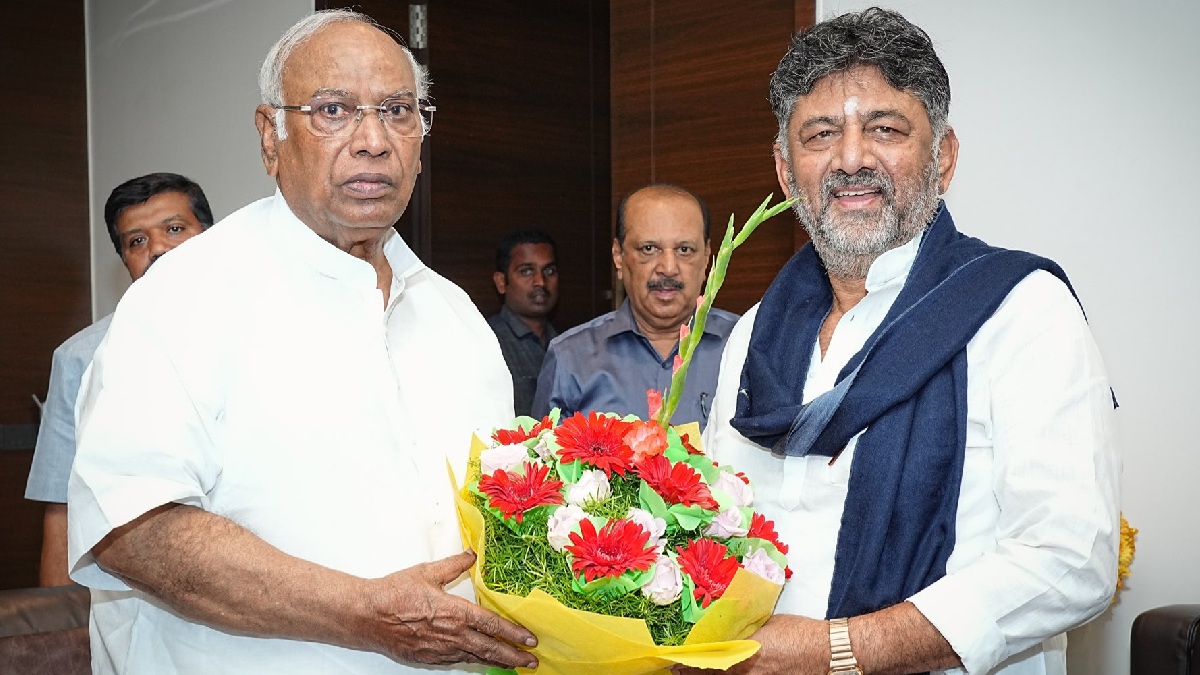
Karnataka Home Minister Priyank Kharge played down the political significance of the interaction, saying the meeting was rather a normal, non-political meeting. Adani’s meeting with the Chief Minister should not be compared with a meeting between the Chief Minister and a contractor or businessman involved in projects in the state.
Kharge also cited the Adani Group's acquisition of the ACC cement plant in Chittapur and said the government has to operate within the framework of the law. He added that regardless of the political views on Adani, the government must follow rules and regulations on all the businesses operating in Karnataka.
The minister further stated that the Adani Group was the lowest bidder for two projects in the state. He also said the government does not have to interfere arbitrarily in a competitive tendering process and companies involved in tenders have to act as per the rules. He replies that the government should play a role in making sure that the tender process is conducted according to law rather than intervening because of the identity of a bidder.
The controversy therefore revolves around two separate issues: the political optics of the meeting and the government's policy towards business and infrastructure projects. Congress leaders may consider their encounters with big corporations as routine governance, but the party’s national criticism of the Adani Group makes such meetings politically sensitive.
The challenge for the Congress government in Karnataka will be transparency and political communication. Information on meetings with big investors could prevent speculation, especially if the government is trying to deflect criticism from the opposition and at the same time defend its policies from others. At the same time, government officials also interact regularly with corporate representatives for discussions regarding investments, employment, infrastructure and development, and these are not indicative of special treatment.
The Adani-Shivakumar meeting is therefore likely to remain a talking point in Karnataka politics. The CMO's relatively little public communication has left room for some differing opinions, and Priyank Kharge's answer about the meeting has also suggested that the government wants to frame the interaction as part of routine administrative and business interaction. The issue may eventually become a larger political controversy, but the outcome will largely depend on what is actually known about the meeting and the extent to which opposition parties seek to clarify it with the Karnataka government.