India’s heritage is not limited to its most famous places. Jaipur, Agra, Delhi and Udaipur are big cities that people come to because they have these forts, palaces and monuments in our country that are a big part of our history, and there are many smaller towns in India that provide a similar picture.
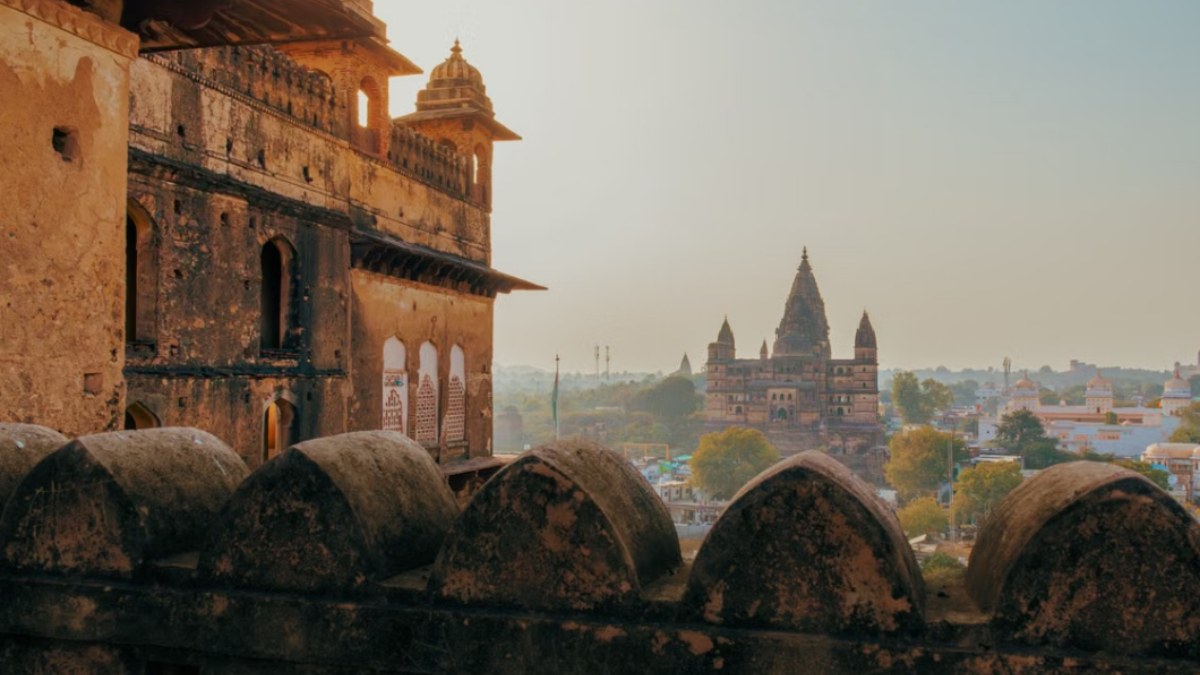
These cities often blend historic architecture with local customs, crafts, food, and landscapes. They can offer a slower travel experience than India’s busiest tourist centres.
These are seven lesser-known heritage towns to visit on your next holiday. From medieval kingdoms and painted havelis to riverside temples and ancient forts.
1. Orchha, Madhya Pradesh
Orchha is one of Madhya Pradesh’s most distinctive heritage places on the banks of the Betwa River.
The Bundela rulers founded the city in the 16th century, and it is home to palaces, temples, and cenotaphs. The Orchha Fort complex includes the Raja Mahal and Jehangir Mahal, and the Chaturbhuj Temple and Ram Raja Temple add to the architectural and cultural significance of the town.
One of Orchha’s most recognisable sights is its group of riverside chhatris, or cenotaphs, that line the Betwa and make an impressive landscape around sunrise and sunset.
Orchha also has something more than sightseeing. Tourists can go to the city for heritage walks and the Betwa River offers opportunities for kayaking and rafting.
Orchha’s medieval architecture, temples and relatively relaxed atmosphere make it a place for travellers to go to see the history without the pace of a big city.
2. Chanderi, Madhya Pradesh.
Chanderi is another Madhya Pradesh town where history and traditional craftsmanship marry.
The city has a long history of handloom weaving and is perhaps best known for Chanderi sarees, which are lightweight and have rich textures and beautiful traditional motifs.
Chanderi’s historical landscape includes forts, palaces, mosques and other structures associated with different periods of Indian history.
A heritage trip to a city in a wooded area, with hills and forests, is also a natural factor. Travellers can combine architectural research with visits to local weaving communities and markets.
For those interested in Indian textiles, Chanderi offers more than just a chance to buy a saree. There is a particular cultural aspect to the town’s weaving tradition and historic monuments there.
3. Maheshwar, Madhya Pradesh
Maheshwar is located on the banks of the Narmada River and is home to temples, ghats and a historical fort.
The town became very prominent during the reign of Ahilyabai Holkar, who made Maheshwar her capital. The fort and riverside buildings are the architectural legacy of the Holkar era.
The Maheshwar ghats are one of the most recognizable sights in the city, and temple and stone structures are located along the Narmada.
Maheshwar is also linked with Maheshwari textiles, a celebrated handloom known for its distinctive patterns and lightweight fabric. The craft is still a part of the town’s cultural economy.
We can therefore combine heritage sightseeing with riverfront walks and an introduction to traditional weaving at this site.
4. Mandu, Madhya Pradesh.
Mandu is situated on a historic plateau in the present-day Dhar district and is known for its medieval architecture and atmospheric ruins.
The city has a good collection of palaces, gates, mosques, and other structures dating mostly from the medieval period. Jahaz Mahal, or Ship Palace, is built between a pair of lakes and is designed to look like a vessel floating on water.
Mandu is especially attractive for travellers who like to see large historical complexes much more than just individual monuments.
The landscape around the ruins adds another dimension to the experience. The plateau, lakes and surrounding valleys offer opportunities for cycling, hiking and photography alongside heritage exploration.
The city’s combination of architecture and natural scenery is ideally suited for a slower Central India road trip.
5. Bundi, Rajasthan.
Rajasthan is known for Jaipur, Udaipur and Jodhpur, but Bundi provides a quieter option for travellers interested in the state’s history.
The town is noted for its hilltop Taragarh fort, palace complex, historic stepwells and narrow streets lined with old buildings.
Bundi Palace has the best murals and paintings of royal life, mythology and local traditions. The town’s historic water management structures such as its baoris or stepwells are also part of its architectural heritage.
Bundi is quite compact, so it can be explored on foot, and people can see many of its historical places. The surrounding Aravalli landscape also provides a dramatic backdrop to the town.
Bundi offers a different perspective for those who would like to know Rajasthan's architectural character without restricting their trip to the state's most famous cities.
6. Mandawa, Rajasthan.
Mandawa is known for its painted havelis that are in the Shekhawati region of Rajasthan.
The city was one of merchant families’ major hubs and developed elaborate painted mansions with bright frescoes. Many of these paintings show mythology, historical scenes, trade, daily life, and influences from outside India.
The result is a streetscape that is unusual, where ordinary lanes can exhibit very ornate facades, courtyards, and balconies.
Mandawa is sometimes called an open-air art gallery for the large number of painted buildings in the town. It is a chance to see Rajasthan’s merchant heritage as well as the better-known royal history.
A walking tour is the best way to see the town and examine the architectural details and frescoes at their own pace.
7. Dhar, Madhya Pradesh.
Dhar offers another lesser-known destination for travellers interested in the history of Central India.
The city was once part of the Paramara dynasty and went through various political and cultural changes. Dhar Fort is among its most important historic monuments and reflects the region’s layered architectural history.
Dhar has other archaeological and heritage attractions as well, making it useful as a base for exploring the wider area.
Dhar is a much more understated tourist destination compared with other popular tourist destinations. Its appeal lies in the opportunity to explore historical sites while also experiencing a functioning regional town rather than a destination built entirely around tourism.
For history lovers, this can make the journey feel more exploratory and less predictable.
Why visit lesser-known Heritage Towns?
India’s smaller heritage towns demonstrate that historical travel does not always require visiting the country’s most famous monuments.
Orchha, Maheshwar, Chanderi, Mandu, Bundi, Mandawa and Dhar offer different combinations of architecture, craft traditions, religion, local history and landscapes.
They can also be very rewarding for travellers interested in photography, architecture and slow travel. From the painted havelis of Rajasthan to the riverside ghats of Maheshwar and the medieval ruins of Mandu, each destination brings an entirely different side of India’s cultural heritage.
Travellers need to check local monument timings, seasonal weather, accommodation availability, and road or rail connections before making a trip. Some heritage towns have limited tourism infrastructure compared to major Indian cities, which is part of their appeal but also requires a little more planning. For anyone looking to take a break from the standard tourist circuit, these towns offer a chance to explore India's history at a more relaxed pace.