A strong 6.0-magnitude earthquake hit the Gulf of Aden between Somalia and Yemen in the early hours of Friday morning, shaking parts of the Horn of Africa and the Arabian Peninsula. The earthquake occurred in the Gulf of Aden, about 145 km offshore of the Somali coast, the USGS said. It was recorded at a relatively shallow depth, which may have had an effect on shaking that was felt near the epicentre.
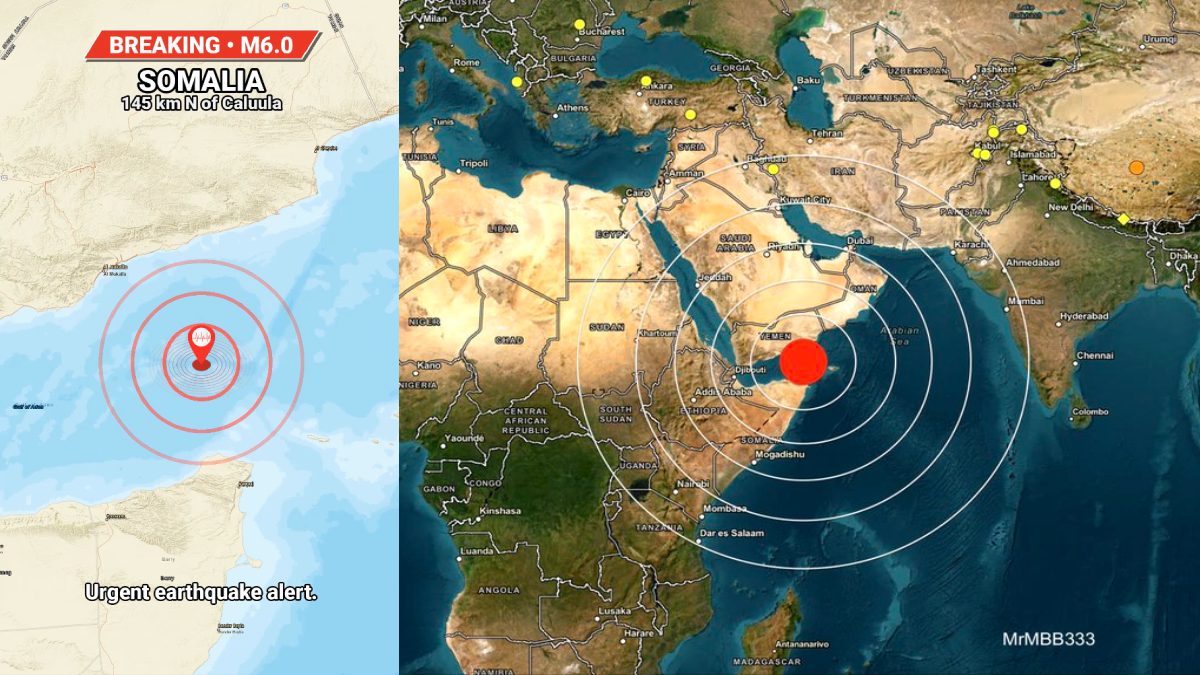
The earthquake struck at 12:07 a.m. local time and was detected by global seismic monitoring agencies. There were no immediate reports of casualties, injuries, or major structural damage from the earthquake, but Somalia and Yemen officials were assessing the situation the day following it. Emergency management agencies are monitoring coastal areas for aftershocks or secondary hazards.
Some residents of northern Somalia and southern Yemen reported feeling slight shaking in particular, with some saying the shaking could last several seconds. Residents of coastal communities have reported buildings shaking and household items rattling on social media. Initial reports show that the earthquake did not trigger a tsunami warning and the scale of the impact on coastal areas is not expected to be large.
The Gulf of Aden is a geologically active region between the Arabian and Somali tectonic plates. The area is part of a complex system of tectonic boundaries that are associated with the East African Rift and the spreading centre beneath the Gulf of Aden. As the two plates are gradually moving apart, stress is created in the Earth's crust, and earthquakes occur at different magnitudes. Scientists have long seen this region as one of the key seismic zones connecting Africa and the Arabian Peninsula.
At the Gulf of Aden, earthquakes are common, and a magnitude 6.0 earthquake is high enough to be felt along the coastline. Offshore earthquakes, as noted by seismologists, pose the greatest threat to maritime activity, coastal infrastructure, and shipping channels if they occur at shallow depths or are followed by stronger aftershocks. The Gulf of Aden is one of the world’s most strategically important waterways, linking the Arabian Sea to the Red Sea and serving as a major international shipping route.
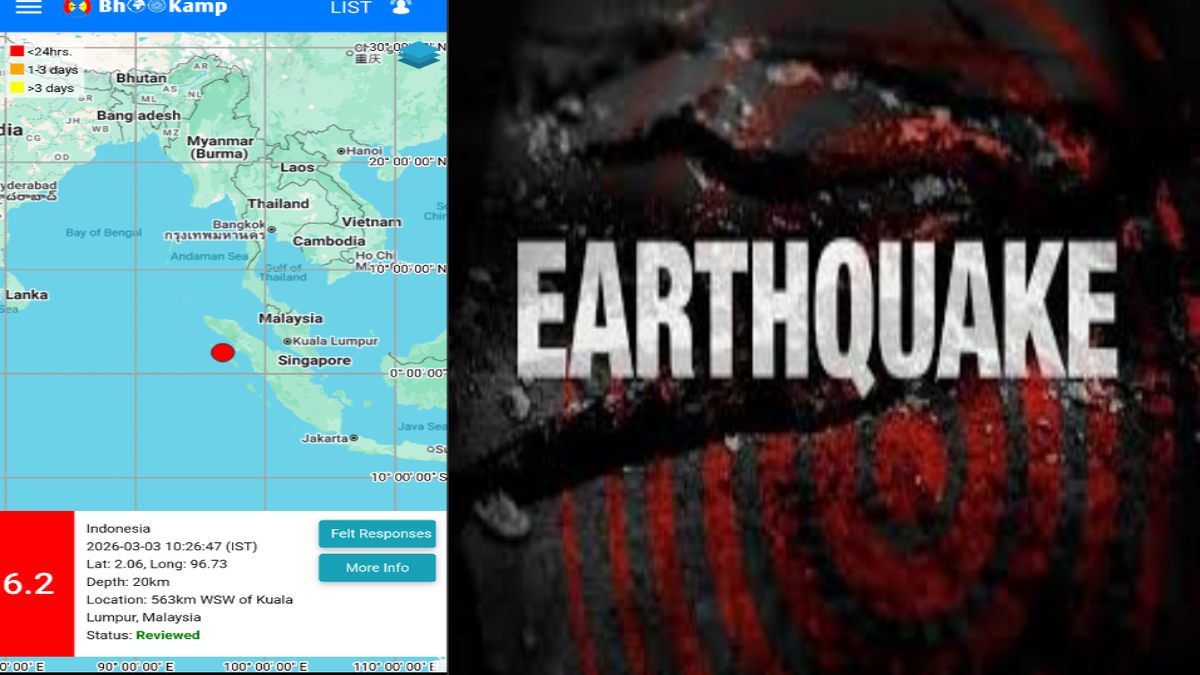
The earthquake came at a time when some regions of the world have been experiencing higher seismic activity. Though earthquakes cannot necessarily be predicted, continuous monitoring and better early-warning systems are the ways in which the situation is handled, said experts. Geological agencies are still studying data from the earthquake to determine whether it was part of a larger sequence of tectonic activity in the area (e.g., earthquakes in the Philippines, Chile, Italy).
Somalia, Yemen, and other neighbouring countries have told residents to be alert and follow official advice. People living in coastal areas should be informed by the local emergency teams and be ready for possible aftershocks, experts say.
To that end, monitoring will continue, and scientists will be closely observing the Gulf of Aden for further seismic activity. In the event of such a disaster, it is a reminder that the geological forces in the area are dynamic and that preparedness is essential in areas that are at risk of natural disasters.