Robots have revolutionized all areas of life so fast and so precisely. Now, a state-of-the-art robot that folds and makes paper airplanes in seconds is catching the eye of the world. Folding paper airplanes may seem like a trivial task, but the robot is all about the best engineering, the most precise mechanics, and automation technology for the future beyond the easy task of paper folding.
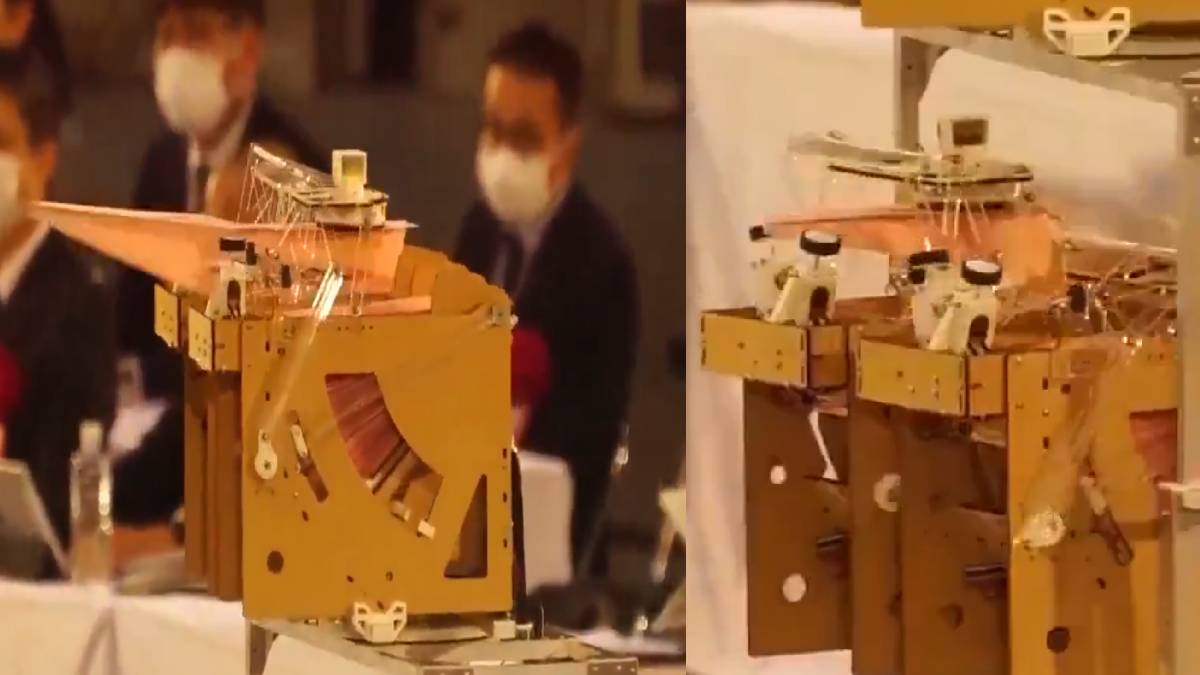
The machine demonstrates how robots can do delicate, repetitive work with near-perfect accuracy. Every fold is done with millimeter-level precision, so that every paper airplane is virtually identical to the previous one. The robot can run continuously without fatigue or loss of accuracy in comparison to humans because they naturally have a tendency to vary in speed and precision over time.
This High-Speed #Robot Can Mass-Produce Paper Airplanes in Seconds
— Ronald van Loon (@Ronald_vanLoon) July 16, 2026
by @Rainmaker1973
#Robotics #Engineering #Innovation #Technology #Tech pic.twitter.com/AyKgTjJ3uc
That is the secret behind the robot's performance: its mechanical design. Armed with high-speed actuators, precise motors, intelligent sensors, and sophisticated programming, the robot holds, folds, aligns, and releases sheets of paper in a single step. The whole process takes only seconds, demonstrating industrial automation at its best.

Although folding paper airplanes is only a demonstration, it is a technology that is already used in manufacturing industries around the world. Similar robotic mechanisms are used in electronics assembly, pharmaceutical packaging, food processing, automotive manufacturing, textile production, and precision engineering. These applications require the same speed, repeatability, and accuracy demonstrated by the paper airplane robot.
One of the main advantages of robotic automation is consistency. Human workers tend to get fatigued, distracted, or perform poorly during repetitive tasks. Robots, however, can perform repeated tasks thousands or even millions of times while maintaining the same level of precision throughout production.
Today’s robots also enhance safety by taking on repetitive or physically demanding jobs that can cause workers to get injured. Instead of substituting skilled workers, automation tends to shift the labor into programming, supervision, maintenance, quality control, and process optimization.
The study also illustrates how AI and machine vision are being incorporated into robotic systems in a rapid manner. Future versions of similar robots may also be able to recognize paper sizes, automatically adapt folding patterns, detect defects in real time, and learn new tasks with AI-powered algorithms. That flexibility would enable robots to perform more complex production tasks with little human intervention.
Educational institutions are also now adopting robotics demonstrations like this one. Folding paper airplanes is a fun way for students to learn engineering, programming, automation, mechanics, and computer-controlled manufacturing. By observing how a seemingly simple activity could be automated in a very precise way, students gain valuable insights into industrial robotics.
The robotics industry as a whole is growing at a fast pace as companies wish for greater efficiency, better products, and lower operational costs. Sensors, artificial intelligence, motion control systems, and computing power are all improving robots’ ability to do things that were once seen as too delicate or complicated for automation.
Experts believe collaborative robots, or “cobots,” will be more common in manufacturing plants, warehouses, laboratories, hospitals, and logistics centers. These machines are designed to work safely next to humans and combine robotic precision with human creativity and decision-making.
The paper airplane robot is the perfect example of how automation has evolved from handling heavy industrial machinery in the very beginning to performing surprisingly complex and delicate tasks. What is most likely a fun engineering project is actually a demonstration of technologies transforming industries around the world.
With robotics progressing, machines will become faster, smarter, and more versatile. Robots are transforming productivity in all sectors, whether assembling smartphones, packaging medicines, sorting packages, or folding paper airplanes—robots are redefining productivity across countless sectors.
The high-speed paper airplane robot isn’t only an engineering achievement; it’s a glimpse into the future of intelligent manufacturing in which automation, artificial intelligence, and precision engineering team up to make products. As technology advances, such innovations will continue to inspire engineers, educators, and industries, proving that even the most mundane task can demonstrate the extraordinary capabilities of modern robotics.