India and Russia are moving forward in preparations for a free trade agreement between India and the Eurasian Economic Union (EAEU), and Russian First Deputy Prime Minister Denis Manturov also said it is already in progress. New Delhi and Moscow are moving toward expanding bilateral trade through the development of both countries’ industries and product lines and aiming to reach a target of $100 billion by 2030.
Manturov made comments during the 27th session of the India-Russia Intergovernmental Commission on Trade, Economic, Scientific, Technological and Cultural Cooperation (IRIGC-TEC) in Moscow on August 24, where he co-chaired discussions with External Affairs Minister S. Jaishankar. He mentioned the India-EAEU FTA as a potential new driver of sustainable trade growth and stressed the need to keep momentum in the negotiations.
The proposed agreement is very important as the EAEU has Russia, Armenia, Belarus, Kazakhstan and Kyrgyzstan as members and so can help India build stronger access to the market not just to Russia but also to a wider Eurasian economic bloc. The talks between India and the EAEU started in 2025, and the two sides signed the terms of reference for the trade talks.
The development comes in the context of increasing India-Russia economic ties. Manturov said bilateral trade increased by 8% in the first half of 2026, with Russian exports to India and Indian exports to Russia experiencing positive trends. He added that the overall volume of trade is only one part of the goal, and diversification of the trade basket is becoming more and more important.
Energy and fertilisers have long been the major source of India's imports from Russia. But Moscow and Delhi are now exploring cooperation on agriculture, food products, machinery, metallurgy and forestry goods. Indian exports to Russia include pharmaceuticals, agricultural products, industrial raw materials, equipment, components and light industry items.
As for India, a trade agreement with the EAEU could offer new opportunities for exporters to access markets in Eurasian countries. If we can have a trade agreement, then that will be beneficial to pharmaceuticals, engineering goods, machinery, agriculture, textiles and processed food if we can get the tariffs down and better market access.
For Russia and its EAEU partners, the attraction is equally strong. India is one of the largest and fastest-growing major economies in the world; its massive consumer market and expanding industrial base are huge. And access to India could open up new opportunities for Russian companies outside the traditional energy industry.
The proposed agreement could also help to address the structural problems in India-Russia trade. While bilateral trade has increased dramatically, the trade balance is still heavily tilted towards Russian exports. India's External Affairs Minister S. Jaishankar has called the trade imbalance one of the major priorities that needs to be addressed.
Jaishankar has linked these measures to the goal of taking India-Russia bilateral trade to $100 billion by 2030. Official Indian data shows bilateral trade reached about $68.7 billion in FY2024-25 before it reached around $59.86 billion in FY2025-26.
The FTA could thus be an important mechanism to alter the composition of this trade. And despite a relatively narrow set of commodities, both governments want more Indian manufactured goods and services to enter Russian and EAEU markets and more Russian investment and exports into India.
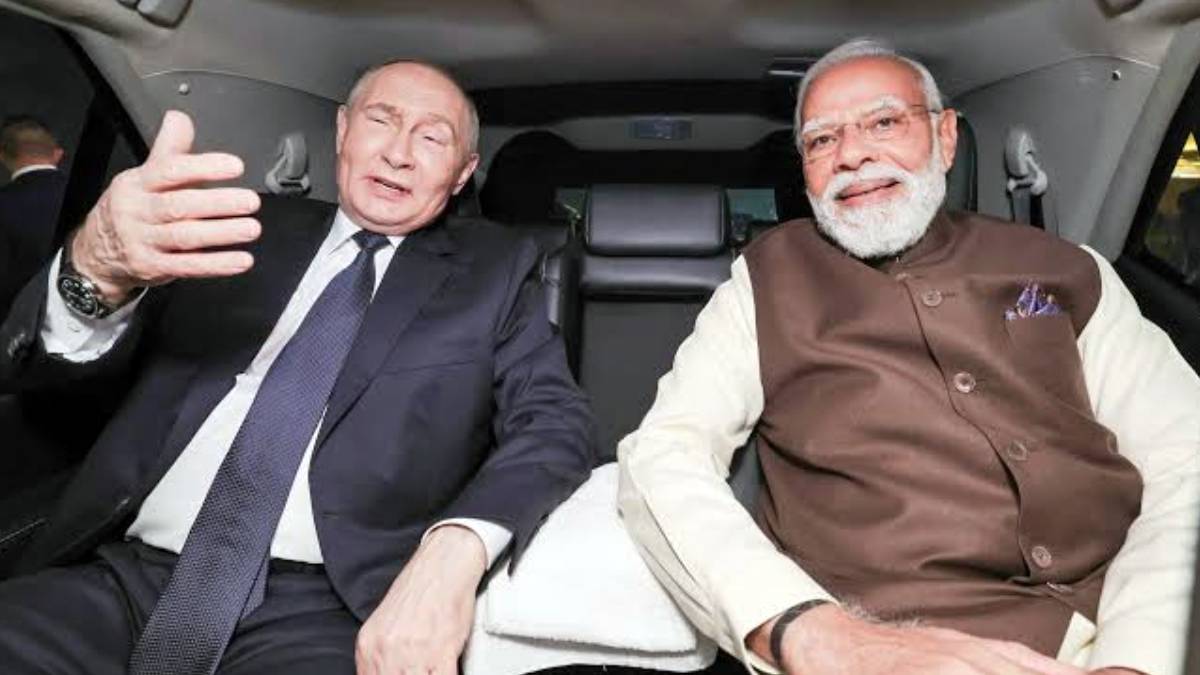
The timing is also crucial from a geopolitical and economic perspective. Global supply chains are in acute flux, and there is an increasing search for alternative markets, payment mechanisms and trading partners. India and Russia have been very close friends through all of the global changes, and both are keen to strengthen the commercial basis of their partnership.
The same discussions have been taking place in Moscow on energy, fertilisers, industrial cooperation and other economic topics too. Russian President Vladimir Putin even offered to boost fertiliser supplies to India, which is another indication of agricultural cooperation in the bilateral relationship.
But an active negotiating phase does not mean the agreement has been finalised. Important issues like tariff concessions, rules of origin, non-tariff barriers, customs procedures and market-access commitments still need to be worked out before a final agreement can be concluded and implemented. Negotiating teams have already been reviewing issues like non-tariff measures and requests for access to each other's markets.
If it is successful, the India-EAEU FTA could be a crucial step in the next phase of India-Russia economic cooperation. It could offer Indian exporters a wider Eurasian market and also Russian and EAEU businesses more access to India.
The key message Moscow is currently getting is that negotiations are moving forward. With bilateral trade already rapidly growing and both countries aiming for $100 billion in trade by 2030, the free trade agreement is emerging as one of the most important economic initiatives in a developing India-Russia relationship.