Narendra Modi’s recent meeting with Iranian President Masoud Pezeshkian has received fresh attention from Washington, with US Secretary of State Marco Rubio repeating the Trump administration’s threat against countries that help Tehran to escape American sanctions. Rubio, when asked to respond to questions about the India-Iran interaction, denied that the meeting indicated a possibility of a bilateral trade agreement.
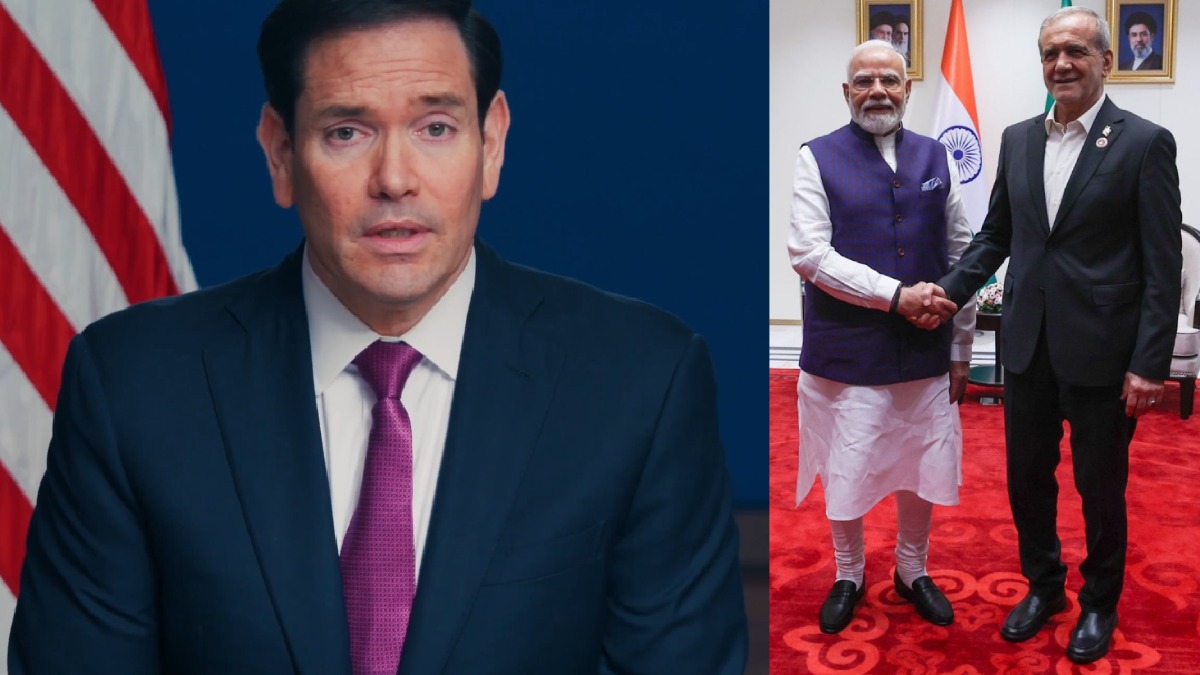
PM Modi and Pezeshkian met on the sidelines of the 26th Shanghai Cooperation Organisation (SCO) Summit in Bishkek, Kyrgyzstan. The interaction took place at a time when India is concerned about Iran's strategic importance for India and its relationship with other countries in the Middle East and Eurasia and is also part of New Delhi's strategy of engagement with Russia and China.
On the Brian Kilmeade Show, Rubio questioned the assumption that India and Iran were working towards a new trade deal. He said he did not believe that the meeting represented negotiations for such an agreement but said countries are allowed to pursue their own foreign policy and to maintain diplomatic relations with Tehran.
Rubio also admitted that India’s engagement with Iran is not unique to India. He said that governments around the world still communicate with Iranian officials and said that the U.S. has had contact with Iranian regime representatives in Washington and Tehran during talks with Tehran.
Rubio repeats Trump's sanctions warning
Rubio did not directly criticize PM Modi's meeting with Pezeshkian but he did use it to reiterate Washington's stance on Iran-related sanctions. As U.S. Secretary of State, countries need not be helping Tehran to develop financial or commercial mechanisms that would allow it to bypass American restrictions.
Rubio said the Trump administration’s position was clear: countries that help Iran to evade sanctions would themselves face US sanctions. Washington has argued that revenues generated by Iran could be used for activities that are destabilising to the US, such as backing militant groups and the development of capabilities tied to its nuclear programme.
The warning is important for countries with deep economic ties to Iran. India has always balanced its strategic and economic interests in Tehran with Washington relations. Iran is important for India's connectivity ambitions, energy needs and access to the rest of Central Asian countries.
US maintains a hardline stance on Iran's nuclear programme.
Rubio also reaffirmed Washington's opposition to Iran acquiring a nuclear weapon. He said the US would continue to use economic pressure against Tehran and indicated there would be military action if Washington felt it was necessary.
The comments reflect the Trump administration’s continued hardline attitude to Iran. Washington has constantly linked sanctions relief and economic engagement to wider concerns regarding Iran’s nuclear activities and its regional grip.
Rubio said the US will not allow Iran to possess a nuclear weapon while Trump remains president. He also argued that Tehran’s need for financial resources is tied to what Washington considers as support for terrorism and efforts to advance its nuclear ambitions.
India Balances Strategic Interests
For New Delhi, engagement with Tehran is part of a foreign policy approach to maintain relationships with multiple countries despite geopolitical tensions. India’s diplomatic ties with Iran are strategic in nature, especially because of connectivity projects and Iran’s geographical position as a potential gateway to Central Asia.
At the same time, India has also developed a strong strategic relationship with the US in defence, technology, trade and Indo-Pacific and has intensified its relations with the US in terms of defence, technology, trade and Indo-Pacific. It is for this reason that Washington's position on Iran sanctions is important for New Delhi in the context of the relations with Tehran as it is now a major matter of importance.
Modi and Pezeshkian's talks are therefore in the context of a complicated international landscape. Diplomatic engagement does not necessarily translate into a formal trade agreement but India's continued interaction with Iran is likely to remain an issue watched closely by the US.
US-Iran Tensions Remain High
Rubio’s remarks also come at a time of continuing tension between Washington and Tehran. Economic pressure, the Trump administration has argued, is one of the key means of forcing Iran to change course, and military action is also at the front of it.
Iranian officials have continued to state that Tehran will resist American pressure. Supreme National Security Council Secretary Mohsen Rezaei has said Iran would pursue a more comprehensive strategy which involved military operations, diplomacy and efforts to fight economic sanctions.
The most recent developments suggest that the US-Iran conflict continues to have consequences beyond the two countries. If India and other countries have relations with Tehran, they have to keep the diplomatic and economic interests to the best of their ability as Washington's sanctions policy grows tougher.
As India continues to work with Iran, the Modi-Pezeshkian meeting is likely to be part of a wider conversation about New Delhi’s strategic autonomy, regional partnerships and the delicate balance between its ties with Tehran and Washington.